If you’re flying into Haneda or Narita for meetings in Tokyo and then hopping a domestic flight to Osaka or Fukuoka, the carry-on rule that actually trips people up isn’t the 100ml liquid limit — it’s the domestic size cap. ANA and JAL both restrict carry-on bags on domestic routes to 55cm x 40cm x 25cm (three dimensions totaling 115cm) and 10kg, which is tighter than what many international carriers allow in economy. If your roller bag clears United or Lufthansa’s sizer but not that one, the gate staff at Haneda’s domestic terminal (Terminal 1 for JAL, Terminal 2 for ANA) will make you check it, and you’ll lose 20-30 minutes at baggage claim in Itami or Fukuoka that you didn’t plan for. Measure your bag with wheels and handle included before you pack anything else — this single detail determines whether the rest of this list even fits.
Carry-On Size Rules You Need to Check First
For the international leg, JAL and ANA both allow 10kg and a combined 115cm (56cm x 40cm x 25cm), which is roughly standard. But if your itinerary includes a connecting domestic hop — say Narita into Tokyo, then an ANA flight from Haneda to Itami for an Osaka client meeting — switch to the stricter domestic measurement from day one. A 21-inch roller bag from brands like Samsonite’s Winfield or Tumi’s Alpha 3 carry-on usually fits both limits, but anything marketed as a 22-inch “international max” bag often fails the domestic sizer by 2-3cm. Pack a soft-sided garment bag as backup; it compresses and gets waved through more easily than hard-shell cases.
The Business Wardrobe That Survives Five Days Without a Suitcase Check
Tokyo business hotels rarely have in-room ironing boards worth using, and dry cleaning at chains like Richmond Hotel or Daiwa Roynet takes a full day if dropped off after 10am. Pack one wrinkle-resistant wool-blend suit (navy or charcoal; Tokyo offices are conservative) and rotate shirts instead of suits. Uniqlo’s AIRism dress shirts are sold at the Ginza flagship (12-story store near Ginza Station) and most Uniqlo locations if you underpack — they’re odor-resistant and dry overnight on a hanger, which matters because humidity in Tokyo from June through September makes regular cotton take 24+ hours to air dry. Bring three shirts, wear one twice with a quick hand-wash, and buy a fourth locally if the trip runs past five days. Skip the second pair of dress shoes; Tokyo sidewalks and train stations are clean enough that one pair of leather shoes with a travel shoe-shine sponge (sold at Tokyu Hands, now rebranded as Hands, in Shinjuku) gets you through a week of client visits.
Tech Bag Essentials and the Power Bank Rule Nobody Reads
Japan runs on Type A plugs at 100V, which matches US two-prong plugs physically but not voltage — most laptop chargers and phone bricks handle 100-240V automatically, so you usually don’t need a voltage converter, just a plain adapter if you’re coming from a three-pin country (UK, Australia). Check the fine print on the charger itself before assuming.
For power banks, airlines enforce the 100Wh rule strictly on international routes out of Narita and Haneda: anything under 100Wh travels freely in carry-on, 100-160Wh needs to stay under two units and sometimes requires declaring at security, and anything over 160Wh is banned outright, no exceptions, no checked-bag workaround. A standard 10,000mAh bank is around 37Wh, so you’re fine, but the newer 27,000mAh bricks some travelers buy for long conference days can exceed 100Wh — check the printed Wh rating, not just mAh, before departure.
On connectivity: an eSIM from Ubigi or Airalo (roughly ¥700-900 for 1GB over 7 days, activated before you land) is simpler than queueing at the pocket wifi counters near Narita Terminal 1’s Arrival Lobby, but if your meetings involve screen-sharing heavy files, a physical pocket wifi from Japan Wireless or Global Advanced Communications (reserved online, picked up at the Haneda international counter) still gives more consistent bandwidth than a shared eSIM plan.
Payment Setup Before You Land
As of 2026, Suica and Pasmo can both be added to Apple Pay or Google Pay using a foreign-issued Visa or Mastercard through the “Welcome Suica” mobile option, which removes the old requirement of a Japan-issued card for mobile IC setup. If you’d rather carry a physical card, the Welcome Suica card (no deposit, valid 28 days) is available from ticket machines at Narita and Haneda and works identically to a regular Suica for JR lines, Tokyo Metro, and convenience store purchases at 7-Eleven, Lawson, and FamilyMart. Load ¥3,000-5,000 at the start of the trip; it covers taxis from Shinagawa Station to most Otemachi or Marunouchi offices and daily combini coffee runs. Separately, carry one contactless Visa or Mastercard — tap payment is now standard at convenience stores and most taxis in central Tokyo, but smaller restaurants in neighborhoods like Kanda or Shimbashi (common for after-meeting dinners) still sometimes run cash-only, so keep ¥10,000-15,000 in cash as backup.
Documents and the Business Card Ritual
Passport holders from the US, UK, EU, Canada, and Australia can still enter visa-free for stays up to 90 days as of 2026, but your passport should have at least one blank page and six months’ validity beyond your return date — immigration at Haneda has turned people back over this in the past year. Pack 20-30 meishi (business cards) in a proper cardholder, not a wallet pocket; handing over a bent card from your back pocket reads as careless in a first meeting with a Japanese counterpart. If you’re attaching a Japan-based colleague’s details, have a bilingual card printed — same-day printing is available at shops near Tokyo Station’s Yaesu side for about ¥3,000-5,000 for 100 cards if you forgot to order them at home.
Liquids, Toiletries, and What to Just Buy There
Standard TSA-style rules apply at Narita and Haneda security: containers under 100ml, all liquids in a single transparent 1-liter bag. Skip packing a full toiletry kit — Matsumoto Kiyoshi drugstores (there’s one inside almost every major station, including a 24-hour branch near Shinjuku’s east exit) stock travel-size versions of everything from contact lens solution to aspirin, usually cheaper than what you’d buy pre-packaged at home. The one exception: if you use a specific prescription medication, bring the full supply plus a doctor’s note in English, since some common decongestants and ADHD medications are restricted or banned under Japanese customs law regardless of your home prescription.
What to Leave at Home
Don’t pack a travel umbrella — convenience stores sell decent collapsible ones for ¥500-700, and you’ll want one anyway if your trip falls in the June-July rainy season or the September typhoon window. Don’t pack a second laptop charger or multiple adapter types; one universal adapter covers the entire trip. And don’t overpack business casual separates assuming you’ll need variety — Japanese colleagues notice consistency, not rotation, and a tightly packed carry-on moves faster through the crowded escalators at Shinagawa Station during evening rush hour than a bag you’re still rearranging at the gate.
One Thing Worth Knowing Before You Land
If your meetings start the same day you arrive, consider using a luggage forwarding service (takkyubin) rather than wheeling a full case straight to your first appointment. Yamato Transport counters at both Narita and Haneda will send your bag directly to your hotel for about ¥2,000-2,500, arriving same-day or next-morning depending on your hotel’s location, while you carry only a slim daypack with your laptop, documents, and meishi to the meeting. It’s a small cost that solves the real problem with carry-on packing for business trips: the lightest bag is the one you don’t have to carry into the client’s office at all.
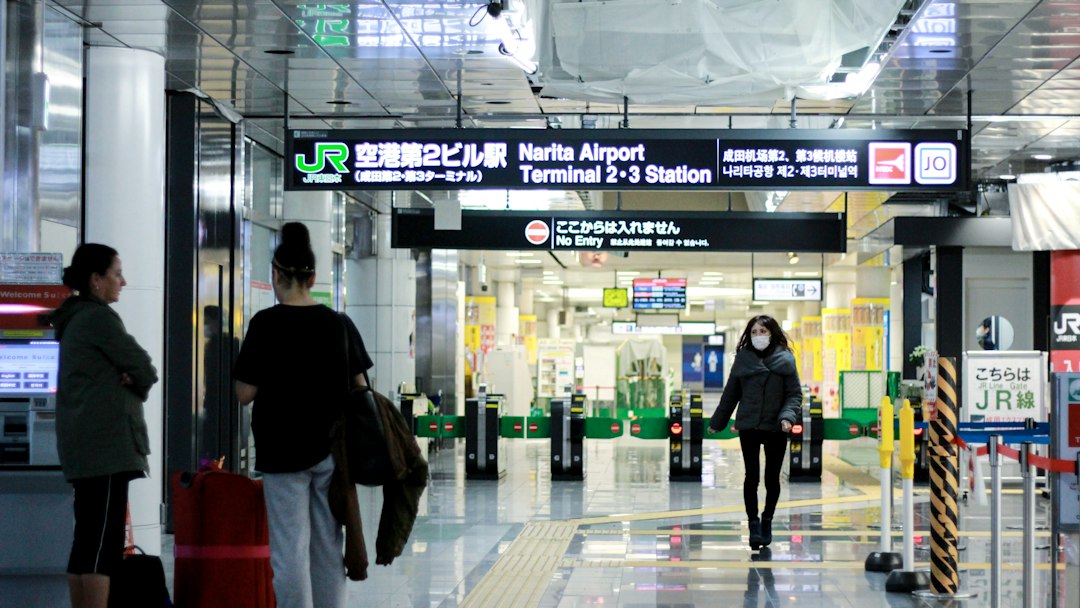
Photo by Tan on Unsplash