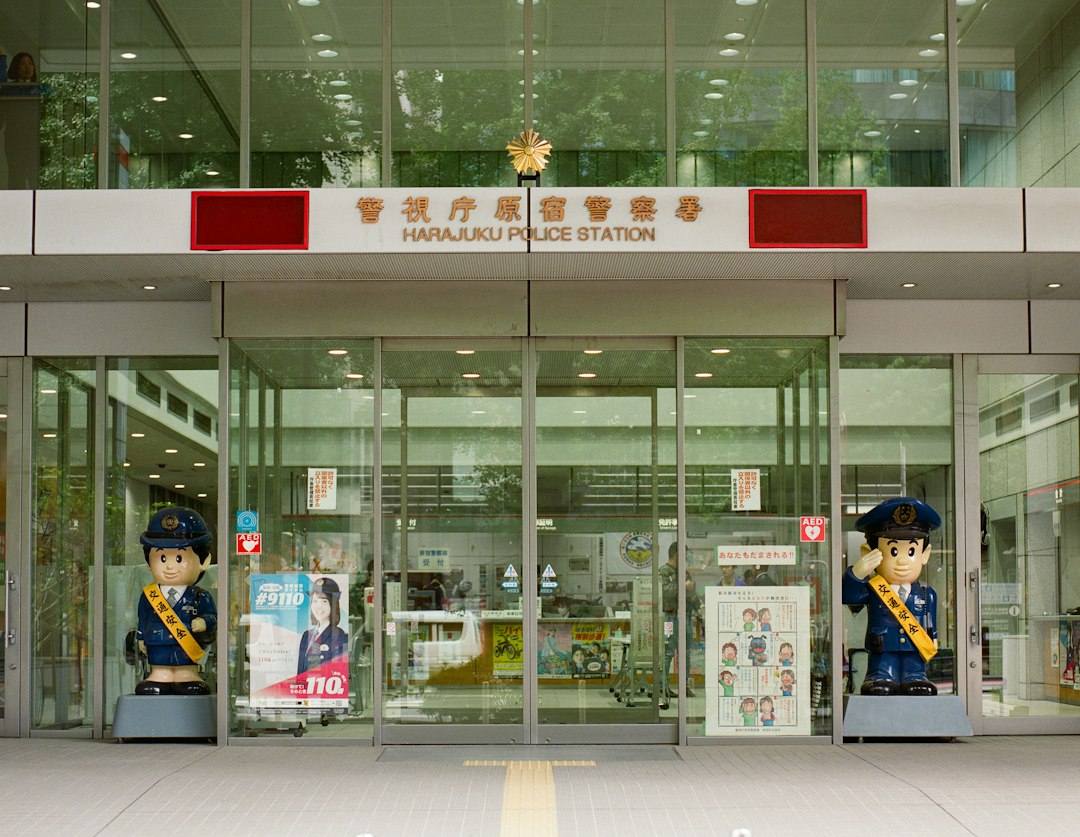
If you’re reading this because something just happened — you lost your passport in Dotonbori, your kid has a 39°C fever in a Kyoto ryokan, or you got pickpocketed near Shin-Okubo Station — here’s what matters first: dial 110 for police, 119 for fire or ambulance, and keep the Japan Helpline number 0570-000-911 saved in your phone before you land, because it’s the one line in this whole list that has English-speaking staff available 24 hours a day, every day, including New Year’s.
I’ve used two of these three numbers myself — once after a bicycle collided with my suitcase outside Namba Station, and once calling on behalf of a British tourist who’d locked herself out of an Airbnb in Nakameguro at 11pm. The system works, but it works differently than it does at home, and the gaps are exactly where tourists get stuck.
The core numbers, and what actually happens when you call them
110 — Police (keisatsu). Free from any phone, including a locked smartphone with no SIM. You do not need to dial a country code or add 0. The operator who picks up in central Tokyo or Osaka often has basic English, but outside the big cities — say, calling from Takayama or rural Shikoku — expect Japanese only, and expect them to patch you to a three-way interpreter line, which takes 60–90 seconds to connect. Stay on the line; hanging up because no one speaks English is the single most common mistake I’ve watched tourists make.
119 — Fire and ambulance. Same deal, free and reachable without credit. Ambulances in Japan are free to ride, but say clearly whether you need 救急車 (kyuukyuusha, ambulance) or 消防車 (shoubousha, fire truck) — the dispatcher will ask. One real catch: Japanese ambulance crews will take you to the nearest hospital with an open bed, not necessarily one with English-speaking doctors, so if you can self-transport to somewhere like St. Luke’s International Hospital in Tsukiji (Chuo-ku, a 5-minute walk from Tsukiji Station on the Hibiya Line) for a non-critical issue, that’s often the better call.
Japan Helpline and the JNTO Visitor Hotline — your real safety net
Japan Helpline (0570-000-911) is a private, multilingual emergency interpretation and advice service that’s been running since 1992. It’s not a replacement for 110/119 — it’s the bridge. Call them simultaneously or right after if you’re struggling to communicate, and they’ll stay on a three-way call with the police or hospital staff until things are sorted. It costs a standard call rate, not free, so a local SIM or eSIM with voice minutes matters here (data-only eSIMs like some Ubigi or Airalo plans won’t let you make this call — check before you buy).
Separately, the Japan National Tourism Organization runs the Japan Visitor Hotline at 050-3816-2787, available 24/7 in English, Chinese, and Korean, for non-emergency tourist problems — lost items, transport confusion, natural disaster questions. I called this number once from Beppu to ask whether a minor earthquake warranted canceling a ferry booking; the operator checked JMA data live and told me within two minutes it was a magnitude 4.1 with no tsunami risk.
Finding a koban when you don’t want to dial anything
Japan’s neighborhood police boxes (koban, 交番) are genuinely useful and criminally underused by tourists. There’s one directly outside the east exit of Shinjuku Station (Kabukicho Koban, nicknamed locally for being the busiest in the country), and another small one beside Kaminarimon Gate in Asakusa that handles lost wallets and tourist directions constantly. If your problem is lost property, a scam, or you just need directions and don’t want to spend phone credit, walk into a koban before you call anything — they log found items into a shared national database and often resolve lost-wallet cases within hours.
Medical emergencies and English-speaking hospitals
For non-ambulance medical issues, these are the facilities I’d actually point someone toward: Tokyo Medical and Surgical Clinic in Azabudai (03-3436-3028, walk-in English-speaking GP clinic, consultation fees typically ¥15,000–¥25,000 without Japanese insurance), St. Luke’s International Hospital in Tsukiji for anything serious, and in Osaka, Yodogawa Christian Hospital in Higashiyodogawa-ku which keeps English-speaking staff on rotation. The Tokyo Metropolitan Health and Medical Information Center, known as Himawari, runs a phone line at 03-5285-8181 (9am–8pm) that will look up the nearest English-capable clinic to your exact location and even check current opening hours for you — I’ve used this to find a dermatologist open on a Sunday in Shibuya.
Embassy and consulate contacts
Keep your embassy’s after-hours emergency line separately from the general switchboard — general lines often close at 5pm. US Embassy Tokyo: 1-10-5 Akasaka, Minato-ku, 03-3224-5000 (after-hours line routes through the same number with a recorded menu). UK Embassy Tokyo: 1 Ichiban-cho, Chiyoda-ku, 03-5211-1100. Australian Embassy: 2-1-14 Mita, Minato-ku, 03-5232-4111. Canadian Embassy: 3-38 Akasaka 7-chome, Minato-ku, 03-5412-6200. If your passport is stolen rather than lost, file a police report first (you’ll need the report number, called a hibanshou, for the embassy’s emergency travel document process) — this alone can save a full day versus going to the embassy first.
Natural disasters: the app matters more than a phone number
For earthquakes and tsunami alerts, download the Safety Tips app (by JNTO, available in English, free) before you arrive — it pushes J-Alert notifications directly from the Japan Meteorological Agency, often 10–20 seconds before shaking starts in Tokyo for a quake originating offshore in Tohoku. This matters more than memorizing a phone number because during a major quake, phone networks get congested fast; NTT’s disaster message board service (dial 171) is the official workaround for checking on travel companions if cell networks are jammed, though honestly most tourists find it easier to just use a messaging app over wifi.
One practical catch most guides skip
If you’re using an eSIM or a prepaid data-only SIM — which is what most tourists now carry as of 2026 instead of renting a pocket wifi — you likely cannot dial 110 or 119 at all, because data-only plans don’t carry a voice line. Test this before you need it: try dialing 110 (don’t complete the call, just check it connects) within your first day in Japan. If it fails, your backup is simple — walk into any convenience store (Lawson and 7-Eleven staff are used to this) and ask them to call on your behalf, or borrow a landline — hotel front desks will dial emergency numbers for guests without hesitation, and it’s one of the few places where showing up in person beats any number on this list.
Photo by Lex Brogan on Unsplash