Planning your trip to Japan in 2026 and wondering exactly where to return your pocket WiFi router before you fly home? You’re not alone. Even with the rise of eSIMs, pocket WiFi remains one of the most popular ways for travelers to Japan to stay connected, especially for groups sharing one device or those visiting rural areas with patchy eSIM data coverage. But one of the most common questions we get at Japlore is: “Where exactly do I return my pocket WiFi at the airport, and what happens if I miss my flight’s counter hours?” This 2026 guide covers every major Japanese airport’s return counter locations, opening hours, and backup options so you never get stuck paying a lost-equipment fee.
Why Pocket WiFi Is Still Popular in 2026
Despite Japan’s excellent eSIM options and improved free public WiFi in cities like Tokyo, Osaka, and Kyoto, pocket WiFi devices remain popular because they let an entire family or group of friends share one strong 4G/5G connection without swapping SIM cards or worrying about individual phone compatibility. Many rental providers such as Ninja WiFi, Japan Wireless, Sakura Mobile, and Global Advanced Communications (GLoBAL WiFi) now offer unlimited data plans with same-day airport pickup and return, making the process smoother than ever as of 2026.
General Pocket WiFi Return Rules
Most providers require you to return the pocket WiFi router, charging cable, and carrying case (if provided) either at the airport counter on your departure day or by mailing it back using the prepaid envelope included in your rental package. Returning at the airport is by far the most convenient option for travelers flying out of Narita, Haneda, Kansai, Chubu, New Chitose, or Fukuoka airports, since it avoids post office visits and confirms your return on the spot.
- Always return the device before your counter’s last collection time on your travel day, not after security.
- Keep your rental receipt or QR code confirmation until the return is confirmed.
- If a counter is closed when you arrive, use the designated return mailbox next to it (most airports have one).
- Late returns or missing equipment can incur fees ranging from ¥5,000 to ¥30,000 depending on the provider and device model, so don’t skip this step.
Narita International Airport (NRT)
Narita remains the busiest gateway for international travelers to Tokyo. Pocket WiFi counters are located in the arrival lobbies of both Terminal 1 and Terminal 2, and most providers also maintain return mailboxes near the departure security checkpoints.
Terminal 1
Look for the GLoBAL WiFi, Japan Wireless, and Ninja WiFi counters near the North and South Wing arrival exits on the 1st floor. Return mailboxes are also available past security on the 4th floor departure area for early morning flights when counters may not yet be staffed.
Terminal 2 and Terminal 3
Terminal 2’s arrival lobby houses similar counters near Exit A and Exit B. Terminal 3, primarily used by low-cost carriers, has fewer staffed counters, so travelers departing from here should double-check whether their provider offers a mailbox drop instead.
Haneda Airport (HND)
Haneda, increasingly popular for its proximity to central Tokyo, has expanded its pocket WiFi services significantly by 2026 due to growing international flight volume. The International Terminal (Terminal 3) has counters on the 2nd floor arrival level, plus post-security return boxes on the 3rd floor departure area, which is extremely convenient if you’re rushing to catch an early flight after checking out of your hotel.
Kansai International Airport (KIX)
For travelers flying out of Osaka, Kansai International Airport’s pocket WiFi counters are located on the 1st floor of the arrival lobby, near the north and south exits. As of 2026, most major providers also offer a 24-hour return mailbox near the departure security check on the 2nd floor, ideal for late-night or early-morning departures when staffed counters are closed.
Chubu Centrair International Airport (NGO)
Serving Nagoya and the Chubu region, Centrair’s pocket WiFi return counters are found in the main arrival hall on the 2nd floor. While smaller in scale than Narita or Haneda, the counters here are rarely crowded, making returns quick and hassle-free.
New Chitose Airport (Sapporo, CTS)
If your Hokkaido adventure ends at New Chitose Airport, pocket WiFi counters are typically located in the international terminal building near the currency exchange counters. Because Hokkaido’s domestic and international terminals are separate buildings connected by a walkway, always confirm which terminal your provider’s counter is in before heading to check-in.
Fukuoka Airport (FUK)
Popular for travelers exploring Kyushu, Fukuoka Airport’s international terminal has a compact but efficient pocket WiFi return counter near the departure lobby. A free shuttle bus connects the domestic and international terminals, so leave extra time if your rental pickup was at the domestic side.
What to Do If You Miss the Counter
If your flight departs very early or very late and the staffed counter is closed, don’t panic. Nearly all reputable providers include a prepaid return envelope in your rental package specifically for this situation. Simply place the device, cable, and case inside the envelope and drop it into any Japan Post mailbox before you leave the country, or use the dedicated post-security return box if your airport has one. Always take a photo of the sealed envelope with a visible postmark or drop-off location as proof, just in case there’s a dispute about return timing later.
Tips to Avoid Late Return Fees in 2026
- Book your pocket WiFi return for the same terminal as your departure flight; some travelers mistakenly go to the wrong terminal’s counter.
- Charge the device fully before returning if your contract requires a minimum battery level (check your rental agreement).
- Return 30-45 minutes before your recommended airport arrival time to account for counter queues during peak holiday seasons like Golden Week or year-end.
- Double check you haven’t left the router or cable in a jacket pocket, hotel safe, or rental car before heading to the airport.
Pocket WiFi vs eSIM in 2026: Which Should You Choose?
By 2026, eSIM providers like Ubigi, Airalo, and Japan-specific carriers have made huge strides in coverage and pricing, and many now offer unlimited plans comparable to pocket WiFi. However, pocket WiFi still wins for groups, travelers with older devices lacking eSIM support, or those heading to remote areas like rural Hokkaido or the Japanese Alps where signal reliability matters more than convenience. If you do choose pocket WiFi, understanding exactly where and how to return it will save you money and last-minute airport stress.
Final Thoughts
Returning your pocket WiFi shouldn’t be the most stressful part of your Japan trip. With counters clearly located at Narita, Haneda, Kansai, Chubu, New Chitose, and Fukuoka airports as of 2026, plus reliable mailbox backup options, travelers have more flexibility than ever. Before your trip, always confirm your specific provider’s exact counter location and hours on their official website, since layouts and staffing can change. With a little planning, your last Japan WiFi connection will be as smooth as your first.
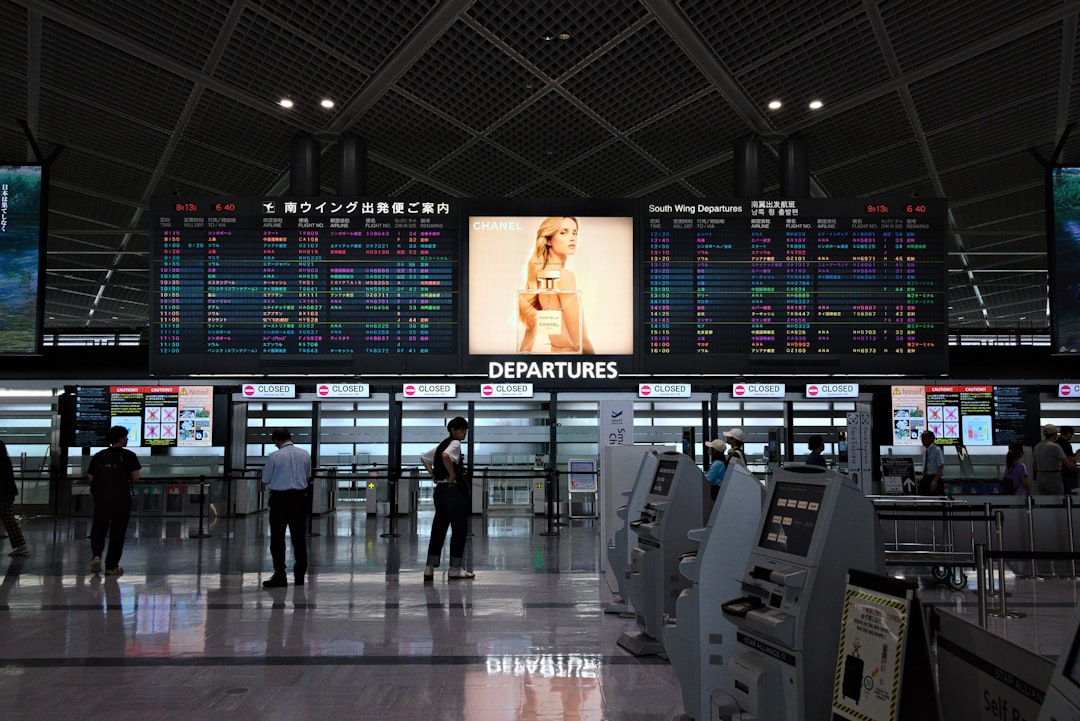
Photo by David on Unsplash