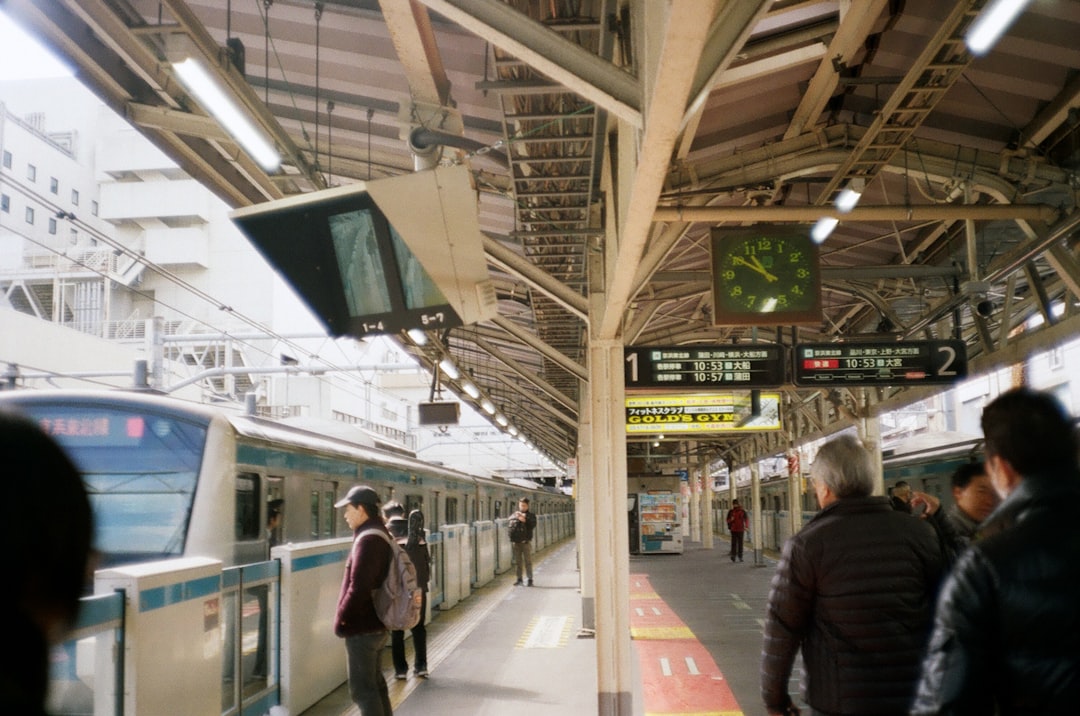

Photo by HANVIN CHEONG on Unsplash
Suica vs Pasmo in 2026: Which IC Card Should You Choose for Tokyo?
Planning a trip to Tokyo in 2026? One of the very first decisions you’ll make—often right at the airport—is which prepaid IC card to get: Suica or Pasmo. These rechargeable smart cards have become essential travel tools, letting you tap through train gates, hop on buses, and pay for snacks at convenience stores without fumbling for coins. As of 2026, both cards have evolved significantly, with new mobile options, foreign credit card compatibility, and updated issuance rules following the global chip shortage that affected physical card production. This guide breaks down everything you need to know to choose the right IC card and use it like a local.
What Are Suica and Pasmo?
Suica and Pasmo are contactless prepaid IC (Integrated Circuit) cards used throughout Japan’s public transportation network and at millions of retail locations. Suica was launched by JR East (Japan Railways East) in 2001, while Pasmo was introduced in 2007 by a consortium of private railway and bus operators in the greater Tokyo area, including Tokyo Metro, Toei Subway, and Odakyu. Functionally, the two cards are nearly identical for everyday travelers—both work on virtually the same networks—but there are subtle differences worth understanding before you buy.
Key Differences Between Suica and Pasmo in 2026
Issuing Companies and History
Suica is issued by JR East and is closely tied to the JR rail network, including the Yamanote Line loop that circles central Tokyo. Pasmo is issued by a partnership of Tokyo’s private railways and subway operators. In practice, this distinction matters only for very specific edge cases, such as certain regional discount schemes or JR-branded loyalty points (JRE POINT for Suica users).
Coverage and Compatibility
Both cards work seamlessly across JR lines, Tokyo Metro, Toei Subway, private railways (Keio, Odakyu, Tokyu, Keikyu, Seibu, Tobu), and most public buses in the Kanto region. Both are also part of Japan’s nationwide IC card interoperability network, meaning you can use either card in cities like Osaka, Kyoto, Fukuoka, Sapporo, and Nagoya on local ICOCA, PiTaPa, SUGOCA, and manaca-compatible systems. As of 2026, this nationwide interoperability remains fully in effect, so your choice between Suica and Pasmo will not limit where you can travel domestically.
How to Get a Suica or Pasmo Card in 2026
Physical Cards
Following a well-publicized shortage of IC chips that began in 2023, JR East and the Pasmo consortium restricted sales of new physical cards for several years. As of 2026, standard physical Suica and Pasmo cards have returned to regular sale at most major station ticket counters and vending machines, though availability can still fluctuate during peak tourist seasons like cherry blossom season (late March–April) and autumn foliage season (November). It’s wise to check current stock via official JR East and Pasmo websites before your trip, or simply plan to get a mobile version instead (see below).
Mobile Suica and Mobile Pasmo
The easiest and most reliable option in 2026 is using a mobile IC card on your smartphone. iPhone users can add Suica or Pasmo directly to Apple Wallet, while Android users can download the dedicated Mobile Suica or Mobile Pasmo apps (Google Pay integration is also supported in many cases). This method avoids physical card shortages entirely and lets you top up instantly using a linked credit card, no need to find a charging machine.
Welcome Suica and Tourist Cards
JR East continues to offer the Welcome Suica, a special tourist-oriented card with no deposit requirement, valid for 28 days from issuance. It’s available at major airport stations including Narita and Haneda, as well as key JR East Travel Service Centers in central Tokyo. Unlike the standard Suica, Welcome Suica does not require a refundable deposit, making it convenient for short visits, though it cannot be refunded for any remaining balance once expired.
Foreign Credit Card Compatibility Update
One of the biggest quality-of-life improvements for international travelers as of 2026 is expanded foreign credit card compatibility for mobile IC cards. Mobile Suica and Mobile Pasmo now accept a wider range of international Visa, Mastercard, and JCB cards for top-ups directly through Apple Pay and Android wallets, reducing the need to carry cash for recharging. That said, compatibility can vary by card issuer and region, so it’s recommended to test a small top-up shortly after arrival and keep a backup of cash just in case, and always check official JR East and Pasmo sites for the latest supported card list as of 2026.
Pricing, Deposit and Refunds in 2026
Standard physical Suica and Pasmo cards require an initial charge of 2,000 yen, which includes a refundable 500 yen deposit, leaving 1,500 yen of usable balance. You can recharge in increments at station machines, convenience stores, or via linked apps. When leaving Japan, you can return a physical card at a JR East ticket window (for Suica) or Pasmo-affiliated counter to receive your deposit plus remaining balance back, though a small handling fee may apply to balances over a certain threshold. Mobile versions have no physical deposit, and any remaining balance can simply be left on your phone for a future trip.
Where Can You Use Suica and Pasmo?
- Trains, subways, and buses throughout the Kanto region and most of Japan
- Convenience stores such as 7-Eleven, Lawson, and FamilyMart
- Vending machines nationwide
- Many restaurants, cafes, and fast-food chains
- Coin lockers at major stations
- Some taxis in Tokyo and other major cities
Suica/Pasmo vs the JR Pass: Which Should You Choose?
Many travelers wonder whether they need a JR Pass in addition to an IC card. As of the October 2023 price increase (still in effect in 2026), the 7-day ordinary JR Pass costs 50,000 yen for adults, a significant jump from previous years. If your itinerary is concentrated within Tokyo and nearby areas like Yokohama, Kamakura, or Nikko, a Suica or Pasmo alone is usually more economical, since you only pay for the exact rides you take. The JR Pass becomes worthwhile primarily if you’re taking multiple long-distance Shinkansen trips, such as a Tokyo–Kyoto–Osaka–Hiroshima loop. For most short Tokyo-only trips in 2026, skip the JR Pass and rely on your IC card.
Practical Tips for Tourists Using IC Cards in Tokyo
- Always keep at least 1,000–2,000 yen of balance to avoid getting stuck at a ticket gate
- Use station recharge machines, most now offer English-language menus
- Mobile IC cards are faster to top up and eliminate the risk of losing a physical card
- Tap lightly and briefly on the reader, no need to press hard
- Keep your phone battery charged if relying on mobile Suica/Pasmo, since a dead phone means no access to the card
- Combined with tax-free shopping at 10% consumption tax rate, save your physical receipts if you plan to claim tax exemption at department stores, separate from your IC card usage
A Quick Note on Entry Requirements
Before your trip, remember to confirm Japan’s current visa and entry requirements, which can change. As of 2026, many nationalities continue to enjoy visa-free short-term entry for tourism, but rules are periodically updated, so always check the official Ministry of Foreign Affairs of Japan website or your local Japanese embassy for the latest information closer to your travel dates.
Final Verdict: Suica or Pasmo?
In 2026, the honest answer is that it barely matters which one you choose, Suica and Pasmo are functionally interchangeable for the vast majority of travelers. If you’re flying into Narita or arriving via JR lines, Suica (or the tourist-friendly Welcome Suica) is a natural, convenient choice. If you land at Haneda and plan to primarily use Tokyo Metro and private railways, Pasmo might feel slightly more intuitive. For most visitors, however, the smartest move in 2026 is simply setting up a Mobile Suica or Mobile Pasmo on your phone before you even land, sidestepping physical card shortages, deposits, and refund hassles entirely, and letting you glide through Tokyo’s transit system with a simple tap.