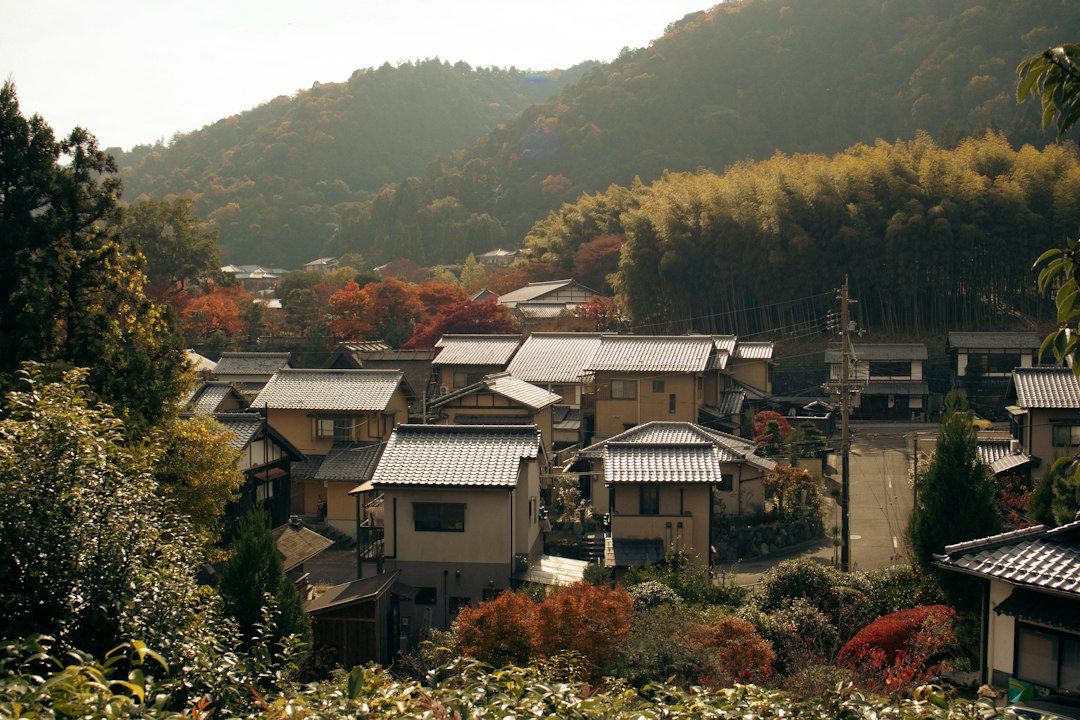
If you already know Shirakawa-go and want the places locals go instead, start with Itoshiro in Gujo City — a hamlet of about 260 people at 700 meters elevation that most tour buses never reach because the only way in is a single-lane stretch of Route 314 that closes under snow from roughly late December to April. This article skips the postcard village everyone photographs and goes into the pockets of Gifu where you’ll likely be the only outsider that day.
Hida vs. Mino: know which mountains you’re actually heading into
Gifu splits into two very different halves, and it matters for planning. The northern Hida region (Takayama, Hida City, Shirakawa village) sits in the Japan Alps and gets serious snow; the southern Mino region (Gujo, Ena, Ibigawa) is lower and greener, with villages often built along old Nakasendo or Mino-kaido trade routes. If you’re driving from Nagoya, Mino villages are 1.5–2.5 hours; from Takayama, Hida villages are 20–60 minutes. Don’t try to combine Itoshiro and Kamioka in one day — the road connection runs you back down to the Tokai-Hokuriku Expressway and adds nearly three hours.
Itoshiro (Gujo City) — the satoyama that rebuilt its own power grid
Itoshiro’s claim to fame isn’t scenery alone; a resident-led NPO restarted a 100-year-old micro-hydroelectric turbine in the early 2010s and now generates enough power to cover the whole settlement’s needs, a project that’s been studied by rural revitalization researchers across Japan. The physical draw is the approach to Itoshiro Hachiman Shrine: a 400-meter avenue of cedar trees, some over 300 years old, that stays shaded and noticeably cooler than the open fields around it even in August. There’s one general store (Itoshiro Shoten) with irregular hours — call ahead rather than assume it’s open — and a handful of farmhouse stays that take bookings mainly through Jalan rather than big international platforms. From Gujo-Hachiman Station, a community bus runs to Itoshiro two or three times daily, taking about 75 minutes and costing around 1,500 yen one way; by car it’s roughly 45 minutes from the Gujo-Hachiman IC on the Tokai-Hokuriku Expressway.
Tonohira and the backcountry hamlets above Gujo Hachiman
Keep going past Itoshiro on local forestry roads (ask locally which are currently passable — some are gravel and closed after typhoons) and you reach Tonohira, a cluster of maybe a dozen households that another resident collective has slowly repopulated with young families running small guesthouses and a shared workspace. There’s no convenience store, no vending machine with cold drinks guaranteed to be stocked, and mobile signal is patchy enough that you should screenshot directions before you lose reception near the pass. This isn’t a place with opening hours to quote — it’s a place where you email ahead, in Japanese if possible, and someone meets you.
Iwamura-juku (Ena City) — Japan’s highest castle town, minus the crowds
Iwamura sits at about 721 meters and held the castle with the highest elevation of any in Japan during the Edo period (only the stone foundations remain now, a 20-minute uphill walk from the town). The preserved merchant street, Honmachi-dori, runs for roughly 1.3 km and still has working shops: Katsugido sells a local sweet called Kuri Kinton made from chestnuts grown in the surrounding hills, in season from September through November, and a small sake brewery, Ena Jozo, offers tastings most afternoons for a few hundred yen. Unlike Magome or Tsumago on the Nakasendo trail further south, Iwamura rarely shows up on English-language itineraries, and on a weekday afternoon you can walk the whole street without passing another tourist. Access is by Akechi Railway from Ena Station (itself on the JR Chuo Line) to Iwamura Station, about 25 minutes, then a 15-minute walk uphill into town.
Kamioka (Hida City) — a mining valley that became a physics pilgrimage site
Kamioka doesn’t look remote on a map — it’s only about 40 minutes by car from Takayama — but the old mountain roads in and the steep valley walls keep it feeling cut off from the rest of Hida. The town built its economy on zinc and lead mining for over a century; when the mine scaled back, the deep shafts were repurposed for the Super-Kamiokande neutrino detector, and Kamioka’s connection to a Nobel Prize (Takaaki Kajita, 2015) is now a point of quiet local pride. The old miners’ housing district near Kamioka’s main street still has narrow lanes worth a 30-minute wander, and the Kamioka Mining History Museum is open 9:00–16:30, closed Tuesdays, with entry around 500 yen. There’s no train station in Kamioka itself; the nearest JR stop is Inotani on the Takayama Line, and from there it’s a local bus or taxi for the final 20 minutes.
Hirase and the part of Shirakawa village that isn’t Ogimachi
Everyone says “Shirakawa-go” and means Ogimachi, the gassho-zukuri village with the viewpoint everyone photographs. But Ogimachi is just one hamlet inside the much larger Shirakawa village administrative area. Drive about 25 minutes further along Route 156 toward the Hirase area and you hit Hirase Onsen, a cluster of a few ryokan built around a hot spring with none of the Ogimachi foot traffic. From here, the toll road up to Shin-Hotaka Ropeway’s base or deeper into the Ryujin Pond trailheads starts, and in autumn the drive itself, lined with maple and beech turning color typically in the second half of October, is arguably better than the village viewpoint everyone queues for.
Getting around without a car (and why you mostly need one)
Public transport to these villages is built for residents, not tourists — expect two to four buses a day, nothing after early evening, and no service at all on some winter days when snow removal takes priority. If you don’t want to self-drive, base yourself in Takayama or Gujo Hachiman proper and arrange a private taxi for a half-day (roughly 15,000–20,000 yen for four hours from Gujo Hachiman, negotiable through the local tourist information office near Gujo Hachiman Station). Renting a car from Takayama Station’s rental counters (Toyota Rent-a-Car and Times Car both have branches within a 5-minute walk) is the realistic option for Itoshiro, Tonohira, or Hirase in a single day.
Where to actually sleep
Minshuku in these villages are small — often four to six rooms — and book out during Golden Week and the autumn foliage weekends in mid-to-late October, sometimes a month in advance despite the remoteness. Dinner is usually included and built around whatever was harvested or caught that week (river fish, wild mountain vegetables called sansai, hoba miso grilled on a magnolia leaf), so if you have dietary restrictions, say so when booking rather than on arrival — substitutions aren’t always possible in a kitchen cooking for six guests total.
One thing to plan around before you go
Cash is still the default in every village listed here — Itoshiro’s store, Iwamura’s sweet shops, and most Hirase ryokan don’t take cards, and the nearest ATM that reliably accepts foreign cards is usually back in Takayama, Gujo Hachiman, or Ena proper, not in the village itself. Withdraw what you need before you head up into the mountains, because by the time you realize the one shop is cash-only, you’re often 40 minutes from the nearest working ATM.
Photo by Kate Kasiutich on Unsplash