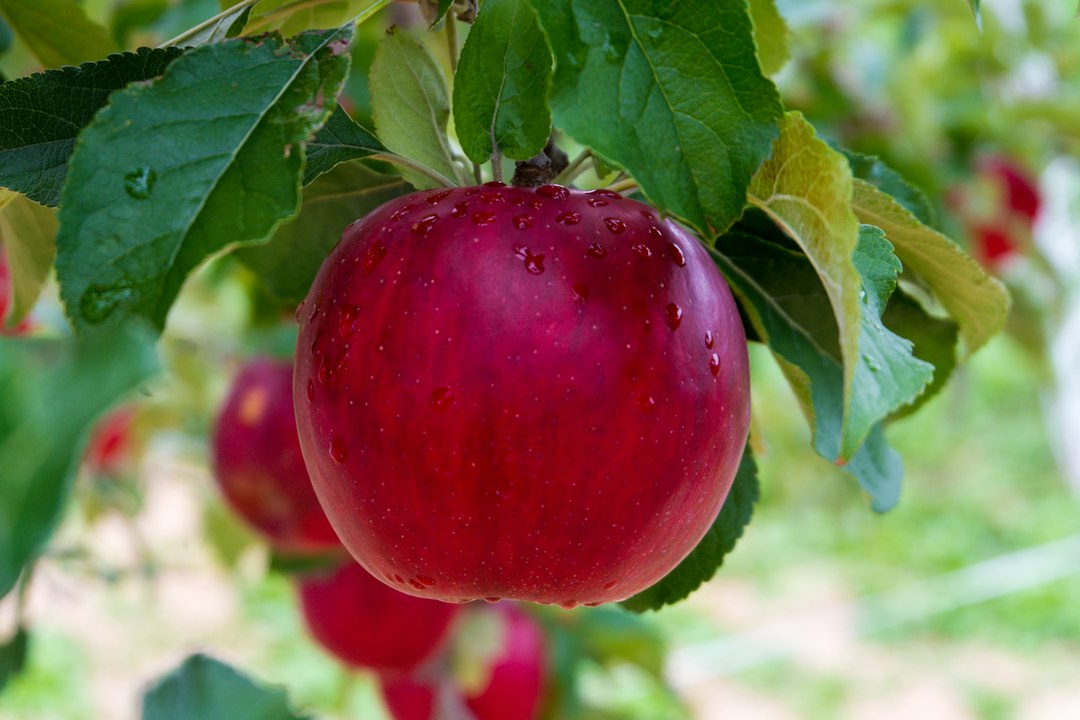
If you only have one day, go to Fujisaki Town rather than central Hirosaki — it’s the town that actually calls itself Japan’s birthplace of apple cultivation, and its back roads between Kiyomizu and Oguma are lined with orchards you can walk into without a reservation during picking season (late August through early November depending on variety). Everything else in this guide builds out from that base fact.
Where the orchards actually are
Aomori Prefecture grows roughly half of Japan’s apples, but the picking-friendly orchard villages cluster in a specific belt: Hirosaki City’s outer wards (especially the Shimizu and Sodenokawa districts), Fujisaki Town just south of Hirosaki, Kuroishi City to the southeast, and Owani Town near the hot spring of the same name. This is the Tsugaru Plain, flat and wide, with the Iwaki River cutting through it and Mount Iwaki (locals call it “Tsugaru Fuji”) sitting on the western skyline as a landmark you’ll use to orient yourself whether you’re driving or biking.
These aren’t postcard villages with gates and gift shops lining a single street — they’re working agricultural communities. You’ll see corrugated-metal storage sheds, irrigation ditches, and farmers on three-wheeled utility carts moving crates of apples. That’s the actual texture of the place, and it’s worth knowing in advance so you don’t expect a theme-park version of “orchard village.”
Getting there without a car
From Shin-Aomori Station, take the JR Ou Main Line to Hirosaki Station (about 35–40 minutes, local or rapid service, roughly 680 yen). From Hirosaki Station’s east exit, the Konan Railway Konan Line runs to Kuroishi Station in about 32 minutes (820 yen one-way), passing directly through orchard country — sit on the right side for the best views of Iwaki-san over the trees. For Fujisaki, Konan Railway’s other branch (the Oume Line, confusingly also departing from Hirosaki) stops at Kido and Fujisaki stations in under 20 minutes.
If you want to actually walk into orchards rather than just see them from a train window, you need a bicycle or rental car. Hirosaki Station’s tourist information counter (inside the station building, open 8:45am–6pm) rents bicycles for 500 yen a day, and from there it’s a flat 25–35 minute ride out to the orchard zones near Shimizu. There’s no steep terrain anywhere in this region, which makes it genuinely one of the easier cycling day trips in Tohoku.
Hirosaki Apple Park (Ringo Koen)
This is the single best orientation point before you go further into the villages. Hirosaki Apple Park, about 6km southwest of Hirosaki Station in the Shimizu area, has roughly 1,300 apple trees across 65 varieties planted on a hillside with Iwaki-san behind it. Entry to the grounds is free; picking costs extra depending on season and variety, typically 200–300 yen per apple or a flat picking course around 500–800 yen including a few apples to take home. It’s open daily, 9am–5pm (last entry 4:30pm), closed only in deep winter months when there’s nothing on the trees anyway. There’s a restaurant on site serving apple curry and apple pork cutlet, which sounds like a gimmick until you actually taste how the tartness cuts the fat — it works.
Picking season and variety timing
This matters more than most tourist guides let on, because “apple picking in Aomori” spans nearly three months and the experience changes completely depending on when you go:
- Late August–early September: Tsugaru variety, sweet and crisp, often the first to ripen and the easiest for casual pickers since the trees are lower-branched in most orchards
- Mid-September–October: Jonagold and Mutsu, larger fruit, good for people who want fewer apples but bigger ones
- Late October–November: Fuji, the variety most people outside Japan actually recognize by name, and the one that keeps best if you’re shipping some home
Farms rarely advertise exact picking windows online in English, so if you’re booking through a minshuku or local tourism office, ask specifically which variety is currently ready — a farm might be between harvests for a week or two even in peak season.
Kuroishi: the quieter alternative
Kuroishi City gets a fraction of Hirosaki’s tourist traffic, but its Nakamachi area has a row of Edo-period merchant buildings with covered wooden walkways (kozuriyose) that’s worth combining with an orchard visit, since the Konan Line drops you right at Kuroishi Station. Several small family orchards around the Oshirakawa district here will let you pick informally if you ask at the farm stand out front — this is not an organized tourist activity, it’s literally knocking on a farmhouse door, and prices are negotiated on the spot, usually a few hundred yen for a bag you fill yourself. Bring cash; nobody out here takes IC cards or credit cards.
Where to eat and what to buy
Skip the generic souvenir shops near Hirosaki Station and go to A-FACTORY in Aomori City (a 5-minute walk from JR Aomori Station, open 9am–7pm) for apple cider, apple wine, and a genuinely good apple pie counter where you can watch them bake in an open kitchen — a slice runs about 450 yen. In Hirosaki itself, Fujita Kinenteien (Fujita Memorial Garden) has a café that does a simple apple pie with vanilla ice cream for around 600 yen, and it’s a nice stop if you’re already walking between Hirosaki Castle and the orchard-bound bike route. For raw apples to take home, roadside direct-sale stands (chokubaijo) along Route 7 near Fujisaki sell irregular or slightly blemished “wake-ari” apples in bulk bags for far less than supermarket prices — often 500–1,000 yen for a bag that would cost three times that in Tokyo.
Staying overnight in the orchard villages
There’s no hotel district out here — your options are a handful of minshuku (family-run guesthouses) in Fujisaki and Owani that double as working farms, plus the hot spring ryokan cluster around Owani Onsen, a 10-minute local train ride from Hirosaki on the Ou Main Line. Owani’s baths are genuinely therapeutic after a day of walking orchard rows, and several ryokan there serve apple-based desserts with dinner as a matter of local pride rather than tourist theater. Expect 8,000–15,000 yen per person with two meals included, which is normal ryokan pricing for this region and noticeably cheaper than equivalent stays near more famous onsen towns.
One practical caveat before you go
Weekday versus weekend matters enormously here in a way it doesn’t in cities. On weekdays, especially outside the Fuji-harvest peak of late October, you may find orchards with nobody around to ask about picking — farmers are out working other fields, and there’s no staffed reception the way there would be at a tourist facility. Call ahead if possible, or go on a weekend when farm stands are more reliably staffed, or default to Hirosaki Apple Park, which is the one spot in the whole region guaranteed to be open and staffed regardless of the day of the week.
Photo by Fumiaki Hayashi on Unsplash