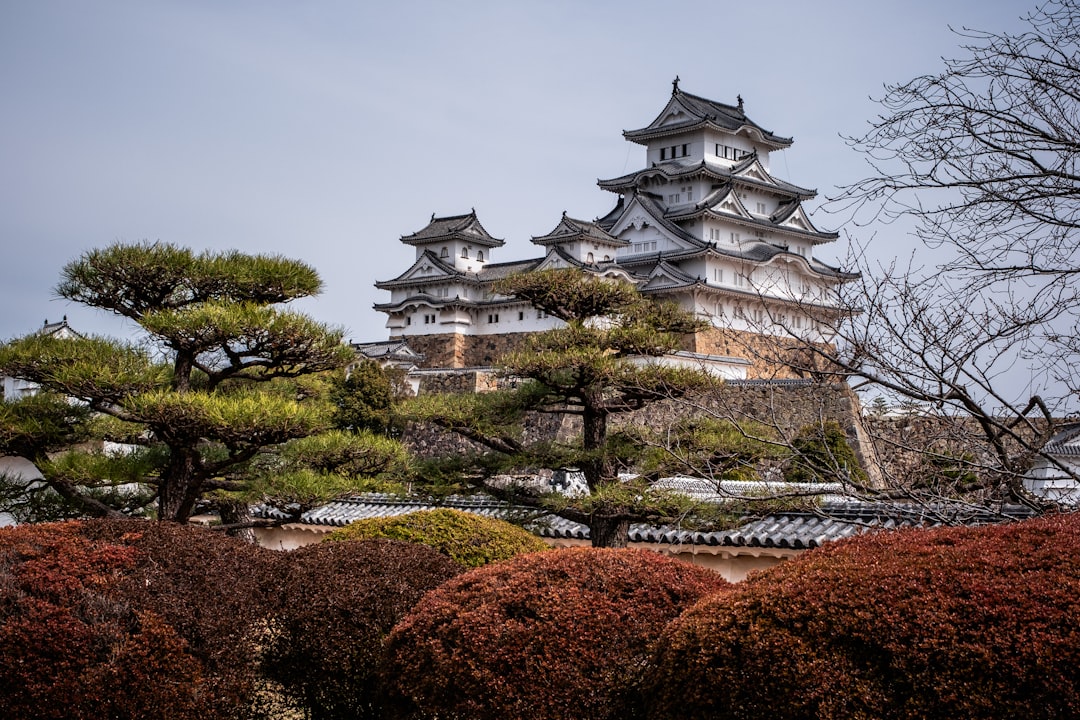

Photo by Sue Winston on Unsplash
Why Himeji Castle Deserves a Spot on Your Japan Itinerary
Himeji Castle, often called the “White Heron Castle” because of its elegant white plaster walls and bird-like silhouette, is Japan’s most magnificent surviving feudal fortress. Unlike many of Japan’s castles, which are modern concrete reconstructions, Himeji Castle retains its original wooden structure dating back centuries, earning it status as a UNESCO World Heritage Site and a National Treasure. If you are planning a trip to the Kansai region, this guide will walk you through everything you need to know before you arrive, from entrance procedures to insider tips that will make your visit smoother and more memorable.
Getting to Himeji Castle
Himeji Castle is located in Himeji City, Hyogo Prefecture, and is remarkably easy to reach thanks to Japan’s efficient rail network. The castle sits roughly a 15 to 20 minute walk straight north from Himeji Station, which is served by both the JR Sanyo Shinkansen and local JR lines. If you are traveling from Osaka, Kyoto, or Kobe, a direct train ride takes between 30 minutes and just over an hour depending on the service you choose.
For travelers who prefer not to walk, a loop bus departs from the station and drops passengers near the castle’s main gate for a small fare. However, most visitors find the walk enjoyable, as the wide boulevard leading from the station frames the castle in the distance, building anticipation as you approach.
Entrance Tickets and Pricing
Purchasing your ticket is straightforward, but knowing the options in advance can save you time and money. Tickets can be bought at the ticket booth near the main gate, and combination tickets that include nearby Koko-en Garden are available at a discounted rate compared to buying separately. If you plan to visit both attractions, the combo ticket is almost always the better value.
- Standard admission covers entry to the castle keep and main grounds.
- Combination tickets with Koko-en Garden offer savings for those interested in traditional Japanese landscaping.
- Discounts are typically available for children, students, and seniors with valid identification.
- Large groups may qualify for reduced group rates, so inquire in advance if traveling with a tour.
It is worth noting that ticket prices and hours can change, so checking the official Himeji Castle website before your trip is always recommended for the most current information.
Best Times to Visit
Himeji Castle is a popular destination year-round, but timing your visit strategically can dramatically improve your experience. The castle grounds are stunning in every season, but each brings its own character.
Spring
Cherry blossom season transforms the castle grounds into a pink-and-white wonderland, with hundreds of sakura trees framing the white walls. This is by far the most crowded period, so arriving early is essential.
Autumn
Fall foliage offers a similarly beautiful but slightly less crowded alternative, with warm-toned leaves contrasting against the white exterior.
Summer and Winter
Summer visits require preparation for heat and humidity, while winter offers the thinnest crowds and occasionally a dusting of snow that makes for spectacular photographs.
Regardless of season, arriving right at opening time is the single best strategy for avoiding tour bus crowds that tend to arrive mid-morning. Weekday visits are also noticeably quieter than weekends and holidays.
Navigating the Castle Grounds
Once inside the main gate, you will pass through a maze-like series of gates and pathways that were intentionally designed to confuse and slow down invading armies. This defensive design is one of the castle’s most fascinating features, and it is easy to see why Himeji Castle never fell under attack.
As you make your way toward the main keep, take time to appreciate the stone walls, which display different construction techniques from various historical periods. Information plaques along the route, many with English translations, provide helpful context.
Inside the Main Keep
The interior of the main keep consists of six stories connected by steep wooden staircases. These original stairs are narrow and steep, so comfortable, sturdy shoes are strongly recommended. Visitors are required to remove their shoes at the entrance to the keep and carry them in a provided bag while exploring, so wearing socks without holes and shoes that slip on and off easily will make your visit far more pleasant.
Inside, you will see wooden storage racks for weapons, defensive architecture like stone-dropping holes, and displays explaining the castle’s samurai history. The top floor rewards visitors with panoramic views over Himeji City.
Practical Entrance Tips for a Smooth Visit
Having guided countless first-time visitors through Japan’s castles, here are the tips that make the biggest difference at Himeji Castle specifically.
- Arrive at opening time whenever possible, especially during cherry blossom season or major holidays, to avoid long queues at the ticket booth and inside the keep itself.
- Wear slip-on shoes since you will remove them before entering the main keep, and steep original staircases require both hands free, so a backpack is more practical than a shoulder bag.
- Bring water, particularly in summer, as the climb through the keep can take over an hour and there is limited shade once you are inside the stone walls.
- Allow at least two to three hours for a thorough visit, including time for the castle keep, surrounding grounds, and optionally Koko-en Garden next door.
- Check for last entry times, as many visitors mistakenly assume they can enter right up until closing, when in fact last admission is typically earlier than the closing time.
- Photography is allowed throughout most of the grounds and interior, though tripods and selfie sticks may be restricted in crowded areas for safety reasons.
- Restrooms and lockers are available near the entrance, so consider storing heavy luggage before you begin your visit since there is nowhere to store bags once inside the keep.
Nearby Attractions Worth Combining
Since you have made the trip out to Himeji, it is worth extending your visit to include a few nearby sites. Koko-en Garden, located just west of the castle, is a beautifully designed Edo-period style garden divided into nine separate walled sections, each with its own theme. It pairs perfectly with a castle visit and rarely feels crowded even when the castle itself is busy.
History enthusiasts might also enjoy the Hyogo Prefectural Museum of History, located a short walk from the castle, which offers deeper context on the castle’s construction and the broader feudal history of the region.
Accessibility Considerations
It is important to note that due to the castle’s historic wooden construction, the main keep is not wheelchair accessible, and the steep original staircases can be challenging for visitors with mobility limitations. However, the castle grounds and gardens outside the keep are largely accessible, and there is still much to appreciate even if you are unable to climb to the top floor.
Final Thoughts
Himeji Castle is one of those rare destinations that lives up to the hype completely. Its combination of architectural beauty, historical authenticity, and dramatic setting make it an essential stop for anyone traveling through the Kansai region. By arriving early, dressing appropriately for the shoe removal policy, and planning your visit around the seasonal crowds, you will be well prepared to enjoy everything this remarkable fortress has to offer. Whether you are a history buff, an architecture enthusiast, or simply chasing the perfect photograph, Himeji Castle rewards every type of traveler who makes the journey.