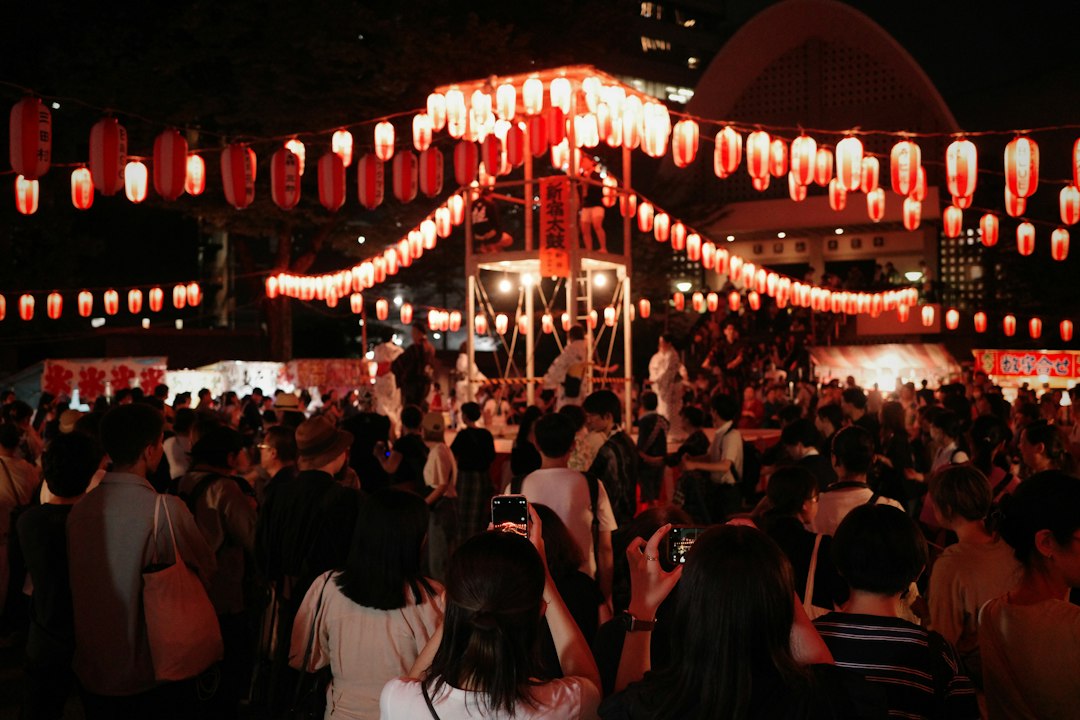
If you’re trying to time a Tohoku trip around a real festival rather than just koyo leaf-peeping, the window that matters is mid-September through the first two weeks of October — after that, most of the big matsuri wrap up and the region shifts into pure foliage-viewing mode. The five festivals below are the ones locals actually plan their calendars around, and I’ve included the station, line, and rough ride time for each because Tohoku’s rural rail schedule is the single biggest thing that trips people up.
Nihonmatsu Chochin (Lantern) Festival, Fukushima — First Weekend of October
This is the one I’d prioritize if you can only do one. Seven taikodai floats, each stacked with roughly 300 paper lanterns and a taiko drum crew riding on top, get hauled through the streets below Nihonmatsu Castle (Kasumigajo Park) after dark on the second and third nights. The light from 2,000-plus lanterns bouncing off the castle stone walls is the actual photo everyone’s chasing, not daytime shots.
Access: take the JR Tohoku Shinkansen to Fukushima Station, then transfer to the JR Tohoku Main Line local train to Nihonmatsu Station — about 20 minutes, local fare around ¥320. The parade route is a 10-minute walk from the station. Standing room along the main street is free, but reserved bleacher seating near the drum-stage area runs about ¥2,000–3,000 per person and sells out by late September, so book through the Nihonmatsu Tourism Association site in advance if you want to sit rather than stand for three hours.
Aizu Matsuri, Aizuwakamatsu — Late September
Aizu Matsuri centers on a historical procession of roughly 500 participants in Edo-period armor, including a reenactment group representing the Byakkotai, the teenage samurai corps who died defending Aizuwakamatsu during the Boshin War. The procession moves down Oumachi-dori starting around 12:30pm on the main day, with mounted riders and portable shrines passing directly in front of Tsuruga Castle’s outer moat.
Access: JR Ban-etsu West Line from Koriyama Station to Aizuwakamatsu Station, about 65 minutes, roughly ¥1,170 one-way on a local/rapid service. The castle and parade route are a 20-minute walk or a short ride on the Haikara-san loop bus (¥210 flat fare, runs every 30 minutes) from the station’s east exit.
Morioka Hachimangu Shrine Autumn Festival, Iwate — Mid-September
Smaller in scale than Aizu or Nihonmatsu but worth catching if you’re already routing through Morioka. The shrine holds yabusame (mounted archery) on the second day and runs a three-day stretch of mikoshi processions through the surrounding neighborhood, with food stalls lining the approach road selting grilled Iwate beef skewers for around ¥500.
Access: Morioka Hachimangu is about a 25-minute walk from JR Morioka Station’s east exit, or a 10-minute ride on the Densha-dori bus line (¥180) toward Hachimancho. The shrine itself has no admission fee; the yabusame viewing area near the archery track fills up fast, so arrive at least 40 minutes before the 1pm start.
Osorezan Autumn Grand Festival (Aki Mairi), Aomori — Mid-October
This one is genuinely different from a typical matsuri — it’s held at Osorezan, the volcanic lakeside temple on the Shimokita Peninsula that’s associated with communicating with the dead. During the autumn session, itako (blind spirit mediums) set up in small tents on the temple grounds and perform kuchiyose, a ritual channeling of the deceased, for visitors who book a short session (cash only, typically ¥3,000–5,000, paid directly to the medium).
Access: from Shimokita, take a bus from Mutsu Bus Center to Osorezan — about 45 minutes, roughly ¥800 one-way, with only a handful of departures per day during the festival period, so check the Shimokita Kotsu timetable before you go rather than assuming you can just show up. The sulfur smell and the field of pinwheels left for deceased children make this one of the more unusual sites in Tohoku regardless of festival timing.
Kakunodate Matsuri, Akita — Early September
Technically straddles late summer into early autumn, but it’s grouped with the autumn festival circuit locally because it marks the start of the harvest-festival season. Nine ornately carved yama floats are pulled through the samurai district by neighborhood teams, and on the final night two floats deliberately collide — a ritual called butsukari — at the intersection near Hiyama-dori, with crews pushing against each other for position rather than giving way.
Access: Kakunodate Station sits on the Akita Shinkansen, about 45 minutes from Akita Station or roughly 90 minutes from Morioka Station. The float collisions happen after 9pm near the old samurai residences on Shimo-Shinmachi; get there by 8pm if you want a sightline, since the street is narrow and crowds pack in tight.
Combining Festivals With Autumn Leaves
Because these matsuri cluster in September and early October, you can realistically pair one with early-stage koyo at higher elevations. Zao’s ropeway area in Yamagata typically turns color from late September, about two to three weeks ahead of the valleys below, so a Yamagata-based trip can catch both the Shinjo area harvest events and early foliage on the same loop. Oirase Gorge in Aomori usually peaks mid-to-late October, which lines up well with a visit timed around Osoregawa’s October festival if you’re already in the Shimokita/Aomori area.
A Few Things That Will Actually Trip You Up
September in Tohoku still overlaps with typhoon season, and outdoor processions like Aizu Matsuri and Nihonmatsu’s lantern parade get postponed by a day or outright canceled in heavy rain — check the host city’s official tourism Twitter/X account the morning of, not just the printed schedule, since English-language sites are rarely updated same-day. Shinkansen seats on the Tohoku line fill up fast on festival weekends themselves (particularly the Aizu Matsuri weekend, since it overlaps with regular autumn leisure travel), so reserve seats at least two weeks out if you’re traveling on a Friday or Saturday. And if you’re doing the Osorezan itako sessions, bring exact cash in small bills — there’s no card payment and change is often limited at the smaller tents.
Photo by Satoshi Nitawaki on Unsplash