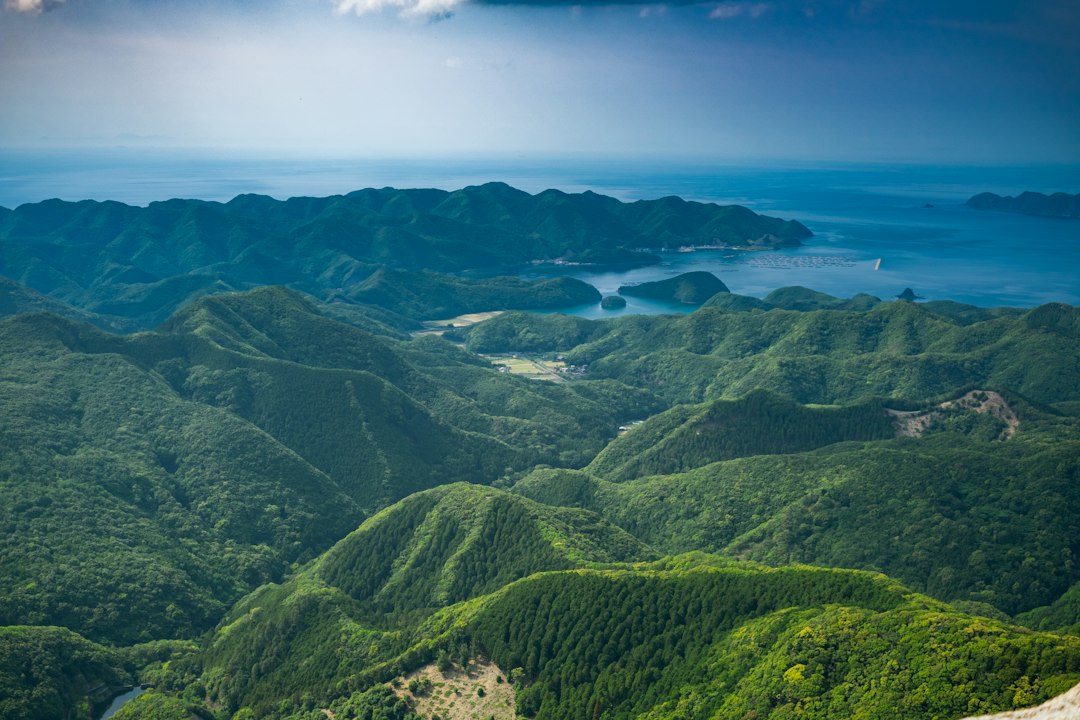
Kyushu carries four separate UNESCO World Heritage designations, and they’re spread across five prefectures with wildly different logistics — one requires a two-hour jetfoil ride, another is a ten-minute walk from a tram stop, and one of them you technically can’t set foot on at all. If you’re trying to plan an actual itinerary rather than just read a list, here’s what each site really involves: how to get there, what it costs, and what trips you upward.
The four designations are: Yakushima (natural heritage, inscribed 1993), Sites of Japan’s Meiji Industrial Revolution: Iron and Steel, Shipbuilding and Coal Mining (cultural, 2015, with components scattered across Nagasaki, Fukuoka, Saga and Kumamoto), Hidden Christian Sites in the Nagasaki Region (cultural, 2018), and Okinoshima Island and Associated Sites in the Munakata Region (cultural, 2017). That’s roughly 25 individual component sites if you count every shaft tower and church separately, so nobody does all of them in one trip — most visitors anchor a trip around Nagasaki city, add Kagoshima for Yakushima, and treat Munakata and the Meiji industrial sites in Fukuoka/Saga as day additions if time allows.
Yakushima: the cedar forest island
Yakushima sits off the southern tip of Kagoshima and is the reason Princess Mononoke’s forest scenes look the way they do — Studio Ghibli staff reportedly scouted Shiratani Unsuikyo ravine before production. You reach the island from Kagoshima Port’s Minami-futo terminal via the Toppy/Rocket jetfoil (about 2 hours, roughly ¥9,200–11,000 one way) or by plane from Kagoshima Airport (35 minutes, cheaper if booked on Japan Airlines’ domestic fare classes in advance). Ferries get cancelled in rough weather more often than people expect, so build in a buffer day if you’re catching a flight out afterward.
Shiratani Unsuikyo (entrance ¥500, open 8:00–16:30) is the easier moss-forest walk, about 2–3 hours round trip. The famous Jomon Sugi cedar, estimated at several thousand years old, requires a 10-hour round-trip hike from the Arakawa trailhead and a reservation for the shuttle bus there during peak season (April–November). Most people underestimate this hike; bring a headlamp regardless of your planned pace, because the last bus back from Arakawa leaves in late afternoon and missing it means a very long wait.
Hidden Christian Sites in the Nagasaki Region
This designation covers twelve separate components built around the story of Japan’s underground Christian communities who survived roughly 250 years of prohibition. The most accessible is Oura Church in Nagasaki city, a short walk uphill from the Oura Tenshudo-shita tram stop on the Nagasaki Dentetsu line (about 15 minutes from JR Nagasaki Station by tram, ¥140 per ride or a ¥600 one-day pass). It’s the oldest standing church building in Japan, admission ¥1,000, open 8:00–18:00.
The harder components to reach are on the Goto Islands and in Amakusa. Egami Church on Naru Island (Goto archipelago) requires a ferry from Nagasaki Port’s Goto terminal — the jetfoil takes about 1.5 hours (around ¥6,000–7,500), the regular ferry closer to 3.5 hours and cheaper. There’s no public transport to Egami Church itself once you land on Naru Island, so you’ll need a rental car or pre-arranged taxi. Interior visits to several of the Goto churches, including Egami, require advance reservation through the local tourism association since the buildings are still active parish churches with regular Mass schedules.
Sites of Japan’s Meiji Industrial Revolution
This is the most geographically scattered designation, with components in Nagasaki, Kitakyushu, Omuta, Saga, and even outside Kyushu in Yamaguchi and Iwate. The three most visited Kyushu components are:
- Gunkanjima (Hashima Island), Nagasaki — the abandoned concrete coal-mining island everyone’s seen in photos. You can’t walk it freely; licensed tour boats like Gunkanjima Concierge or Yamasa Kaiun depart from Nagasaki Port, cost around ¥3,600–4,500, run about 2.5 hours total with roughly 40 minutes actually on the island along a fixed walkway. Tours get cancelled for swell/wind even on days that look calm in the harbor — check the morning of, not the night before.
- Glover Garden, Nagasaki — not industrial heritage itself but tied to the same era; Thomas Glover’s residence overlooking Nagasaki Harbor. Entrance ¥620, open 8:00–18:00 (extended to 21:30 in summer for illumination nights). Reachable via the same Oura Tenshudo-shita tram stop as Oura Church, so pair the two in one afternoon.
- Yawata Steel Works, Kitakyushu — still an operating Nippon Steel plant, so you view it from a designated public viewing platform in the Higashida district rather than entering. Free, best reached from JR Yahata Station (Kagoshima Main Line) then a 10-minute walk; signage is minimal so Google Maps pinned to “Higashida Daiichi Steel Works Viewing Deck” helps.
- Miike Coal Mine and Miike Port, Omuta — the Miyanohara Pit shaft tower is the recognizable image, viewable from outside for free; it’s about a 15-minute walk from JR Omuta Station (roughly 40 minutes from Hakata on a rapid train). The adjacent Miike Coal Mine Industry and Science Museum charges a small fee and has mining equipment you can actually climb into.
- Mietsu Naval Dock Site, Saga — the least visited component by far, mostly foundation remains now, with a small museum called Sanshukan on site (free entry) a short bus ride from JR Saga Station. Worth it only if you’re already in Saga for Arita pottery or the balloon festival.
Okinoshima Island and the Munakata Shrines
Okinoshima itself, a small island off Fukuoka’s coast, is the one UNESCO site in Japan you essentially cannot visit. Historically only Shinto priests were permitted to land, under strict purification rituals, and women have never been allowed on the island at all; since the inscription, even the limited annual public landing day for male visitors has been suspended. What you can actually visit is Munakata Taisha Hetsu-miya, the mainland shrine that forms part of the same designation and houses artifacts excavated from Okinoshima’s ritual sites (many now displayed in the on-site Shimpokan treasure hall, entry ¥800, open 9:00–16:30). It’s near JR Togo Station on the JR Kagoshima Main Line, about 25 minutes from Hakata by rapid train, then a 10-minute bus or taxi ride. This is the most practical of the four designations to add as a half-day trip from Fukuoka city.
Building a realistic itinerary
Nagasaki city is the obvious base since it covers both the Hidden Christian Sites and most of the Meiji industrial components within a compact tram network. Give it two full days minimum if you want to include a Gunkanjima boat tour, since weather cancellations mean you shouldn’t schedule it on your last possible day. Kagoshima and Yakushima work as a separate southern leg, ideally three days including the ferry crossing. Fukuoka handles Munakata as an easy day trip and can tack on Kitakyushu’s Yawata viewing deck if you’re a rail or industrial-heritage enthusiast, though it’s a fairly dry stop for casual visitors — a quick photo and a read of the signage, nothing more.
One thing worth flagging before you book anything: several of the Hidden Christian church sites, including Egami Church, limit visitor numbers per day and close entirely during Mass and other religious observances, which aren’t always published in English on the main tourism sites. If a specific church is the whole reason you’re making the trip to a smaller island, email the local tourism association directly to confirm the visit is actually open that day rather than relying on the general opening hours listed online.
Photo by Nichika Sakurai on Unsplash