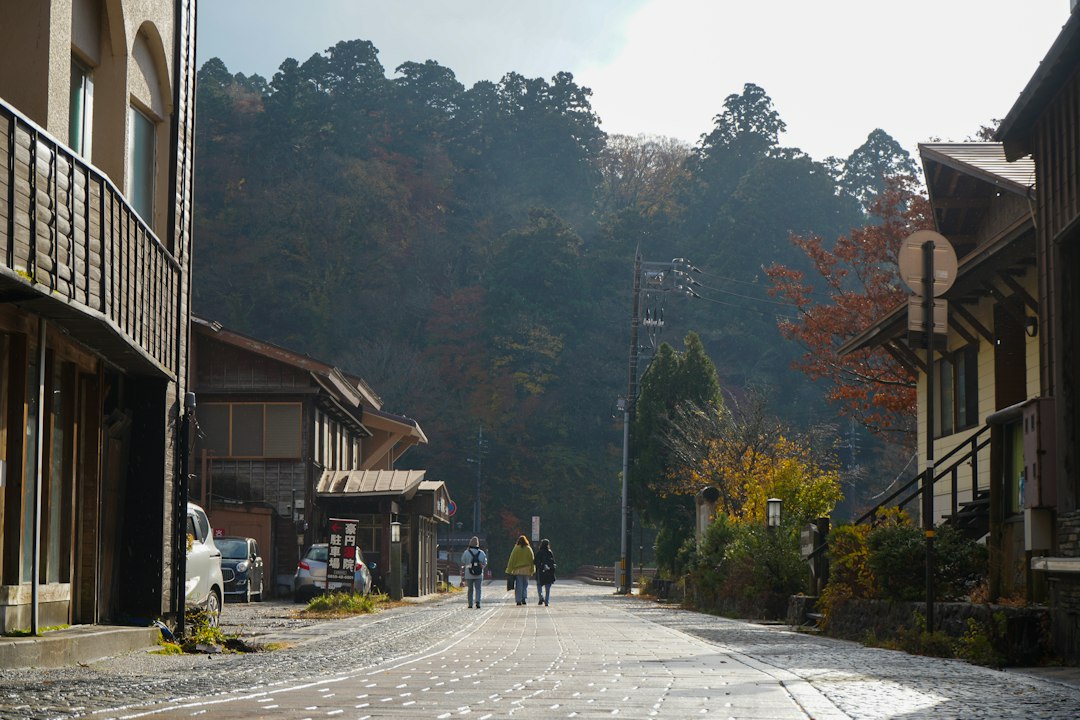
If you want genuine seclusion rather than a quiet hour between tour buses, three places in Nagano deliver it: Narai-juku on the JR Chuo Line, the Tsumago-Magome stretch of the old Nakasendo, and the hamlet cluster called Akiyama-go on the Niigata border, reachable only by an infrequent local bus from Iiyama Station. None of these require a guide or a tour package — you can do all of them by regional train, a rental car, or your own two feet — but they do require planning around bus timetables that run two or three times a day and restaurants that close by 2pm.
Why these valleys still feel cut off
Nagano is split by the Kiso, Akaishi, and Hida mountain ranges (the “Japan Alps”), and the Kiso Valley in particular sits in a narrow corridor between the Central and Southern Alps that the old Nakasendo highway had to thread through on foot. That same topography is why the Chuo Line here still runs single-track sections and why some of these post towns went decades without paved roads. Akiyama-go, further north along the Nakatsu River gorge, is even more isolated: Route 405, the only road in, is closed by snow from roughly December through April, and the hamlets have a combined population under 200.
Narai-juku: the longest post town on the Nakasendo
Narai Station sits on the JR Chuo Line between Shiojiri and Nakatsugawa. From Matsumoto Station it’s a local train ride of about 50 minutes (fare roughly ¥820); there are only about ten trains a day in each direction, so check the timetable before you go rather than assuming you can just show up. The town itself is a single preserved street just over 1km long, lined with lattice-fronted merchant houses (kirimise), lacquerware shops like Kissyoan, and the comb-maker Oroku-gushi, which has sold Kiso-style wooden combs for generations. The local brewery and tasting room near the station end of the street, Kurumaya, is usually open 9am to 5pm and pours small samples of its Kiso-brewed sake for a few hundred yen. Because Narai sits slightly off the main Tsumago-Magome tourist circuit, you can walk the whole street at dusk without passing another visitor — something that’s gotten much harder to do in Tsumago during peak autumn weekends.
Tsumago and Magome: walking between two villages frozen on purpose
Tsumago-juku enforced an ordinance decades ago banning visible power lines, vending machines, and parked cars on its main street — it’s one of the only post towns where that restriction actually held, and it shows. The nearest station is Nagiso on the JR Chuo Line (about 80 minutes from Nagoya by limited express Shinano); from the station it’s a 10-minute local bus (¥300) or a 50-minute uphill walk into town. Magome, the other end of the trail, connects instead to Nakatsugawa Station, with a 25-30 minute bus (around ¥600).
The hike between the two villages follows the original Nakasendo trail for 7.8km, climbing over the Magome Pass — figure on about three hours at an unhurried pace, including a stop at the waterfall partway along. Both tourist information offices run a same-day luggage-forwarding service for ¥1,000 per bag, but you need to drop your bag off by around 11:30am for it to arrive at the other end by mid-afternoon; miss that window and you’re carrying your own pack. For an overnight stay, the minshuku Daikichi in Tsumago runs about ¥9,500 per person with dinner and breakfast included, and like most small lodgings here, it doesn’t take online bookings — you call or fax.
Akiyama-go: if you want the real edge of the map
This is the one for people who’ve already done Tsumago-Magome and found it too polished. Akiyama-go is a string of roughly a dozen hamlets following the Nakatsu River gorge straddling the Nagano-Niigata border, inside Sakae Village. There’s no train anywhere near it. The practical route is JR Iiyama Line to Iiyama Station (itself a stop on the Hokuriku Shinkansen), then a local community bus that runs maybe two or three times a day along Route 405, taking around 90 minutes to reach the furthest hamlets. Check the current schedule at Iiyama’s tourist counter before you commit, because missing the last bus back means an overnight stay whether you planned one or not.
The reward is Kissen-no-yu, an unmanned open-air hot spring where you dig your own bathing pool into the riverbed gravel with a shovel left on site — donation box, no attendant, no schedule. A handful of family-run ryokan like Yukemuri-no-yado take guests through the snow season closure window, but from December to April, Route 405 on the Sakae side shuts down entirely and the hamlets become reachable only from the Niigata (Tsunan) side, so this is strictly a late-spring-through-autumn destination unless you’re arriving on skis.
Togakushi: a mountain shrine village 1,200m up, 55 minutes from Nagano City
Togakushi is less remote logistically but still feels like a different altitude and era. From Nagano Station, the Alpico bus toward Togakushi/Tsuzurao takes 55-70 minutes depending on the route and costs about ¥1,290 one way. The village is built around five shrine sites (Okusha, Chusha, Hokosha, Hinomikosha, and Kuzuryusha), connected by a 400-metre avenue of cedar trees estimated at 300-400 years old leading to Okusha — the walk there and back, with the shrine steps, takes a good 90 minutes round trip. Soba is the other reason to come: Togakushi grows its own buckwheat at elevation, and shops like Uzuraya serve it the old way, in woven bamboo baskets (zaru), typically open for lunch only and closed by mid-afternoon. Kagami Ike, a small pond a short walk from the main shrine road, reflects Mt. Togakushi on still mornings and is worth timing your visit around sunrise if you’re staying overnight nearby.
Where to actually sleep
Minshuku (family-run guesthouses, shared bathrooms, futons, two meals included) run ¥8,000-11,000 per person per night across Narai, Tsumago, and Togakushi. Kominka stays — whole renovated farmhouses rented out to one group — are increasingly available around the Kiso Valley and run ¥15,000-30,000 per night for up to six people, which works out cheaper than you’d expect if you’re traveling with family or friends. Whichever you book, bring cash: most of these places don’t take cards, and several don’t have a booking website at all, just a phone number listed on the local tourism association’s page.
One practical warning before you go
The thing nobody mentions in the standard write-ups: village restaurants in all four of these places genuinely close after lunch and don’t reopen for dinner, so if you’re staying somewhere without meals included, you need to buy food before 2pm or plan on vending machines and convenience store runs from the nearest larger town. Also book Tsumago or Magome accommodation two to three months ahead if you want an autumn foliage weekend — rooms in the single-digit counts per village fill up that fast, and there’s no overflow hotel district to fall back on.
Photo by Yosuke Ota on Unsplash