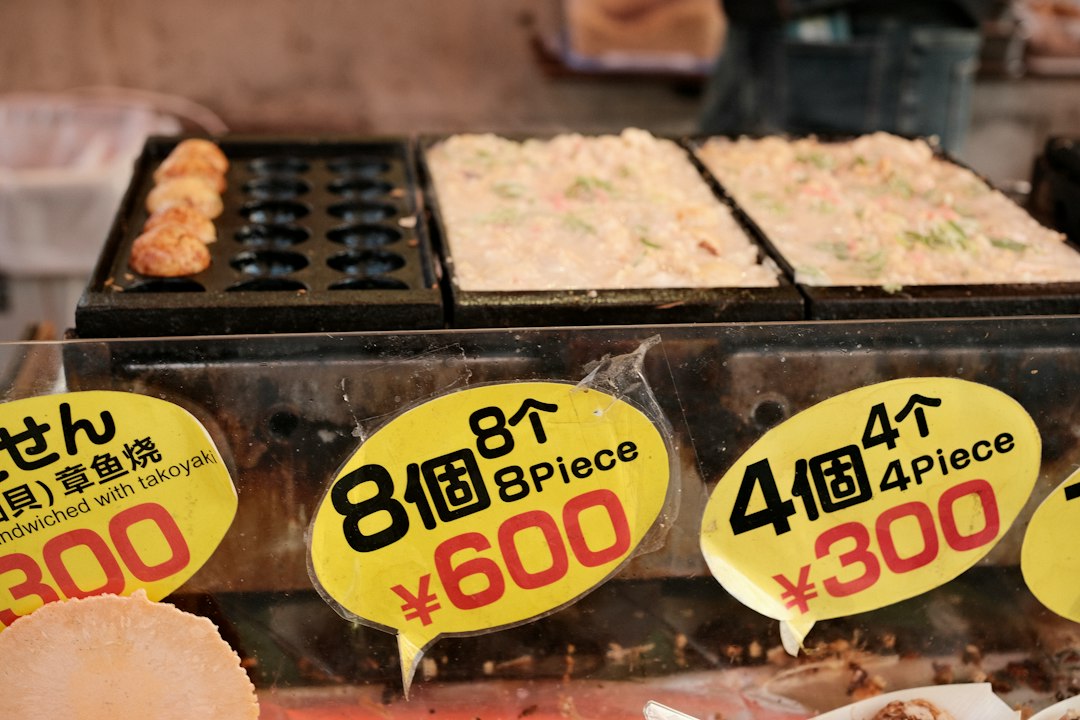
If you search “Osaka takoyaki making class,” you want three things: a real address you can walk to, a price in yen, and confirmation it’s actually worth the ¥4,000-7,000 instead of just eating takoyaki from a Dotonbori street stand for ¥500. Short answer: yes, if you pick a class that teaches the batter-to-dashi ratio and the pick-flipping technique rather than just handing you a pre-mixed batch to pour. Here’s what I found after taking two different classes in Osaka — one near Namba and one in a home kitchen in Fukushima ward.
What You’re Actually Paying For
A takoyaki stand sells you the finished ball. A class teaches you the mechanics: how dashi-based batter behaves differently from pancake batter, why the cast-iron pan (tako-yaki-ki) needs to be screaming hot before you pour, and the two-pick flip that turns a flat puddle into a round ball without it collapsing. Most tourist-facing classes run 90 minutes to 2 hours, make 20-30 pieces per person, and throw in a side dish — usually okonomiyaki or gyoza — so you’re not just eating 20 octopus balls for lunch.
Cooking Sun (Nipponbashi, Chuo-ku) — Best for Solo Travelers
Cooking Sun runs multiple daily sessions out of a studio in Nipponbashi, about a 5-minute walk from Namba Station (Midosuji, Yotsubashi, or Sennichimae lines) or from Nippombashi Station on the Sakaisuji Line. Sessions are typically offered at 10:30, 13:00, and 16:00, and they accept solo bookings, which matters because a lot of Osaka cooking classes have a two-person minimum. The takoyaki-focused course runs around ¥5,000-6,000 per person, lasts about 90 minutes, and is taught in English by staff who’ve clearly done this hundreds of times — the instructor corrects your batter consistency by touch, not just by eye. Booking is through their own website or via Klook; slots during Golden Week and New Year fill up a week or more in advance.
Uzuki Home Cooking Class (Fukushima) — Best for Small Groups
A smaller, home-style option is run out of an apartment kitchen near JR Fukushima Station on the Osaka Loop Line, about 6 minutes on foot from the station exit. Groups are capped at 6 people, which means more hands-on correction than a studio can give. The host, a longtime Osaka resident, explains the historical angle too — that takoyaki was invented in Osaka in the 1930s by a street vendor named Tomekichi Endo, originally filled with beef before octopus became standard. The class costs roughly ¥6,500 and includes miso soup and rice alongside the takoyaki, making it closer to a full meal than a snack demo. Bookings go through Airbnb Experiences, and payment is non-refundable inside 48 hours of the session.
What the 90 Minutes Actually Looks Like
- Batter prep: mixing flour, eggs, and dashi stock (not water — this is the detail that separates home attempts from the real thing) to a consistency thin enough to pour but thick enough to set within 30 seconds on contact with the hot pan.
- Pan prep: oiling every hole of the cast-iron plate with a brush, then pouring batter to overflow each hole slightly — this overflow becomes the crust you fold in later.
- Filling: dropping in diced octopus (tako), tenkasu (tempura scraps), beni shoga (pickled red ginger), and chopped green onion before the batter sets.
- The flip: using two metal or bamboo picks to rotate each ball a quarter turn as the edges firm up, pulling in the overflow batter to build a sphere — this is the part everyone fails at first and laughs about.
- Finishing: brushing with takoyaki sauce, a zigzag of Kewpie mayonnaise, dried bonito flakes (katsuobushi) that visibly move from the heat, and aonori seaweed powder.
Group vs. Private, and Whether It’s Worth the Upcharge
Group classes (4-8 people) run cheaper per head, usually ¥4,000-5,500, but you’ll be sharing one or two pans, meaning more waiting and less individual correction. Private sessions, which some operators like WAK Japan offer on request, run ¥8,000-12,000 per person but give you a dedicated pan and instructor attention the whole time — worth it if you’re traveling with kids who’ll otherwise get bored waiting for a turn. If budget is the main constraint, the group class at Cooking Sun gives the best ratio of hands-on time to price I’ve found.
Getting There and Timing It Around Dotonbori
Most classes cluster around Namba and Shinsaibashi because that’s where the tourist foot traffic already is — meaning you can combine a morning class with an afternoon walk through Dotonbori to compare your homemade batch against famous stands like Takoyaki Doraku Wanaka or Kukuru. If you’re staying near Umeda, the Midosuji Line gets you to Namba in about 12 minutes for roughly ¥280, so it’s not worth ruling out a Namba-based class just because your hotel is north of the river.
What Nobody Tells You Before You Book
Takoyaki batter is egg- and wheat-based, and most studios use bonito-based dashi, so if you’re vegetarian or have a shellfish/seafood restriction, email ahead rather than assuming substitutions exist — some places can swap octopus for cheese or corn, but not all advertise it. Also, the cast-iron pans stay hot for the entire session, and burns from oil splatter are common enough that most instructors hand out aprons but not oven mitts, so wear sleeves you don’t mind getting a little oil on. Lastly, many listings on Klook and Airbnb show availability that isn’t live-updated; if a slot looks open three days out, confirm by message before planning your whole afternoon around it — I’ve had one session rescheduled last-minute because the studio double-booked a time slot during a holiday weekend.
Photo by Perry Merrity II on Unsplash