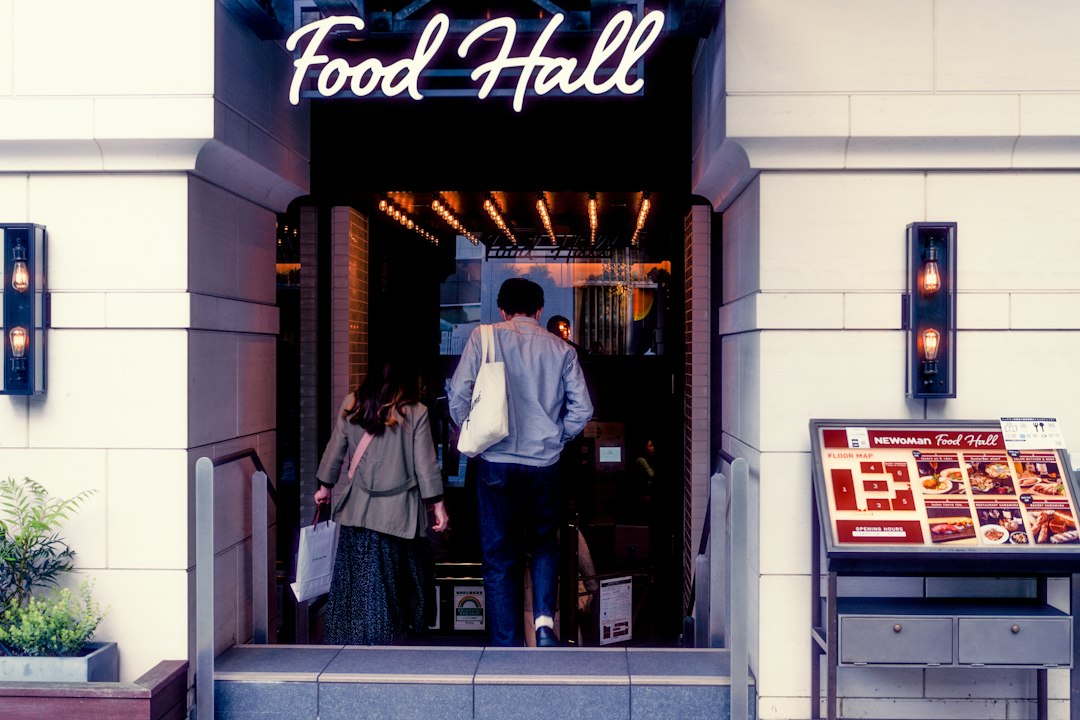
The Hanshin Umeda Main Store depachika sits directly below Osaka Metro’s Umeda/Higashi-Umeda Station exit, one level down from the Hankyu Umeda food hall everyone already knows about, and it’s the one locals actually use for weeknight dinner shopping. If you only have time for one basement food floor in Umeda, go here first for the bento and prepared-food selection, then walk the five minutes to Hankyu for sweets if you still have room in your bag.
Location, Hours, and How to Get There
The store is at 1-13-13 Umeda, Kita-ku, directly connected underground to Osaka Metro Midosuji Line and Tanimachi Line’s Umeda/Higashi-Umeda Station — you can walk from the ticket gates to the food floor without going outside, which matters on a rainy Osaka afternoon. JR Osaka Station is about a 5-minute walk through the underground Diamor Osaka passage, and Hankyu Umeda Station is roughly 3 minutes on foot. The food basement (B1 and B2) is generally open 10:00 to 20:00, though a handful of prepared-food counters stay open until 20:30. Go on a weekday around 16:00 if you want to browse without shoulder-to-shoulder crowds; after 18:30 it fills up fast with people grabbing dinner on the way home, and after 19:00 the discount stickers start appearing on bento boxes.
Why This Depachika Is Different From Hankyu’s
Hankyu Umeda’s basement, a few minutes’ walk away, leans heavily into luxury sweets and imported chocolate brands aimed at gift-giving. Hanshin’s version is more of a working person’s food floor — bigger ratio of izakaya-style osouzai (prepared side dishes), fresh bento, and grocery items, with fewer tourists stopping to photograph displays. The building itself was rebuilt and the food hall reopened with roughly double its old footprint across two basement levels, so even with the dinner rush it doesn’t feel as cramped as the older Hankyu layout.
Floor Layout: B1 vs B2
B2 is the fresh and prepared food level — bento boxes, sushi, deli counters, grilled items, and the main sweets corridor. B1 handles groceries, bread, drinks, and a row of takeaway stalls near the escalators leading up to the main floors and down to the Midosuji Line concourse. If you’re short on time, B2 is where you want to spend most of it; B1 is worth a quick pass mainly for bread and drinks to go with whatever you bought downstairs.
Shops Worth Seeking Out
- Yoshino Sushi Honten — an Osaka hako-zushi (pressed box sushi) shop with roots going back to the Edo period; their boxed sets run about 1,500–3,000 yen and keep well for a few hours, which makes them a good pick if you’re eating later at your hotel.
- Jiyuken — the counter version of the old Namba curry rice shop famous for mixing the egg into the curry rather than serving it on top; a set here runs around 700–900 yen.
- Kukuru — a Dotonbori-born takoyaki chain with a stall on the food floor; 8 pieces typically cost 600–700 yen and they’re cooked fresh to order rather than sitting under a heat lamp.
- Mon Cher — the Kobe brand behind the Dojima roll cake; the plain roll is around 1,500 yen and usually has a short line around midday.
- Hanshin Tigers food corner — since Hanshin owns the Tigers baseball team, there’s a dedicated section selling Tigers-branded curry in a can, sembei, and canned beer sets; it’s a genuinely local souvenir angle you won’t find at Hankyu or Daimaru.
- Aizuya — a grilled-squid and seafood deli counter good for a quick skewer to eat standing near the stall, priced mostly under 500 yen per item.
What to Actually Buy
Bento boxes here run roughly 800–1,800 yen depending on whether you get a simple makunouchi box or one of the seafood-heavy options. The osouzai counters sell things by weight or per small container, usually 300–700 yen, which is the better move if you want to sample three or four different dishes rather than commit to one full bento. If you’re building a picnic for Nakanoshima Park or Osaka Castle Park, grab bread from the B1 bakery section, a couple of osouzai containers, and a drink from the B1 beverage aisle — the store will usually give you a bag that keeps everything together without crushing it on the subway ride.
Eating On-Site vs Taking It Away
Unlike some depachika, Hanshin doesn’t have a large dedicated eat-in food court on the food floor itself — most people buy here and eat elsewhere, either at home, in a hotel room, or on one of the benches near the Umeda underground concourse. If you want to eat immediately, there are a few standing-counter spots near the takoyaki and grilled-squid stalls where you can eat while standing, but don’t expect table seating. For actual seated dining, the upper floors of the Hanshin building and the connected Hankyu/HEP area have restaurant floors if you’d rather sit down.
Timing Tips and Practical Warnings
Discount stickers on bento and prepared food generally start appearing from around 18:30–19:00 and get steeper closer to closing, but by 19:30 the most popular items — the better sushi sets and the Tigers curry cans during baseball season — are usually already sold out, not discounted. If you’re after a specific item, go earlier in the day rather than hunting for a bargain late. Cash still works everywhere, but most counters now also take IC cards (ICOCA/Suica) and major credit cards, which wasn’t universally true a few years ago. Bags and backpacks get crowded fast in the narrow aisles during the 17:00–19:00 rush, so if you’re carrying luggage — common for travelers heading to Osaka Station right after — it’s easier to shop on the B1 level first, where the aisles near the grocery section are a bit wider than the packed B2 bento corridor.
Photo by ayumi kubo on Unsplash