If you’re searching for a “Circle K Sunkus meal guide,” the first thing you need to know is that the chain as a unified national brand doesn’t really exist anymore. Circle K Sunkus Co. merged into FamilyMart starting in 2016, and by around 2018 nearly every Sunkus-branded store in Japan had been repainted as a FamilyMart, down to the shelf layout and the fried chicken counter. What survives under the actual “Circle K” name today is a cluster of stores concentrated in the Tokai region — Aichi, Gifu, Mie, Shizuoka, and parts of Nagano — because the Circle K license in that area was held separately from the Sunkus side of the business before the FamilyMart merger. So this guide covers two things: how to actually find a working Circle K store, and what to eat there if you do, since the food lineup is a hybrid of old Sunkus-era items and newer FamilyMart-style stock.
Where Circle K Stores Still Operate
Nagoya is your best bet. There’s a cluster of Circle K locations around Sakae, including one on a side street off Otsu-dori about a five-minute walk from Sakae Station (served by the Higashiyama and Meijo subway lines). Outside the city, Circle K density is higher in suburban Aichi towns like Komaki, Kasugai, and Toyota City, often as roadside stores along Route 41 or Route 155 rather than in train-station clusters. If you’re coming from Nagoya Station, the Meitetsu Komaki Line gets you to Komaki Station in about 25 minutes, and there are at least two Circle K branches within a 10-minute walk of the station exits. In Gifu and Mie, look for standalone roadside stores rather than ones attached to train stations — Circle K in this region skews toward car-accessible locations with parking lots, which is also why some branches keep shorter hours (6am–11pm) instead of 24/7.
The Hot Food Counter (Still the Main Draw)
The fried snack counter by the register is the single best reason to stop at a Circle K over a vending machine or a chain restaurant when you’re moving fast. Expect fried chicken pieces (around ¥160–¥220 each), chicken skewers on a stick (¥140–¥180), and in the surviving Tokai stores, a regional item worth trying: miso-dipped kushikatsu-style fried skewers, a nod to the Nagoya miso-katsu tradition that FamilyMart branches outside the region don’t carry. Potato items — wedges or hash-brown-style triangles — run ¥130–¥170. These are restocked in batches, usually around 11am, 1pm, and again around 6pm, so if the case looks sparse, ask the staff (“揚げたてありますか” — “do you have any fresh ones?”) rather than assuming it’s sold out for the day.
Oden Season (Late September Through March)
Like every convenience chain in Japan, Circle K runs an oden pot from early autumn to early spring. Pick your own items with tongs and a cup: daikon radish (¥90–¥120), boiled egg (¥100), chikuwa fish cake (¥90), and konjac (¥80) are the standard picks. Prices run slightly cheaper than FamilyMart’s current oden pricing in central Tokyo, which is one practical reason locals in Aichi still favor the surviving Circle K branches over the newly converted FamilyMarts nearby. The broth itself leans a touch sweeter in Chubu-region stores — a local preference, not a mistake — so if you’re used to the saltier Kanto-style broth, it’ll taste different and that’s expected.
Onigiri, Bento, and Sandwiches
Rice balls run ¥120–¥160 depending on filling; the standard tuna mayo and salted salmon are always in stock, with regional items like hoba miso (a Gifu/Nagano miso variant) showing up seasonally in stores closer to the Nagano border. Bento boxes range from ¥430 for a basic karaage-and-rice box to around ¥650 for a grilled fish or tonkatsu set. Sandwiches are priced ¥280–¥430, with the egg sando (thick-cut, mayo-heavy) being the most consistent across every branch I’ve checked. None of these have English labeling in the smaller roadside stores, so if you’re avoiding a specific allergen, it’s worth using a translation app on the ingredient list on the back rather than guessing from the photo on the wrapper.
Drinks and the Coffee Machine
Circle K’s self-serve coffee machine (look for the red-and-white unit near the register) charges ¥100 for a small (S) hot or iced coffee and ¥150 for a medium (M) — noticeably cheaper than a canned coffee from the fridge case, which runs ¥130–¥160. You grab an empty cup at the counter, pay first, then fill it yourself at the machine; staff will point you to it if you look confused, which almost every first-time visitor does. Soft drinks and canned alcohol in the cooler are standard convenience-store pricing: ¥150–¥200 for a 500ml bottle, ¥220–¥280 for a 350ml beer can, with ID checks enforced via a touchscreen prompt even if you’re obviously not a teenager.
Instant Noodles and the Hot Water Station
Every Circle K I’ve used still has the hot water dispenser next to the register for cup noodles (¥150–¥230 depending on brand). This is genuinely one of the most useful features of any conbini when you’re traveling with a tight schedule — grab a cup noodle, have it filled in under a minute, and eat standing at the small counter by the window that most Tokai-region stores still have (a feature some newer FamilyMart remodels have removed in favor of more shelf space).
Payment and Practical Ordering Tips
- IC cards (Manaca in the Nagoya area, or Suica/Pasmo from elsewhere) work at self-checkout and the register — tap before the cashier rings up the hot food separately.
- Hot food counter items are usually ordered by pointing or saying the item name plus “onegaishimasu”; staff will tong it into a paper sleeve for you.
- Microwave use for bento boxes is free and self-service at most branches — look for the microwave near the magazine rack, not behind the counter.
- Smaller roadside Circle K stores in Gifu and Mie may close earlier (often 11pm) than you’d expect from a “convenience store,” so don’t assume 24-hour service outside the Nagoya city core.
Circle K vs. the FamilyMart That Replaced It
If you walk into a store that used to be Sunkus and is now FamilyMart, the food lineup has shifted toward FamilyMart’s national private-label items — their Famichiki fried chicken, their own bento branding — and the regional Tokai specialties mentioned above (miso oden broth, hoba miso onigiri) have mostly disappeared in favor of standardized nationwide stock. So if the regional flavor is what you’re after, you genuinely need to seek out one of the remaining true Circle K locations rather than any store with a Sunkus-era building that’s since been repainted.
One Practical Warning Before You Go Looking
Map apps are not reliable here. Google Maps and Apple Maps frequently mislabel former Sunkus locations as “Circle K” even though the physical store has operated as a FamilyMart for years, because the listing data was never updated after the 2016–2018 rebrand. Before making a special trip to a pinned “Circle K” location, check the Street View image if available, or just call ahead — it takes thirty seconds and saves you a wasted walk in July heat. The real, functioning Circle K stores are reliably clustered in the Tokai region as described above; outside Aichi, Gifu, Mie, Shizuoka, and Nagano, treat any “Circle K” map pin with suspicion.
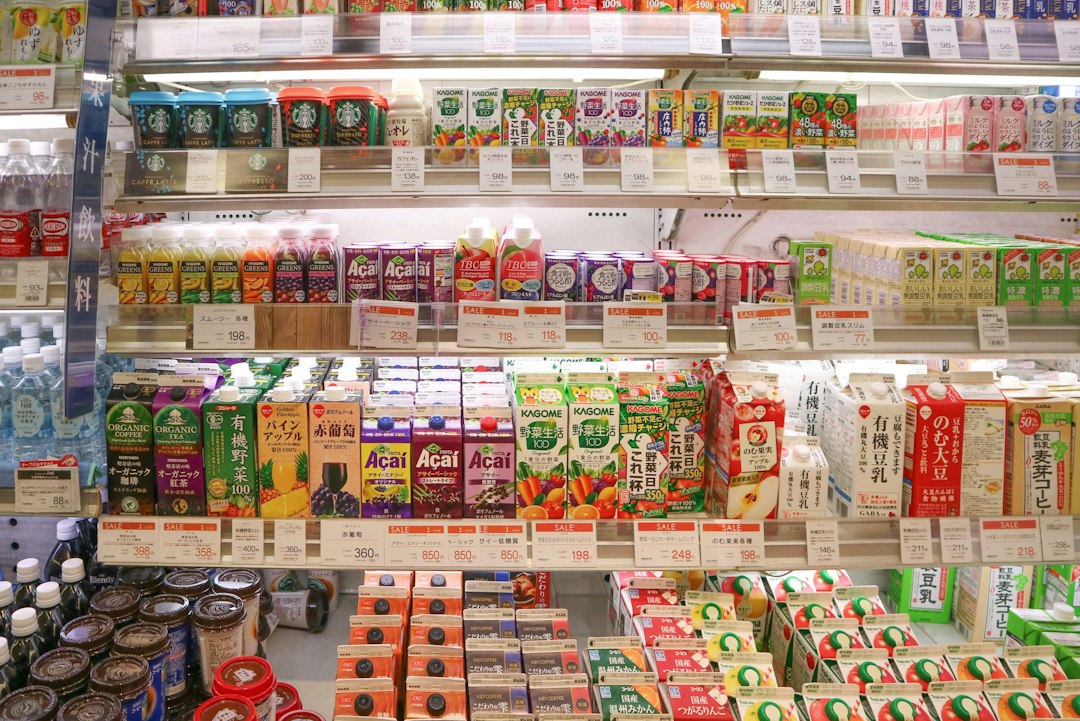
Photo by Joan Tran on Unsplash