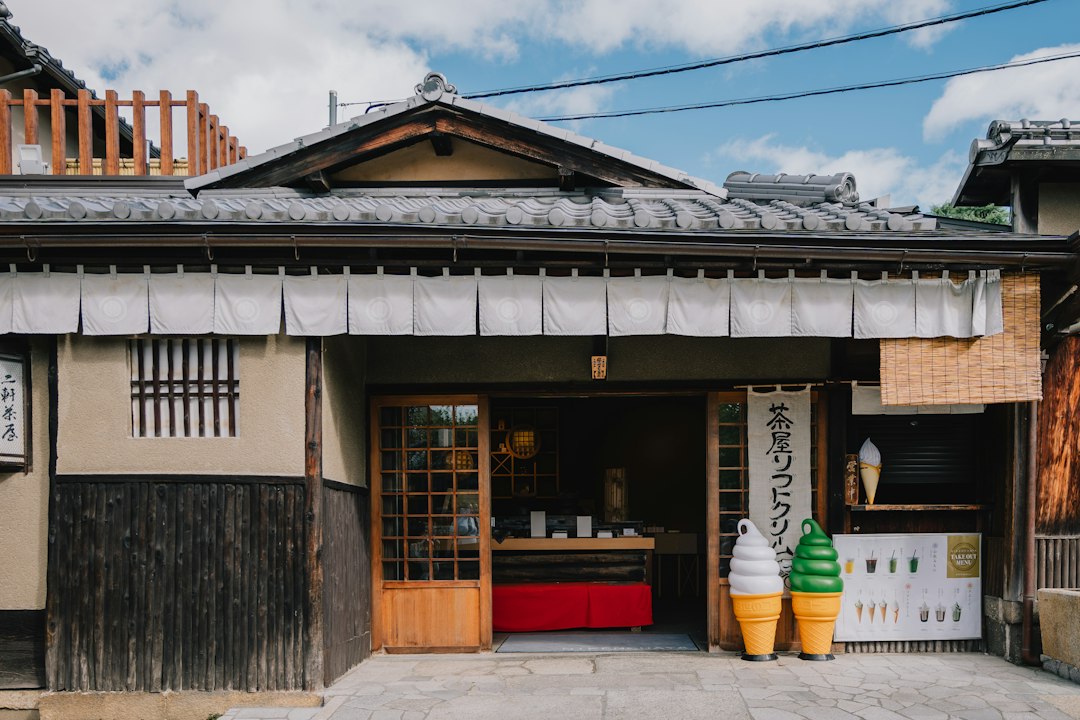
If you only remember one thing: Ministop is the only major convenience chain in Japan where staff hand-make your dessert to order at the counter, not pull it pre-packaged from a freezer case. Look for the words “ソフトクリーム” (soft cream) or “ハロハロ” (Halo Halo) on the backlit menu board above the register — that’s your signal this particular branch has the machine running, because not every Ministop does (more on that caveat below).
Why Ministop Is Different From Lawson, 7-Eleven, and FamilyMart
Lawson and 7-Eleven sell excellent packaged sweets — Lawson’s Uchi Café roll cakes are genuinely good — but you’re buying something made in a factory that morning and chilled in a case. Ministop built its brand around in-store food service since the 1980s, with a soft-serve machine and a small eat-in counter (usually four to eight stools) tucked near the window. You order at the till, pay ¥200–¥390 depending on size, and the clerk pours it fresh in front of you. That’s the whole reason to seek this chain out specifically rather than grabbing dessert at whichever conbini is closest.
The Core Menu: What to Actually Order
Halo Halo
This is Ministop’s signature, adapted from the Filipino shaved-ice dessert and sold here since the late 1990s. The standard version layers shaved ice, soft serve, azuki red bean, and small jellies for around ¥390. Rotating flavors — ube purple yam is the most requested, followed by mango in summer — show up as limited runs, usually announced with a small paper poster taped to the freezer case rather than on the main digital board, so it’s easy to miss if you don’t look down.
Soft Cream (Soft Serve)
Plain vanilla runs about ¥200 for a regular cone, with a “mix” (vanilla-chocolate swirl) around ¥230. In autumn, the purple sweet potato (murasaki imo) soft cream using Naruto kintoki potatoes from Tokushima is worth the detour — it’s one of the few seasonal items that genuinely tastes like the ingredient rather than just artificial coloring.
Half-Baked Cheese Tart
A cold case item rather than made-to-order, this one runs roughly ¥150–¥180 and has a drier, denser texture than the famous PABLO cheese tarts — more of a cheesecake-cookie hybrid than molten center.
Oshiruko and Amazake (Winter)
From December through February, some branches carry hot sweet red bean soup (oshiruko) with a mochi piece, usually sold in a paper cup from a warmer near the register for about ¥150. Not every store stocks it; it tends to show up more reliably at branches near train stations than at suburban roadside locations.
Seasonal Rotation Calendar
- March–April: Sakura (cherry blossom) soft cream and sakura mochi, tied to hanami season
- May–June: Uji matcha soft cream, usually the richest matcha flavor of the year
- July–August: Mango Halo Halo, melon soft cream
- September–November: Purple sweet potato and kuri (chestnut) soft cream
- December–February: Oshiruko, amazake, and a chocolate-heavy soft cream for the New Year period
None of these have fixed start dates — they roll out whenever the regional distribution center finishes the previous batch, so a flavor can appear two or three weeks earlier in Kyushu than in Tohoku.
Specific Branches Worth Visiting
Three stores I’d point people to if they’re already in the area:
- Asakusa Kaminarimon-dori store — about a three-minute walk from Asakusa Station (Ginza and Asakusa subway lines, Tobu Skytree Line), on the street leading toward Senso-ji. Small eat-in counter facing the street, good for people-watching while eating a Halo Halo after the temple crowds.
- Shibuya Udagawacho branch — roughly four minutes on foot from Shibuya Station’s Hachiko exit, tucked up the slope past the Tsutaya building. Busier in the evening with students; soft-serve stock tends to run low by 10pm on weekends.
- Osaka Namba Nankai-dori store — near Dotonbori, about five minutes from Namba Station (Midosuji, Sennichimae, and Yotsubashi subway lines). This one often has Kansai-exclusive seasonal flavors before they roll out nationally.
Payment and Price Notes
Most Ministop stores accept Suica, Pasmo, and other transit IC cards at the register, plus the Ministop smartphone app, which occasionally issues a ¥20–¥50 discount coupon for soft cream if you’re a registered member. Cash still works everywhere. Expect to pay ¥200–¥450 total for a dessert plus a drink, which is roughly in line with a Starbucks Frappuccino but with far less wait.
Practical Timing Tips
Soft-serve machines need occasional cleaning cycles, typically done in the early afternoon lull between 2pm and 3pm — if you hit a store during that window and the clerk says “junbi chu” (preparing), it usually clears up within 15–20 minutes. Late at night, some 24-hour branches shut off the soft-serve machine around 11pm or midnight even though the store itself stays open, to save on maintenance, so don’t count on dessert from Ministop as a reliable midnight snack strategy the way you might with onigiri.
One Important Caveat Before You Go Out of Your Way
Ministop’s store count has shrunk over the past several years, and a notable chunk of locations in the Kansai region were converted over to Lawson branding as part of a restructuring deal between the two companies’ parent group. That means a Ministop you remember from a previous trip to Osaka or Kyoto may simply not be there anymore, or may have reopened as a Lawson with a completely different dessert lineup. Before planning a detour specifically for Halo Halo, it’s worth a quick check on Google Maps that the pin is still tagged as Ministop rather than relying on memory or an older blog post — this is exactly the kind of detail that goes stale fast in convenience-store coverage.
Photo by Vinicius Brasil on Unsplash