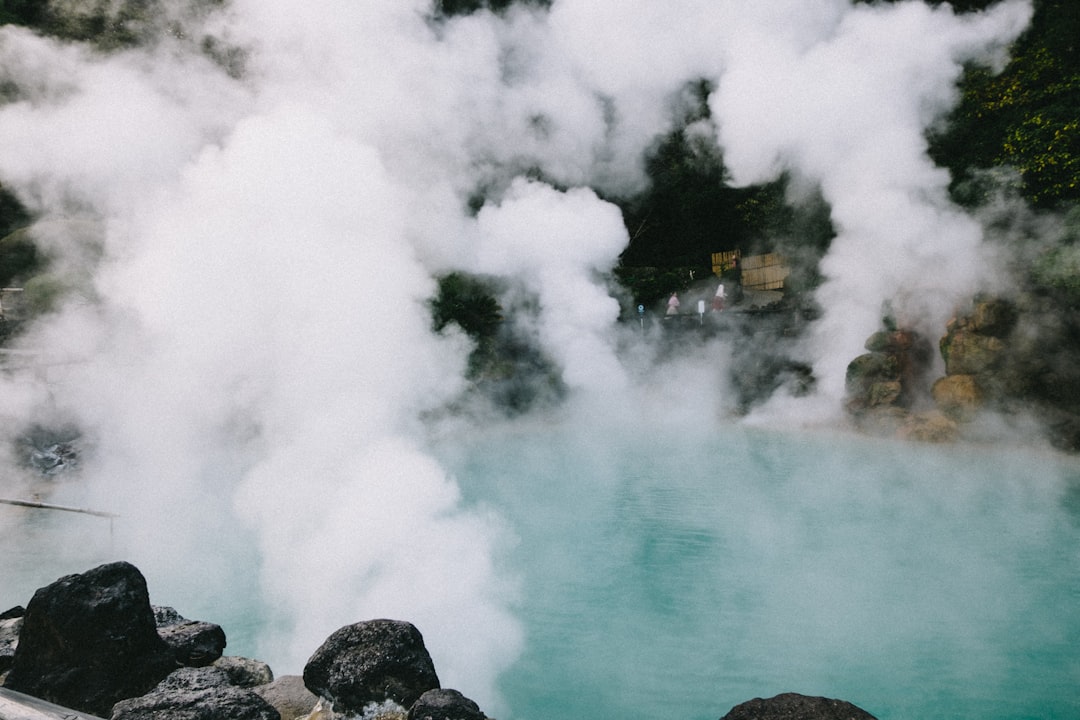

Photo by Tayawee Supan on Unsplash
Welcome to Japan’s Real-Life Hell
Tucked into the coast of Oita Prefecture on the island of Kyushu, Beppu is one of the most geothermally active cities on Earth. It produces more hot spring water than any other place in Japan, and while most visitors soak in soothing baths, Beppu also offers something far more dramatic: the Jigoku, or ‘Hells.’ These are natural hot springs so intensely hot, colorful, and violent in their bubbling that early residents believed they were windows into the underworld. Today, the Beppu Jigoku Tour is one of the most unique and photogenic sightseeing experiences in all of Japan, drawing curious travelers who want to see boiling mud, cobalt-blue ponds, and steaming craters rather than actually bathe in them.
Unlike typical onsen, you cannot enter these Jigoku waters, most reach temperatures well above 90 degrees Celsius, making them purely a visual and sensory spectacle. This guide covers everything you need to know to plan your own hell tour, from the must-see spots to practical tips for making the most of your visit.
What Exactly Is a Jigoku?
The word ‘jigoku’ translates literally to ‘hell’ in Japanese. These are naturally occurring hot springs that, due to unique underground volcanic activity, produce water and steam so hot and mineral-rich that they create otherworldly colors and violent bubbling effects. Some pools are a shocking cobalt blue thanks to dissolved minerals, others churn with grey mud, and some shoot boiling water into the air like miniature geysers. The Jigoku have been tourist attractions for over a century, and locals have developed each site with gardens, viewing platforms, and small amenities to enhance the experience while preserving the natural drama of the springs.
The Nine Hells of Beppu
There are nine officially recognized Jigoku in Beppu, spread across two main clusters: Kannawa and Shibaseki. Most travelers focus on the seven hells within the Kannawa district, as they are within easy walking distance of one another, while two additional hells are located in Shibaseki, a short bus or taxi ride away.
Umi Jigoku (Sea Hell)
Perhaps the most famous and photographed of all the hells, Umi Jigoku features a strikingly beautiful cobalt-blue pond that resembles a tropical sea rather than a boiling spring. The color comes from iron sulfate dissolved in the water. Surrounding the main pond are lovely gardens, a smaller pink-tinted pool, and a greenhouse where visitors can see water lilies thriving in geothermally warmed water. There is also a foot bath here, one of the few places on the tour where you can actually dip your feet into safely cooled spring water.
Oniishibozu Jigoku (Monk’s Head Hell)
This hell is named for its bubbling grey mud pools, which form round bulges as they boil that resemble the shaved heads of Buddhist monks. It is a fascinating and slightly comedic sight, with mud plopping and popping constantly across the surface. Small footbaths are also available here for visitors wanting a short, relaxing break.
Kamado Jigoku (Cooking Pot Hell)
Named after a giant cauldron-like statue of a demon at its entrance, Kamado Jigoku is one of the more varied hells, featuring several different ponds of varying colors and mineral compositions across its grounds. It has a fun, almost theme-park atmosphere with steam vents you can stand near and unique souvenir stands selling onsen-steamed treats.
Oniyama Jigoku (Demon Mountain Hell)
This hell is unusual in that it doubles as a small crocodile farm, using the geothermal heat to keep dozens of crocodiles warm year-round. It is one of the more unconventional sights of the tour, blending natural wonder with an eccentric zoo experience.
Shiraike Jigoku (White Pond Hell)
As the name suggests, this hell features a milky, pale blue-white pond created by mineral deposits. It has a tranquil, almost ghostly beauty compared to the more dramatic hells, and includes a small aquarium showcasing tropical fish raised using the warm spring water.
Chinoike Jigoku (Blood Pond Hell)
Located in the Shibaseki area, this is arguably the most visually shocking of the hells. Iron oxide gives the water a vivid, blood-red color, creating a striking and slightly unsettling scene that has made it one of the most iconic images associated with Beppu. It is considered Japan’s oldest natural hot spring of its kind and is a designated place of scenic beauty.
Tatsumaki Jigoku (Waterspout Hell)
Also in Shibaseki, this geyser erupts at semi-regular intervals, shooting boiling water and steam several meters into the air. A protective roof has been built over the geyser to allow safe viewing, and the eruption is genuinely thrilling to watch in person.
Practical Tips for Your Hell Tour
- Buy a combination ticket: A discounted pass covering entry to seven of the main hells is available and offers significant savings compared to paying individual admission fees.
- Plan for a half day: Seeing all seven Kannawa hells plus the two in Shibaseki comfortably takes around four to five hours, including walking and transit time.
- Use the local bus loop: A convenient sightseeing bus connects the Kannawa hells with the Shibaseki hells, running on a loop that makes hopping between sites easy even without a car.
- Wear comfortable shoes: While distances between hells are walkable, there is a fair amount of ground to cover, especially if you visit all nine sites.
- Bring a camera: The vivid colors of the ponds, especially Umi Jigoku and Chinoike Jigoku, are extremely photogenic, particularly on clear days when the steam creates dramatic backdrops.
- Try onsen-steamed food: Several hells and nearby shops sell eggs, buns, and puddings steamed using natural geothermal heat, a fun and tasty way to experience the local geology.
Best Time to Visit
The Jigoku are an evergreen attraction that can be visited comfortably in any season. Spring and autumn offer the most pleasant walking weather between sites, while winter adds a dramatic contrast as steam billows more visibly against the cold air. Summer visits are still enjoyable, though the combination of heat and steam can feel intense, so staying hydrated is important. Early morning visits tend to be quieter, allowing for better photos without crowds.
Combining the Hell Tour with a Real Onsen Experience
While the Jigoku themselves are for viewing only, Beppu is also home to some of Japan’s best bathable hot springs. After a day of exploring the hells, consider soaking in one of the city’s many public bathhouses or ryokan onsens. Beppu offers eight distinct hot spring areas collectively known as Beppu Hatto, each with its own mineral composition and character. A visit to a traditional sand bath, where you are buried up to the neck in naturally heated sand, is another uniquely Beppu experience worth pairing with your hell tour.
Getting to Beppu
Beppu is easily reached by train from Fukuoka or Oita, making it a practical addition to a Kyushu itinerary. The Kannawa hells cluster is a short bus ride from Beppu Station, and most of the sites are clearly signposted for visitors. Tourist information centers near the station can provide maps and updated bus schedules to help plan an efficient route.
Final Thoughts
The Beppu Jigoku Hot Springs Hell Tour offers a rare glimpse into the raw geothermal power that lies beneath Japan’s surface. It is equal parts natural wonder, cultural curiosity, and photographic playground, making it a memorable stop for travelers seeking something beyond Japan’s temples and cities. Whether you’re marveling at the cobalt blue of Umi Jigoku, watching a geyser erupt at Tatsumaki Jigoku, or snapping photos of the blood-red waters of Chinoike Jigoku, Beppu’s hells prove that hell, at least in this case, is a beautiful place to visit.