Honshu holds the majority of Japan’s UNESCO World Heritage Sites, and the practical problem isn’t finding them — it’s that they’re scattered from Nikko in the north Kanto hills to Hiroshima Bay in the far west, meaning no single trip covers them all unless you’re planning several weeks on the Shinkansen. I’ve visited every site listed below at least twice, and this guide groups them by region with the actual train lines, stations, ride times, and entry fees you’ll need to book around, rather than a vague “explore ancient Japan” pitch.
Kansai Cluster: Kyoto, Nara, Himeji, Osaka
This is the easiest region to base yourself in because Kyoto Station puts you within 90 minutes of four separate World Heritage designations.
Historic Monuments of Ancient Kyoto
This isn’t one site but 17 separate locations spread across Kyoto, Uji, and Otsu, including Kinkaku-ji, Nijo Castle, Kiyomizu-dera, and Nishi Hongan-ji. The one people skip and shouldn’t is Byodo-in in Uji — the temple on the back of the ¥10 coin. Take the JR Nara Line from Kyoto Station to Uji Station (20 minutes, ¥240), then walk 10 minutes along the Uji River. Entry is ¥700 for the garden and Hoshokan museum, with the Phoenix Hall interior accessible on a separate timed ticket (¥300, limited to 50 people per 20-minute slot). Enryaku-ji on Mt Hiei, the other often-missed component, requires the Eizan Cable Car from Yase-Hieizanguchi Station (reached via the Eizan Railway from Demachiyanagi) and charges ¥1000 entry.
Historic Monuments of Ancient Nara
Todai-ji, Kofuku-ji, Kasuga Taisha, and Nara Park sit within a 20-minute walk of each other, reachable from Kyoto via the JR Nara Line (45 minutes, ¥720) or the faster Kintetsu Limited Express from Kyoto Station (35 minutes, ¥1140 with seat reservation). Todai-ji’s Great Buddha Hall is open 7:30am–5:30pm in warmer months and charges ¥800. Horyu-ji, the world’s oldest surviving wooden structures, is a separate listing entirely — take the JR Yamatoji Line to Horyu-ji Station (11 minutes from Nara, ¥230) and walk 20 minutes, or catch the bus from the station (8 minutes). Entry is ¥1500, which feels steep until you’re standing in front of a five-story pagoda from the 7th century.
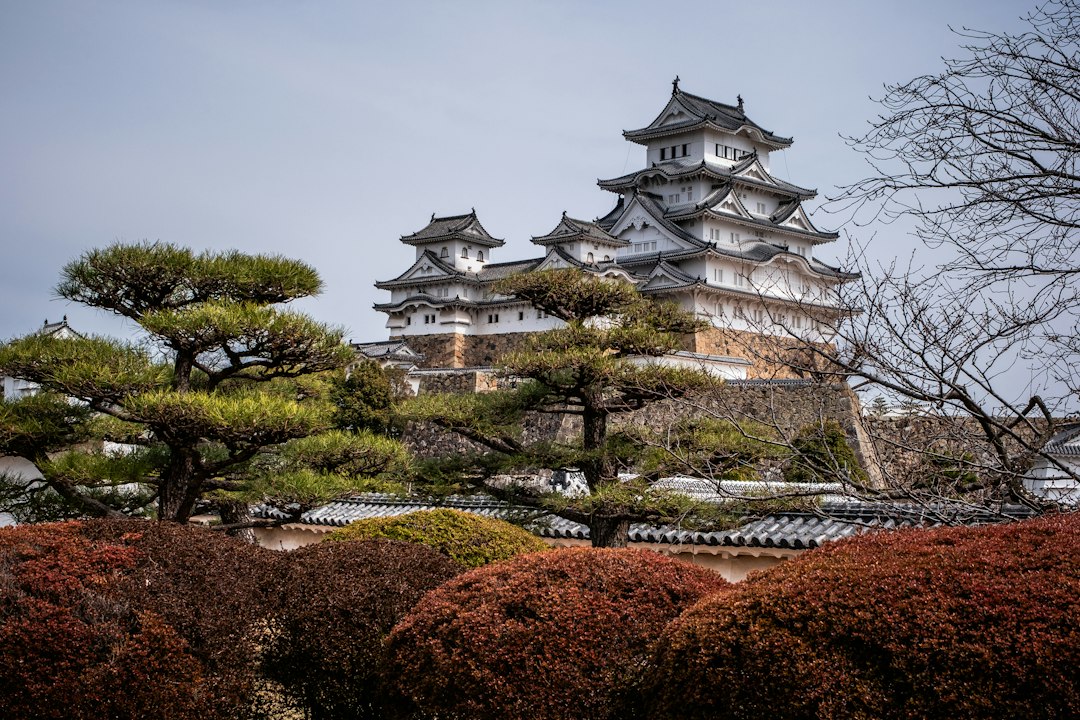
Himeji Castle
The best-preserved original castle keep in Japan and worth the detour west. From Shin-Osaka, the Hikari Shinkansen reaches Himeji in about 30 minutes (¥3460 unreserved); from Kyoto it’s closer to an hour. The castle is a straight 15-minute walk up Otemae-dori from Himeji Station — you can see the white keep from the station exit the entire way. Entry is ¥1000, open 9am–4pm for last admission (closing 5pm), closed December 29–30. Go on a weekday morning if you want photos of the main keep’s interior staircases without a queue.
Mozu-Furuichi Kofun Group
The newest Kansai addition, and the one most visitors don’t realize they can see. The Nintoku-tenno-ryo Kofun near Mozu Station (JR Hanwa Line, 20 minutes from Tennoji) is the largest keyhole-shaped tomb mound in Japan, but it’s forested and surrounded by a moat — you can’t walk on it or see the shape from ground level. For that, go to the 21st-floor observation lobby of Sakai City Hall, a 10-minute walk from Mozu Station, which is free and gives you the only clear aerial-ish view available to the public.
Chubu: Mountain Villages and Mount Fuji
Historic Villages of Shirakawa-go and Gokayama
The gassho-zukuri thatched-roof farmhouses are best reached by Nohi Bus from Kanazawa (75 minutes, ¥1850 one-way, reservation recommended especially in winter) or from Takayama (50 minutes, ¥2600). Go on a weekday if possible — the Ogimachi village core is small enough that weekend tour buses from Nagoya make the main viewpoint path genuinely crowded by 11am. The Gokayama side (Ainokura and Suganuma) gets a fraction of the visitors and is arguably more atmospheric for an overnight stay in a farmhouse minshuku.
Fujisan: Sacred Place and Source of Artistic Inspiration
Mount Fuji’s listing covers 25 component sites, not just the summit — Sengen shrines, Oshino Hakkai’s spring-fed ponds, and parts of the Fuji Five Lakes area are all included. The official climbing season runs early July to early September; outside those dates, mountain huts close and trails are considered unsafe without winter equipment. If you’re not climbing, Chureito Pagoda near Fujiyoshida (a 25-minute walk uphill from Shimoyoshida Station on the Fujikyu Railway) gives the classic pagoda-plus-Fuji photo without needing the summit permit system.
Kanto: Nikko and Tomioka
Shrines and Temples of Nikko
From Asakusa Station in Tokyo, the Tobu Nikko Line runs direct — the Limited Express Spacia takes about 1 hour 50 minutes and costs around ¥2900 with reservation, while the regular rapid service takes closer to 2.5 hours for roughly ¥1400. Toshogu Shrine’s entry is ¥1300 on its own; the combination ticket covering Futarasan Shrine and Rinno-ji is ¥1000 but does not include Toshogu, so budget for both if you want the full complex. The carved sleeping cat (Nemuri-neko) and the three wise monkeys panel are both at Toshogu, not the other shrines — a common point of confusion.
Tomioka Silk Mill
A genuinely different kind of World Heritage listing — a 19th-century industrial site rather than a temple or castle. From Tokyo, take the Joetsu Shinkansen to Takasaki, then the Joshu Railway to Joshu-Tomioka Station (about 40 minutes), followed by a 15-minute walk. Entry is ¥1000, open 9am–5pm (last entry 4:30pm). The brick-and-timber reeling plant interior, with its original French-imported machinery, tends to get skipped by people doing a Honshu temple circuit, which is exactly why it’s worth the detour.
Tohoku and the Sea of Japan Coast
Hiraizumi
Chuson-ji’s Konjikido (Golden Hall) is the main draw — an entire small building covered in gold leaf, lacquer, and mother-of-pearl, built in the 12th century and now protected inside a concrete cover building. From Tokyo, take the Tohoku Shinkansen to Ichinoseki (about 2.5 hours), then the local Tohoku Line to Hiraizumi Station (8 minutes). It’s a 20-minute uphill walk to Chuson-ji from the station, or a short taxi ride. Entry to the Konjikido is ¥800.
Sado Island Gold Mines
The most recently inscribed site on this list sits off the Niigata coast. Reach Sado via Jetfoil from Niigata Port (65 minutes, around ¥6900 one-way) or the slower car ferry (2.5 hours, cheaper). The Sado Kinzan mine site, with its Edo-period hand-dug tunnels, charges around ¥900–¥1000 depending on which course you choose. This is a full-day commitment from Niigata, not a half-day add-on.
Shirakami-Sanchi
One of Japan’s few natural World Heritage sites on Honshu, straddling the Aomori-Akita border — virgin Siebold’s beech forest with no road cutting through the core zone. Access is via the JR Gonō Line to Juniko Station on the Aomori side, near the Twelve Lakes (Juniko) walking trail, or through Nishimeya village from the Akita side. There are no paved paths into the protected core area; what visitors see is the buffer zone, which is still genuinely remote.
Hiroshima and Miyajima
Hiroshima Peace Memorial (Genbaku Dome)
The skeletal dome itself is viewed from outside only — it’s preserved exactly as it was after the 1945 bombing and you cannot enter. From Hiroshima Station, take the Hiroden streetcar (Line 2 or 6) to Genbaku Dome-mae, about 20 minutes, flat fare ¥220. The adjacent Peace Memorial Museum (entry ¥200, open until 6pm most months, later in summer) is where you spend the real time.
Itsukushima Shrine, Miyajima
The floating torii gate is only fully “floating” at high tide — check tide tables before you go, since at low tide you simply walk out to the gate on exposed sand, which some people prefer for photos. From Hiroshima Station, JR trains to Miyajimaguchi take about 25 minutes, then the JR ferry (10 minutes, ¥200 one-way, free with a Japan Rail Pass) crosses to the island. Shrine entry is ¥300. Deer roam freely near the pier and will go through unattended bags, so don’t leave food visible.
A Practical Note Before You Build an Itinerary
Don’t try to string more than two regions together in one trip unless you have at least ten days — the Kansai cluster alone deserves three full days, and travel between Hiroshima and Nikko, for example, is a six-hour-plus Shinkansen commitment each way. A better approach is picking one base region per trip: Kansai for temples and castles, Tohoku for Hiraizumi and Sado together, or a Chubu loop combining Shirakawa-go with Mount Fuji. Also worth knowing: several sites, including Byodo-in’s Phoenix Hall and parts of Toshogu, run on timed-entry or limited-capacity systems during peak autumn foliage and spring cherry blossom weeks, so same-day entry isn’t guaranteed if you show up after 10am on a Saturday in November.
Photo by Sue Winston on Unsplash