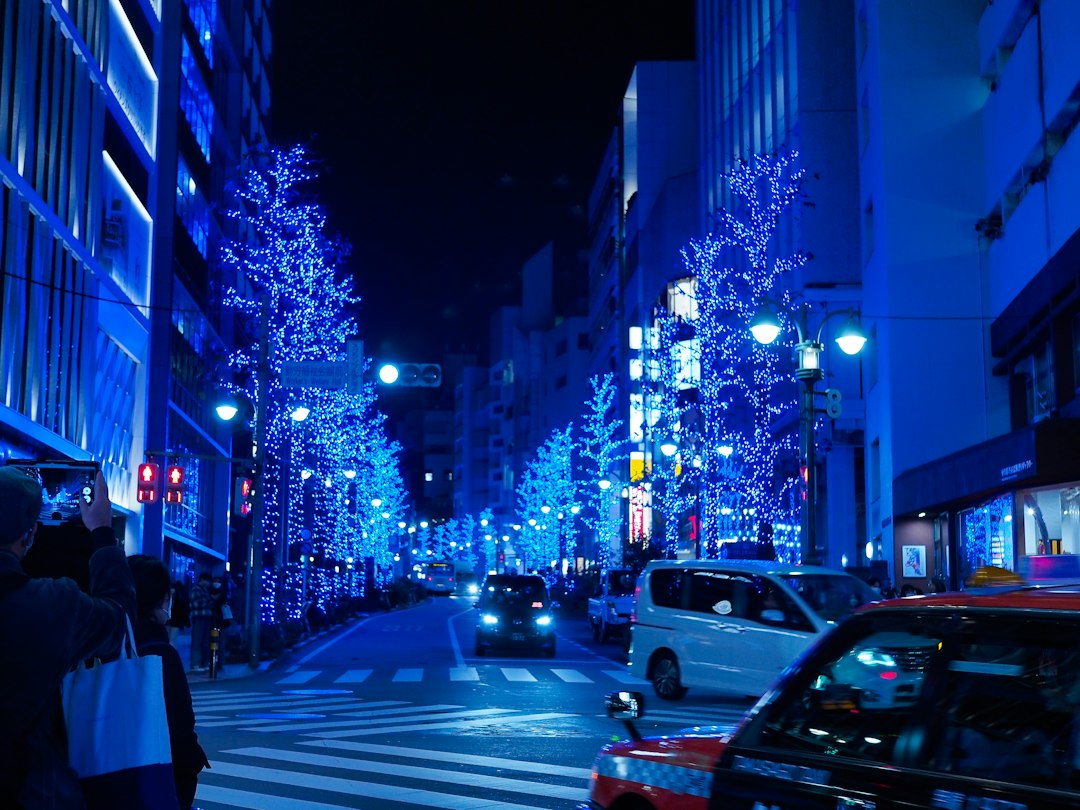
The single biggest mistake people make at Japanese winter illumination events isn’t forgetting a coat — it’s dressing for walking around when you’ll actually be standing still for long stretches, often in a queue, often in an open field with no windbreak. I learned this the hard way at Nabana no Sato in Mie Prefecture, where the wind coming off the Nagashima riverside flatlands made a forecasted 7°C feel like 2°C by 8pm. If you’re planning a December or January illumination trip, the layering strategy matters more than the brand of coat you bring.
Here’s the system that actually holds up, event by event, with the gear and prices I’ve used myself.
Why Standing Still Is the Real Problem
Illumination events aren’t hikes. At Kobe Luminarie, held along the pedestrian street between Motomachi Station (JR Kobe Line or Hanshin Line, Kobe) and Higashi Yuenchi, the crowd control means you often shuffle forward a few meters every few minutes toward the main Kado-den light arch, and in peak years that queue has stretched past an hour. An hour of standing in a Kobe winter wind at 4-8°C is a completely different experience from an hour of brisk walking in the same temperature. Your core can stay warm from movement alone; it’s your feet, hands, and the queue-standing that get you.
The Three-Layer System That Actually Works
Base layer: moisture control, not just warmth
Uniqlo’s HEATtech line (around ¥990–¥1,990 per piece, sold in nearly every Uniqlo store including the big one at Ginza or the Shinjuku branch near the East Exit) is the standard for a reason — it’s thin enough to layer under jeans or a skirt without bulk, and critically, it wicks sweat. If you’re walking from the train station to the venue and then standing around, you’ll sweat on the walk and then get cold fast once you stop if your base layer traps moisture instead of moving it away. Skip cotton thermals entirely; they do the opposite of what you need.
Mid layer: this is where people under-pack
A fleece or a thin down vest goes here. The mistake is relying on one thick coat as your only insulation — a single layer, however expensive, doesn’t trap air as well as two thinner ones. Workman (yes, the workwear chain — there’s a branch near most suburban stations, and prices for a packable down vest run ¥2,900–¥4,900) makes genuinely warm mid-layer pieces that locals actually wear for exactly this purpose, not just construction sites.
Outer shell: windproof matters more than down-fill
At open venues like Nabana no Sato or Ashikaga Flower Park (reached via Tobu Ashikaga City Station, about a 10-minute walk or free shuttle to the park entrance), wind cuts through gaps in zippers and collars. A windproof, water-resistant shell — even a thin one — outperforms a thick but open-weave sweater-coat. Look for a high collar and a chin guard zip; Uniqlo’s Blocktech series (around ¥5,990–¥8,990) and most ski-brand shells handle this well.
Don’t Neglect the Extremities
- Feet: Thin wool socks under your regular socks, not one thick pair — thick alone compresses inside boots and actually reduces insulation. Waterproof boots matter if there’s been recent rain since illumination paths (especially at Nabana no Sato’s water-garden sections) often have damp gravel.
- Hands: Touchscreen-compatible gloves are worth the extra ¥500–¥1,000 at Don Quijote if you plan to take photos — pulling bare gloves off repeatedly to use your phone camera in -2°C air gets old fast.
- Head and ears: A knit beanie plus, if you’re sensitive to cold, a neck gaiter rather than a scarf — a gaiter stays put and doesn’t unravel in wind, unlike a loose scarf.
How Cold It Actually Gets, Venue by Venue
Tokyo events — Marunouchi Illumination near Tokyo Station’s Marunouchi side, Roppongi Hills’ Keyakizaka-dori, Shinjuku Southern Terrace — typically sit between 2°C and 8°C on a December evening, and the surrounding buildings cut a lot of wind, so a solid three-layer system is enough. Kobe Luminarie (mid-December, roughly 17:30–21:30 nightly during its run) runs similarly, though the coastal location adds a noticeable wind chill some nights. Nabana no Sato, lit nightly from around 17:00 to 21:00 across its long illumination season from mid-October through early May, is the outlier for Honshu — it’s an open riverside park, and wind consistently makes it feel several degrees colder than the forecast. Sapporo’s White Illumination in Odori Park (nearest station: Odori on the Sapporo Municipal Subway) is in another category entirely — expect -5°C to -10°C after dark, which means real winter boots, a proper down coat rated for subzero temperatures, and thermal leggings, not just HEATtech under jeans.
Kairo: The Cheap Trick That Makes the Biggest Difference
Disposable stick-on kairo (hand warmers) are sold at every convenience store — Lawson, FamilyMart, 7-Eleven — for about ¥30–¥60 each, or in boxes of 10–30 at Daiso or Don Quijote for roughly ¥300–¥700. The stick-on type goes on the outside of your base layer at your lower back, not in your pocket — body heat from your core circulates better that way and lasts the full 3–4 hours most illumination visits take. I keep a non-stick pair in my coat pockets too, for hands between photos. This single ¥500 investment solves more cold-weather problems than any single piece of clothing.
If You Arrived Without Warm Enough Clothes
This happens more than you’d think, especially to travelers who flew in from somewhere warm and underestimated a Japanese December. Workman and Uniqlo both have locations near almost every major station — there’s a Uniqlo inside or near Shinjuku, Shibuya, and Nagoya stations specifically for this kind of last-minute layering grab. Don Quijote stores, open late (many until midnight or 24 hours in bigger cities), stock cheap kairo, gloves, and knit hats near the entrance, usually within the first two aisles.
One Thing Nobody Mentions: Overheating Indoors Afterward
The part that actually catches people out isn’t the cold outside — it’s the sudden heat once you duck into a heated train carriage, a convenience store, or a restaurant afterward wearing all four layers plus active kairo patches. Japanese trains and shops run their heating aggressively in winter, and a full cold-weather outfit becomes uncomfortably hot within minutes indoors. Build your layering so the outer shell and mid-layer are easy to remove and stuff into a bag — a tote or small backpack, not just your coat pockets — so you’re not sweating through the thirty-minute ride home from Kuwana Station back to Nagoya still wearing everything you needed standing outside at Nabana no Sato.
Photo by Yuika Takamura on Unsplash