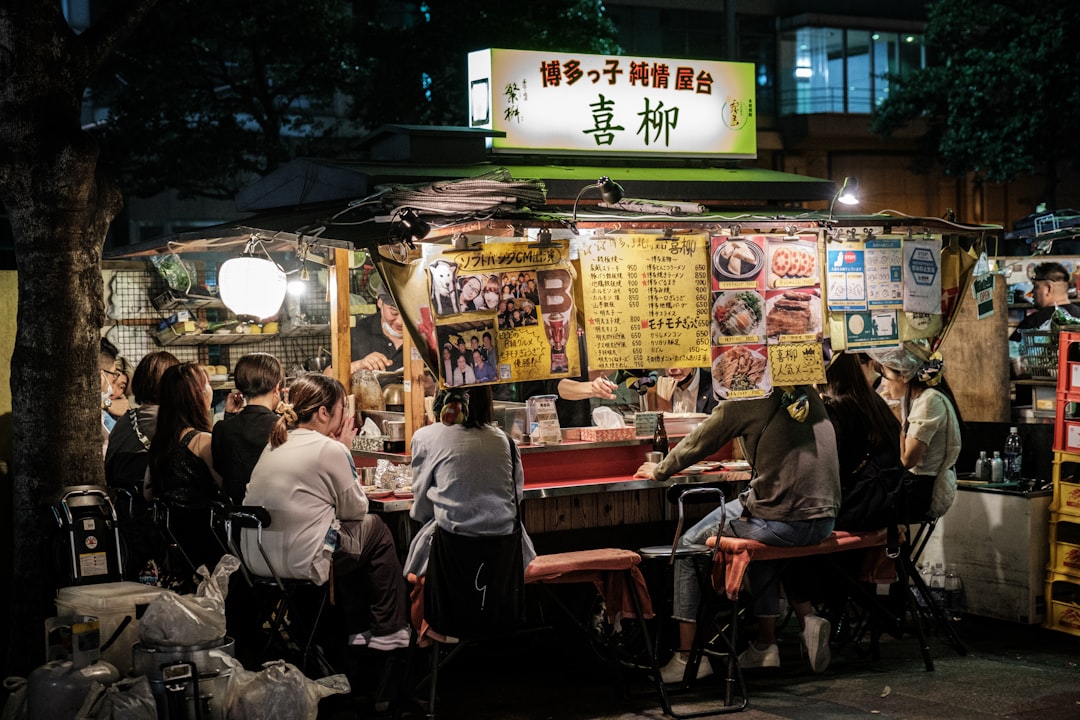

Photo by Nichika Sakurai on Unsplash
What Are Fukuoka Yatai?
Scattered along the riverbanks and boulevards of Fukuoka, tiny mobile food stalls known as yatai transform the city’s streets into an open-air dining wonderland every evening. These portable canvas-and-wood carts, each seating only eight to ten people on cramped stools, represent one of Japan’s most authentic and atmospheric culinary traditions. Fukuoka is home to the largest concentration of yatai in the entire country, making it an essential stop for any food lover exploring Kyushu.
Unlike the polished restaurants and izakayas that dominate Japan’s dining scene, yatai offer something rawer and more intimate. You sit shoulder to shoulder with strangers, the steam from bubbling broths mixes with the night air, and the chef stands just an arm’s length away, ladling out bowls of ramen or grilling skewers of yakitori. It is dining stripped down to its most communal and delicious essence.
A Brief History of the Yatai Tradition
Yatai culture in Fukuoka traces back to the post-war era, when food vendors set up makeshift stalls to feed a hungry population rebuilding their lives. Over the decades, these humble carts evolved from necessity into a beloved cultural institution. At their peak, hundreds of yatai lined the streets of Hakata and Tenjin. Although the number has decreased due to stricter regulations and licensing requirements, Fukuoka City has worked to preserve this heritage, recognizing yatai as an important part of local identity and tourism appeal.
Today, strict hygiene standards, designated locations, and limited operating licenses ensure the tradition continues sustainably while maintaining the nostalgic charm that first made yatai famous.
Where to Find the Best Yatai in Fukuoka
Nakasu District
Nakasu, the entertainment island sandwiched between two branches of the Naka River, is the most iconic yatai destination in the city. As dusk falls, dozens of stalls illuminate the riverside with warm lantern light, their reflections shimmering on the water. This area is particularly popular with tourists and offers a picturesque backdrop for photos alongside your meal.
Tenjin Area
A short walk from Nakasu, the Tenjin district hosts another cluster of yatai, often frequented by local office workers unwinding after a long day. The atmosphere here tends to be slightly more low-key and local, offering a genuine glimpse into everyday Fukuoka life.
Nagahama
Known as the birthplace of Hakata-style tonkotsu ramen, Nagahama’s yatai are a pilgrimage site for ramen enthusiasts. The stalls here specialize almost exclusively in rich, creamy pork bone broth ramen, served fast and hot to fishermen and night workers historically, and now to curious travelers.
What to Eat at a Yatai
Each yatai typically specializes in a handful of dishes, so hopping between stalls to sample different specialties is part of the fun. Here are the essential dishes to try:
- Hakata Ramen: The signature dish of the region, featuring thin, straight noodles in a rich, milky tonkotsu (pork bone) broth. Portions are small, encouraging diners to order kaedama, an extra serving of noodles to add to the remaining soup.
- Yakitori: Skewered and grilled chicken, often including flavorful cuts like skin, cartilage, and liver, seasoned simply with salt or a sweet soy tare sauce.
- Motsunabe: A hearty hot pot made with beef or pork offal, cabbage, garlic chives, and a savory soy or miso-based broth, perfect for sharing.
- Oden: A comforting winter staple of fish cakes, boiled eggs, daikon radish, and other ingredients simmered in a light dashi broth.
- Gyoza: Pan-fried dumplings filled with minced meat and vegetables, crispy on the bottom and juicy inside.
- Tempura: Lightly battered and fried seafood or vegetables, offering a satisfying crunch alongside cold beer.
Yatai Etiquette and Practical Tips
Dining at a yatai involves some unspoken rules and practical considerations that first-timers should know:
- Arrive early or be patient: Popular stalls fill up quickly, especially on weekends. There is often no formal queue, so hovering nearby signals your intention to wait for a seat.
- Cash is king: Most yatai do not accept credit cards, so bring enough Japanese yen in small denominations.
- Expect close quarters: Seating is tight and communal. Striking up conversation with neighboring diners, including locals, is common and part of the charm.
- Don’t overstay your welcome: With limited seating, it is polite to avoid lingering too long once you have finished eating, especially if others are waiting.
- Order incrementally: Rather than ordering everything at once, it is customary to order a dish or drink, enjoy it, then order more as you go.
- Weather matters: Since yatai are open-air, dining is most comfortable in mild weather. Many stalls provide plastic sheeting or heaters during colder months, but summer evenings tend to be the most popular time to visit.
- Language barrier: Many yatai owners speak limited English, but simple pointing, smiling, and basic Japanese phrases go a long way. Menus are often displayed with photos or written only in Japanese, so a translation app can be helpful.
Why Yatai Dining Is a Must-Do Experience
Beyond the food itself, yatai offer something increasingly rare in modern dining: genuine spontaneity and human connection. There is no reservation system, no fixed menu you can study in advance, and no guarantee of exactly how your evening will unfold. You might end up chatting with a local businessman about his favorite ramen shop, or bond with fellow travelers over shared plates of yakitori under the stars.
This unpredictability, paired with unpretentious, delicious food, is exactly what makes yatai such a treasured part of Fukuoka’s identity. It is a dining experience that engages all the senses, from the sizzle of the grill to the aroma of simmering broth to the gentle hum of conversation drifting along the riverside.
Tips for Planning Your Yatai Night
To make the most of your yatai adventure, consider these practical suggestions:
- Visit multiple stalls in one evening rather than settling into just one, since portions are typically small and designed for grazing.
- Go with a mix of curiosity and flexibility, as not every stall will have an empty seat when you arrive.
- Bring a light jacket even in warmer months, as evenings by the river can turn breezy.
- Photograph the exteriors and lantern-lit streets before you sit down, since it can feel rushed to snap photos once seated in such tight quarters.
- Pace your alcohol consumption if hopping between multiple stalls, as many yatai encourage ordering beer, sake, or shochu alongside food.
Final Thoughts
Fukuoka’s yatai stalls are far more than a place to grab a quick bite; they are a living piece of culinary history and community spirit that has survived decades of change. Whether you are slurping a bowl of iconic tonkotsu ramen in Nagahama or sharing skewers of yakitori with new friends along the Nakasu riverside, a night spent hopping between these humble stalls offers one of the most memorable and authentic dining experiences Japan has to offer. For any traveler passing through Kyushu, an evening among the yatai is simply unmissable.