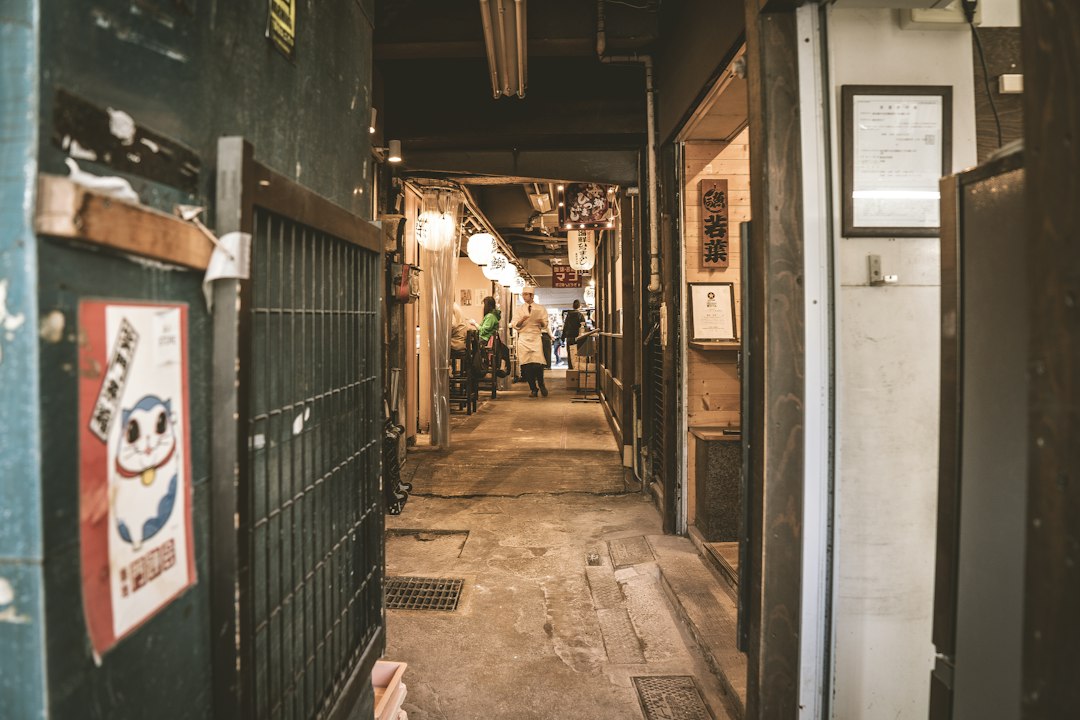
There’s no single train station with a Denji cutout waiting for you, and that’s the first thing to get straight before you plan a trip around this one. Chainsaw Man isn’t built on the kind of one-to-one background mapping that shows like Your Name or Haikyuu!! get — Tatsuki Fujimoto draws a Tokyo that’s deliberately smudged, half-remembered, stitched from several real neighborhoods he clearly knows well. So a “pilgrimage” here means visiting the specific districts that fans and background-hunters have matched to panels and anime frames, mostly clustered around Nakano, Kichijoji, and Nerima on the JR Chuo and Seibu Ikebukuro lines. I’ve walked all of these on two separate trips, and I’ll tell you exactly where to get off the train and what you’ll actually find.
Nakano: the neighborhood that feels like the Public Safety office’s turf
Get off at Nakano Station on the JR Chuo Rapid Line — four minutes and about ¥160 by IC card from Shinjuku, one of the shortest hops on the whole network. Exit the north side (kita-guchi) and you’re standing at the mouth of Nakano Sun Mall, the covered shopping arcade that background artists for the anime are widely believed to have referenced for the cramped, slightly grimy commercial streets Denji and Power wander through between devil-hunting jobs. The low-rise mixed signage, the pachinko parlor glow at street level, the narrow vertical building facades stacked with izakaya from the second floor up — none of this is CG-perfect Tokyo, and that’s exactly the texture the show’s urban scenes go for. Walk the full arcade (it takes about seven minutes end to end) and you’ll pop out right at Nakano Broadway.
Nakano Broadway and Mandarake
Nakano Broadway itself isn’t in the anime, but it’s the obvious stop for anyone doing a Chainsaw Man-themed day, since it houses one of the largest Mandarake complexes in Tokyo — multiple floors of used manga, cels, and character goods spread across dozens of individually run stalls. Chainsaw Man merchandise shows up irregularly depending on licensing waves, so don’t build your whole trip around finding a specific figure here; check the ground-floor general shop first since it tends to stock newer series goods, while the upper-floor specialty stores (floors 2–4) lean older and rarer. Most Mandarake units open around noon on weekdays and close by 8pm — arriving before 11am means half the building is still shuttered, which catches a lot of first-time visitors off guard.
Kichijoji’s Harmonica Yokocho: the back-alley bar aesthetic
From Nakano, stay on the Chuo Rapid Line heading west — Kichijoji is about eight minutes further, roughly ¥220. Exit the north side and Harmonica Yokocho is the tangle of alleyways directly across from the station, named for how the narrow lanes resemble the holes of a harmonica when seen from above. This is the kind of postwar black-market-era alley cluster — standing bars, three-seat ramen counters, a single-chair hairdresser wedged between two food stalls — that matches the tone of several of the show’s seedier nighttime panels, including scenes near devil-infested back streets. It’s not a confirmed location in the way a Studio Ghibli museum tie-in would be, but if you want to physically stand in the kind of space Fujimoto is drawing from, this is it. Go after 6pm on a weekday when the lanterns are lit and the alley is still loose enough to walk through comfortably — Friday and Saturday nights get packed shoulder to shoulder by 9pm.
Shibuya Crossing: the season premiere that actually happened here
This one isn’t speculative fan-mapping — it’s documented promotion history. When the anime’s first season launched, Chainsaw Man took over the big Crossing Vision screen on the old QFRONT building at Shibuya Crossing (the building has since been renamed and renovated, but the screen location is the same corner facing the scramble) with trailer footage timed to the season’s premiere. If you’re at the crossing on an evening with current anime promotional rotations running, it’s worth a few minutes of neck-craning, though don’t expect permanent signage — these takeovers are time-limited ad buys, not a fixed attraction. Shibuya is about 25 minutes from Nakano via the Tozai Line with a transfer, or roughly the same via JR through Shinjuku.
Nerima Ward: where the studio actually sits
MAPPA, the studio that produced the anime, has its main production office in Nerima City, in the general area around Oizumi-gakuen Station on the Seibu Ikebukuro Line (about 20 minutes from Ikebukuro, roughly ¥260). Nerima has been one of Tokyo’s animation production hubs for decades — Toei Animation’s main studio is also out this way — so the area has a quiet, residential, slightly industrial feel that doesn’t look like a tourist attraction at all. I want to be direct about this: the building is a working office, not a visitor facility. There’s no lobby tour, no gift shop, and standing outside filming or loitering is a fast way to annoy both staff and neighbors who live on an otherwise ordinary street. If you go, it’s a five-minute respectful walk-by, not a destination to linger at.
Suginami’s quieter side streets: Denji’s apartment block vibe
Between Nakano and Kichijoji sits Suginami Ward, a stretch of low apartment blocks, vending machines on every second corner, and the kind of power-line-crossed sky that shows up constantly in Chainsaw Man’s quieter domestic panels. There’s no single confirmed building for Denji’s apartment, but walking the residential blocks south of Asagaya Station (one stop from Nakano on the Chuo Local line, not the Rapid) gives you the closest real-world match to that specific flavor of cramped, slightly run-down Tokyo housing the show uses for its downtime scenes.
Putting it together as a day trip
A realistic one-day route: start at Nakano Station in the late morning, walk Nakano Sun Mall and Nakano Broadway (allow two hours if you actually dig through Mandarake), take the Chuo Local one stop to Asagaya for a 20-minute residential wander, continue to Kichijoji for an early dinner, and hit Harmonica Yokocho once the lanterns are on. Total train cost for the day lands under ¥600, and you’re never more than fifteen minutes between stops.
One thing worth knowing before you go
Don’t expect any official signage, stamp rallies, or collaboration cafes tied to these specific neighborhoods — unlike Studio Ghibli or Demon Slayer, Chainsaw Man hasn’t had a formal tourism board tie-in as of this writing, so everything here is fan-documented pattern-matching rather than confirmed by the studio or Fujimoto himself. Treat it as a reason to explore neighborhoods most tourists skip entirely, not as a checklist with guaranteed photo-ops at the end of it.
Photo by Alexandre Valdivia on Unsplash