What You’re Actually Signing Up For
A Tsukiji hands-on cooking class is not a demonstration where you watch a chef roll sushi while you nod along — the good ones hand you a knife, a mat, and raw fish within the first twenty minutes. Most programs run 2.5 to 3.5 hours and combine a guided walk through Tsukiji Outer Market (the inner wholesale market moved to Toyosu back in 2018, so don’t go looking for the tuna auction here) with an actual cooking session in a nearby kitchen studio. You’ll typically make three to five dishes: tamagoyaki (rolled omelet), miso soup from scratch using real dashi, nigiri or temaki sushi, and sometimes a side like ohitashi or tsukemono. Expect to eat everything you make, which is the real payoff after an early wake-up.
Getting There and Timing It Right
The outer market sits in Tsukiji, Chuo-ku, and the closest station is Tsukijishijo on the Toei Oedo Line — exit A1 puts you almost directly at the market’s edge. Tsukiji Station on the Hibiya Line is about a 5-minute walk and works fine too if you’re coming from Ginza or Roppongi. Most cooking schools schedule morning sessions starting between 8:30am and 10:00am because the market itself is busiest and freshest early; shops start closing around 2pm and a good chunk shut by 1pm, so an afternoon market walk means half-empty stalls. The outer market is officially closed on Sundays and irregular Wednesdays — check the calendar on the Tsukiji Outer Market Shopping Street Promotion Association site before booking, because nothing is more deflating than a cooking class whose market-tour component happens on a day half the shops have their shutters down.
What the Market Tour Portion Covers
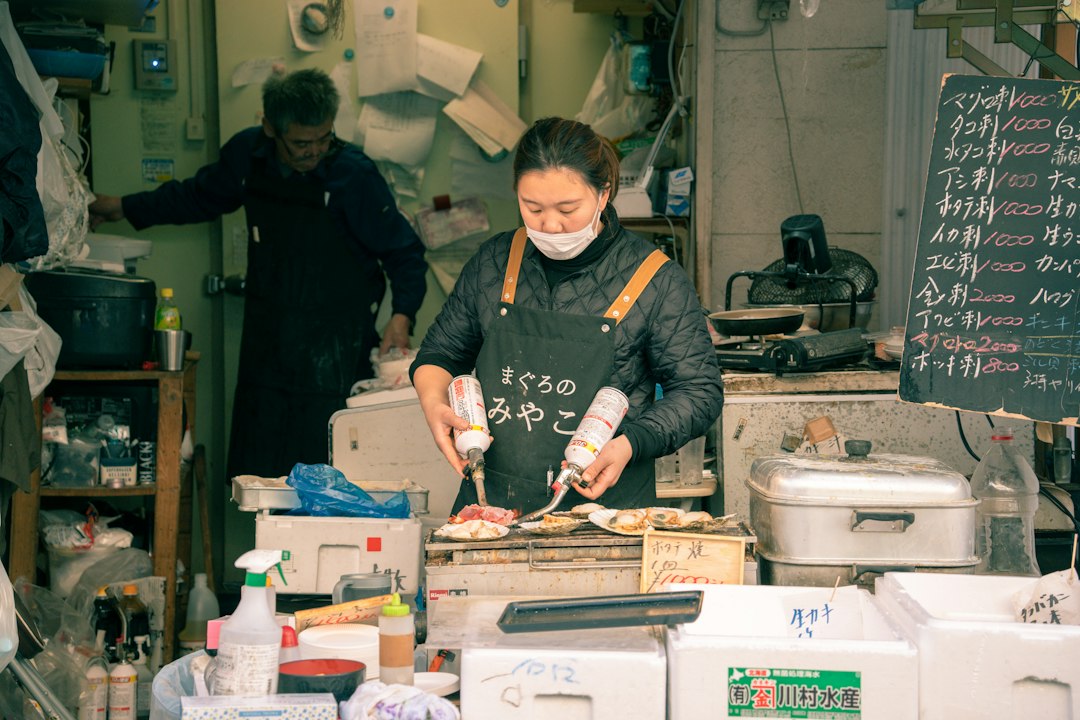
Instructors usually walk you down Tsukiji’s main shopping street past shops like Yamachō for katsuobushi and dried goods, past the tamagoyaki stalls near the Tsukiji Hongwanji side of the market, and often stop at Tsukiji Namiyoke Inari Shrine, the small shrine wedged between the market and the former inner market site, which workers have used for generations. You’ll usually be shown how to pick a fish eye that indicates freshness, how to smell dried bonito shavings to judge quality, and sometimes given a small tasting — grilled unagi skewers or fresh uni are common samples, usually included in the course price but occasionally an extra ¥500-¥1,000 if the instructor buys something special that morning.
Inside the Kitchen: What You’ll Actually Cook
Kitchens are almost always small — think 6 to 10 participants max, set up in a converted apartment or a rented studio space a few minutes from the market rather than inside it (studio space in Tsukiji proper is expensive, so several operators run their kitchen in Tsukiji 4-chome or just over in Shintomicho, one Yurakucho Line stop away). You’ll get your own station with a rice paddle, a bamboo sushi mat, and a kitchen knife that’s sharper than what most people have at home, which the instructor will spend real time teaching you to handle safely. Sushi rice is pre-seasoned with vinegar typically before class to save time, but you’ll usually handle the actual seasoning and cooling (uchiwa fanning included) yourself in at least one dish. Tamagoyaki is the dish most tourists struggle with — getting the layered roll technique right usually takes two or three attempts, and most classes let you keep practicing rather than moving on after one try.
Price Breakdown and Booking Specifics
Expect to pay between ¥8,000 and ¥15,000 per adult depending on group size, how much fish/seafood is included, and whether the class includes a private market tour beforehand. Private or semi-private classes (2-4 people) run toward the top of that range, sometimes ¥16,000-¥18,000 per person, while larger group sessions of 8-10 people can come in closer to ¥8,000-¥9,500. Children’s pricing is usually around 50-70% of the adult rate, though not every operator accepts kids under 6 due to knife use. Most reputable operators require booking at least 48 hours ahead through their own site or through platforms like Klook, Viator, or GetYourGuide, and cancellations inside 24 hours are typically non-refundable. Payment is usually taken in advance online in USD or JPY; very few let you pay cash on the day anymore post-pandemic.
Who This Works For (and Who It Doesn’t)
- Good fit: travelers who want a structured, English-explained intro to Japanese home cooking rather than restaurant-style tasting menus, families with kids 8+, solo travelers wanting a low-pressure way to meet other tourists.
- Not a great fit: people expecting to watch a professional sushi chef demonstrate high-end techniques — most classes teach approachable home-style sushi and rolls, not the decades-of-training style you’d see at a sushi-ya in Ginza. If that’s what you want, look instead at a sushi-making class specifically marketed as taught by a former sushi restaurant chef, which tends to run ¥20,000+ and is a different product entirely.
- Also not ideal for anyone with a severe shellfish or raw fish allergy — most menus are built around seafood and substitutions are limited since ingredients are bought fresh that morning.
Practical Tips From Having Done This
- Wear closed-toe shoes and clothes you don’t mind smelling like fish for the rest of the day — the market portion involves walking through wet, narrow lanes (some locals still call the uneven stone paths from the old market days “nukarumi” conditions after rain).
- Skip breakfast or eat light; between market tastings and the cooking portion you’ll be eating more than you expect by 11am.
- Bring cash in small bills (¥1,000s) for optional market purchases — many of the smaller stalls selling dried seafood or knives still don’t take cards.
- If you want photos of the tuna cutting or auction spectacle, that’s now exclusively at Toyosu Market, a separate trip via the Yurikamome Line to Shijo-mae Station — don’t confuse the two when researching your class.
One Thing to Plan Around
The detail that trips up the most visitors isn’t the cooking — it’s humidity and crowding in July and August, when the uncovered sections of the outer market get genuinely uncomfortable by 10am and some instructors shorten the walking portion as a result. If you’re booking in peak summer, ask the operator directly whether their market tour gets cut short on hot days, since a few quietly do this without mentioning it upfront, and you’ll want to know before paying ¥12,000 for what turns out to be a 15-minute walk instead of 45.
Photo by HONG FENG on Unsplash