If you’re booking a shukubo in Koyasan mainly for the Okunoin night walk, go with Eko-in temple — it’s one of the few that runs its own English-guided night tour starting from the temple lobby, so you don’t have to coordinate a separate booking or find Ichinohashi bridge in the dark on your own. Rooms run about ¥13,000-20,000 per person including two shojin ryori meals, and the night tour itself is a ¥1,500 add-on, roughly 90 minutes, usually departing around 7:00pm or 7:30pm depending on the season.
Getting to Koyasan
From Osaka, take the Nankai Koya Line Limited Express “Koya” from Namba Station — about 100 minutes to Gokurakubashi, the last stop. From there you switch to the Nankai Koya Cable Car, a steep 5-minute ride up the mountain to Koyasan Station. A local bus then takes you about 10 minutes into town; get off at Senjuinbashi if your temple is near the center, or ride further toward Okunoin-mae if you’re staying closer to the cemetery side. A one-way bus ticket is around ¥300-500, and there’s a 2-day bus pass (about ¥1,000) worth buying if you plan to see Danjo Garan and Okunoin on separate days.
Choosing a Shukubo
Of the roughly 117 temples on the mountain, about 52 accept overnight guests. Eko-in gets booked out first because of its night tour and genuinely friendly English-speaking monks, so reserve at least 3-4 weeks ahead for spring and autumn weekends. Muryokoin and Henjoson-in are good backups with similar pricing and also allow guests to sit in on the morning Gongyo service. Fukuchiin is worth knowing about if you want an actual rotenburo (outdoor bath) — most shukubo only have simple indoor baths. Check-in is typically 3:00pm-5:00pm; arrive late and you’ll miss the communal dinner seating, usually served at 5:30pm or 6:00pm sharp.
What the Room and Meals Are Actually Like
Expect a tatami room with futon bedding laid out while you’re at dinner, a low table, and a sliding door that doesn’t lock — this is normal in a temple, not an oversight. Shared bathrooms are standard; a few temples now offer rooms with private toilets for an extra ¥2,000-3,000. Dinner is shojin ryori — Buddhist vegetarian cuisine with no meat, fish, or alliums (garlic and onion are considered too stimulating for monastic practice) — typically six to eight small dishes including sesame tofu (goma-dofu), tempura vegetables, and pickles. Breakfast the next morning is lighter: rice porridge or rice, miso soup, and pickles, served around 7:00am-7:30am after the morning prayer service. Lights-out is informal but most guests are in their rooms by 9:00pm since the whole town goes quiet early.
The Okunoin Night Walk
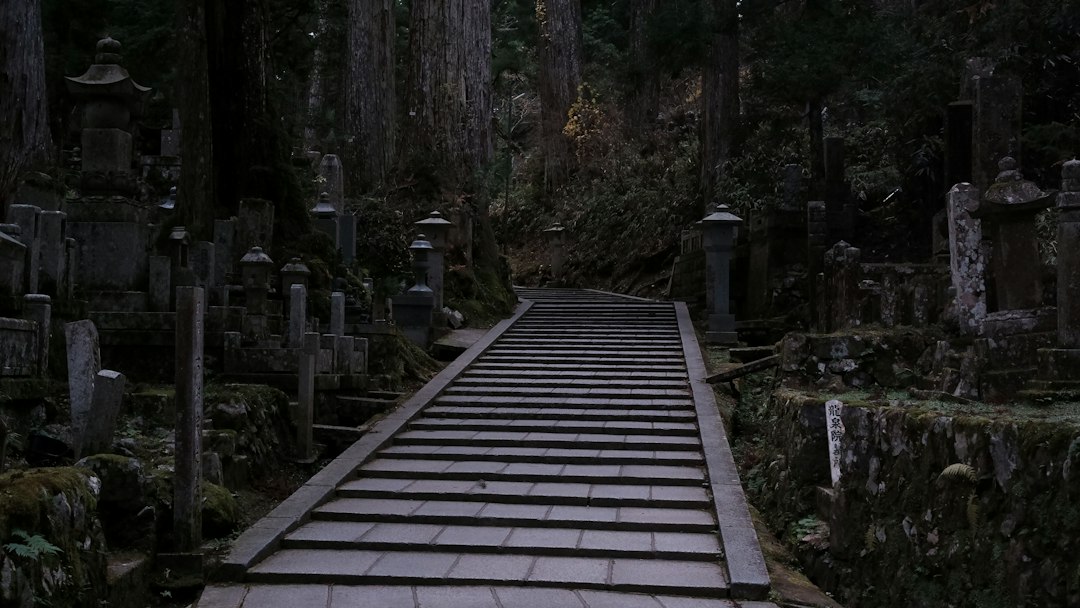
Okunoin is a roughly 2-kilometer stone path running through a cedar forest lined with over 200,000 gravestones, memorial markers, and monuments — some dating back over a thousand years. The proper entrance is Ichinohashi bridge; etiquette says you bow before crossing, since you’re entering the mausoleum grounds of Kobo Daishi, founder of Shingon Buddhism, who Shingon followers believe is in eternal meditation rather than deceased. If you join Eko-in’s tour, you meet in the temple lobby and walk together with a flashlight-carrying guide who points out details you’d otherwise miss in the dark — the grave of Oda Nobunaga, a memorial shaped like a rocket for a company’s deceased employees, the Panasonic corporate grave, even a UCC coffee company memorial shaped like a coffee cup.
Walking It Independently
You don’t need a tour to do this walk — many of the stone lanterns along the path are lit after dark, and the route is safe and well-trodden. Bring a phone flashlight anyway for the darker stretches past the midpoint. Walking from Ichinohashi to the inner sanctuary takes about 40-50 minutes at a relaxed pace. Some visitors shortcut by entering at Naka-no-hashi bridge near the parking lot, which cuts the walk roughly in half, but you skip some of the oldest and most atmospheric sections of the cemetery doing this.
Torodo Hall and the Inner Sanctuary
The path ends at Gobyo bridge, beyond which photography is prohibited out of respect — leave the camera down here even if no one’s checking. Just before it stands Torodo Hall (the Lantern Hall), lit by over 10,000 lanterns, including two flames said to have burned continuously for more than a thousand years. Nearby, the Mizumuke Jizo statues are where visitors ladle water over the stone figures as a prayer for deceased relatives; you’ll usually see fresh water stains on at least a few of them even late at night.
When to Go
Mid-November is peak autumn foliage and also peak crowding — book your shukubo and the night tour at least a month out if you’re coming then. Obon season (around August 13) brings the Mantoe lantern festival, when the entire cemetery path is lit with candles, arguably the single best night to do this walk, but rooms sell out even earlier for it. Winter is genuinely cold — temperatures drop below freezing and temple rooms are heated only by a kerosene stove in the room, so pack real layers; summer evenings are pleasant and this is actually the easier season to book a room on short notice.
A Few Things Worth Knowing Before You Go
Credit cards are not accepted at most shukubo — bring cash in yen to settle the bill at checkout. Checkout is usually by 10:00am, and most temples ask you to attend the morning service if you’re staying the night, even if it’s not strictly mandatory — it’s one of the better reasons to choose a temple stay over a hotel in the first place. If the night tour is fully booked by the time you check in, ask the front desk directly; cancellations happen fairly often and they will sometimes slot you in on the spot rather than through the online booking system.
Photo by Ryo Harianto on Unsplash