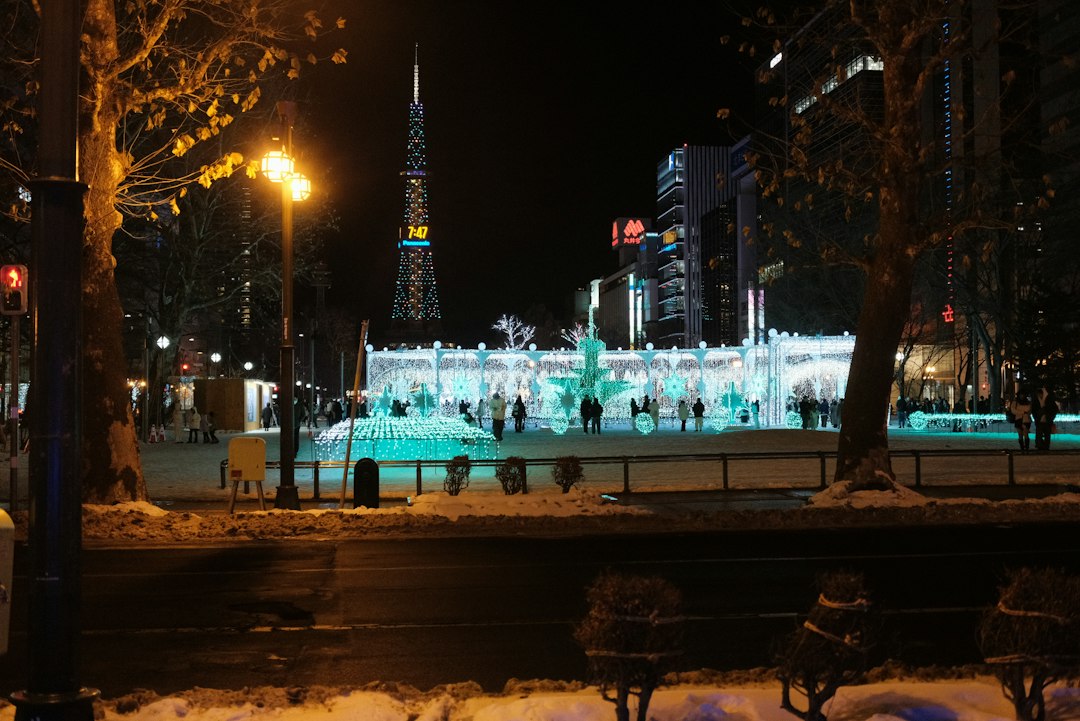
## Why Sapporo Accommodation Sells Out Every February If you’re planning a trip around the Sapporo Snow Festival (Sapporo Yuki Matsuri), the single most important thing to know is this: book your bed before October. The festival runs roughly 11 days in early-to-mid February and spreads across three sites — Odori Park (1-chome to 12-chome), the Susukino ice sculpture zone, and the Tsudome site (reached by free shuttle bus from the Sapporo Station bus terminal, about 25 minutes total with the connecting Chuo Bus Loop Quarter transfer). Every dorm bed, capsule, and twin room within walking distance of Susukino Station or JR Sapporo Station gets reserved months ahead, and nightly rates for the same hostel bed that costs ¥3,200 in June can jump to ¥7,000-¥9,000 in festival week. This isn’t generic hype — check any OTA calendar for the first two weeks of February against late November and you’ll see the price curve yourself. ## Sapporo’s Hostel Culture: What Actually Makes It Different Sapporo’s hostel scene is smaller and more local than Tokyo’s or Osaka’s, but it has a distinct character shaped by the climate. Nearly every hostel here has a dedicated boot-and-glove drying room near the entrance — because guests arrive soaked from snow, not rain — and a communal kitchen that doubles as the social hub after dark, since nobody wants to go back outside once they’ve thawed out. A few names worth knowing by location, not just brand: - **Piece Hostel Sapporo** — about a 5-minute walk from Susukino Station (Namboku Line), dorm beds from roughly ¥3,800 outside peak season. Front desk hours are limited (around 7am–11pm), so arrange late check-in in advance if your flight into New Chitose lands after 9pm. - **Guesthouse Waya** — a small, family-run mixed dorm near Nakajima Park Station (Exit 1, Namboku Line), known for a shared kitchen where the owners sometimes cook nabe with guests on cold nights. Only around 10 beds, so it fills first for festival week. - **Sapporo International Youth Hostel** — out in Makomanai, about 25 minutes from Sapporo Station via the Namboku Line plus a short shuttle. Dorms run around ¥4,000 and it’s popular with school groups and cyclists, meaning it can feel institutional rather than social. - **UNIZO Inn Sapporo Eki-Mae** — technically a business hotel, not a hostel, but included here because it’s the fallback option one block from Sapporo Station’s north exit when dorms are full. ## Accommodation Type Comparison for Snow Festival Travelers ### Hostel (Dorm Bed) - Shared room with 4–10 beds, shared bathroom - Communal kitchen and common lounge for meeting other travelers - Best for: solo travelers and budget-conscious visitors who don’t mind noise and want to meet people - Not ideal for: light sleepers or anyone needing total quiet after a long day in the snow ### Guesthouse (Private Room) - Often the same building as a dorm hostel but with a locked private room option - Shared bathroom in most cases, occasional en-suite - Best for: couples or small families wanting privacy without ryokan prices - Check: whether breakfast or kitchen access is included — this varies a lot between properties ### Business Hotel - Compact private room, en-suite bathroom, usually includes a desk and sometimes a small heated floor mat - Best for: travelers prioritizing a hot shower and reliable heating after a day photographing ice sculptures in -5°C wind - Weak point: almost zero social interaction, and rooms near Susukino can be noisy until 1-2am on weekends ### Capsule Hotel - Single capsule pod, shared bathroom and sauna/bath facilities - Best for: solo travelers who want more privacy than a dorm but can’t justify business hotel prices - Caveat: most capsule hotels in Sapporo are male-only or have very limited female floors — confirm before booking ### Ryokan / Onsen Inn - Tatami rooms, often with access to an indoor or outdoor onsen bath - Best for: travelers wanting to recover from the cold with a proper hot soak, especially if you add a night in nearby Jozankei (about an hour by bus from Sapporo Station) - Trade-off: significantly higher price and usually located outside the central Susukino/Odori walking radius | Item | Hostel Dorm | Guesthouse Private | Business Hotel | Ryokan/Onsen Inn | |——|————|––––––––––|—————–|——————| | Price range (festival week) | ¥4,000–8,000 | ¥8,000–14,000 | ¥10,000–20,000 | ¥20,000–45,000 | | Privacy | Low | Medium | High | High | | Heating comfort | Variable (shared space) | Good | Very good | Excellent | | Social atmosphere | High | Medium | Low | Low | | Location near Odori/Susukino | Usually excellent | Good | Excellent | Often further out | | Best for | Solo budget travelers | Couples/small groups | Comfort-focused solo/pair | Onsen recovery trips | If you’ve landed on your preferred type from the table above, the smart move is to check live availability now rather than later — Sapporo’s festival-week inventory for hostels and mid-range hotels alike tends to shrink fast from late autumn onward, so pull up current rates and lock in dates while rooms near Susukino Station and Odori Park are still showing. ## Booking Timing: When to Actually Reserve For the best hostel dorm rates, aim to book by early October. By late November, the cheapest beds near Susukino are usually gone and you’re left comparing mid-tier options. Prices typically surge 2-3x starting mid-January as the festival date approaches and domestic group bookings (school trips, company retreats) lock in blocks of rooms. If you’re flexible, staying one subway stop away — around Nakajima Park or Horohirabashi on the Namboku Line — instead of directly at Susukino Station can save ¥1,500-¥3,000 per night with only a 5-7 minute longer walk. ## Cold-Weather Practical Tips for Hostel Stays - Pack compressible layers, not bulky sweaters — hostel dorm storage lockers in Sapporo are typically small, around 30x40cm - Use the boot-drying rack if your hostel has one; wet snow boots left in a dorm room will keep the whole room damp overnight - Bring your own eye mask and earplugs — most dorms don’t have curtains around bunks, and someone will inevitably return from Susukino’s bars after midnight - If the hostel has shared heated flooring (yuka-danbou) in the lounge, that’s usually the warmest spot in the building after 9pm — better than your bunk - A footbath detour to Jozankei Onsen (about 60-70 minutes by Jotetsu Bus from Sapporo Station) on your way back from a day trip is a cheap way to warm up before a cold dorm night ## Crowd Avoidance Strategy The worst bottleneck isn’t the festival sites themselves — it’s Susukino Station’s Namboku Line exits between 6pm and 8pm when the illuminated sculptures peak for photos. If you’re staying near Susukino, leave for dinner before 5:30pm or after 9pm to skip the exit queues. For Tsudome, go in the morning (gates typically open around 9am) rather than afternoon, since most tour buses arrive after lunch. Odori Station’s Exit 8 puts you closest to the Odori Park venue if your hostel is along the Namboku or Tozai Line. ## A Quick Caveat Before You Book Many Sapporo hostels enforce strict no-show and late-cancellation fees during Snow Festival week — often 100% of the booking if cancelled within 7 days, compared to the usual 20-30% in other months. Read the cancellation policy on the specific listing, not just the general house rules. Also double-check front-desk hours: several budget hostels in Susukino operate with unstaffed overnight reception and a keypad or lockbox system, which is fine if you’re arriving in daylight but can be stressful if your flight from New Chitose is delayed and you’re trying to find an actual human at 11pm in the snow.
Photo by Dominic Kurniawan Suryaputra on Unsplash