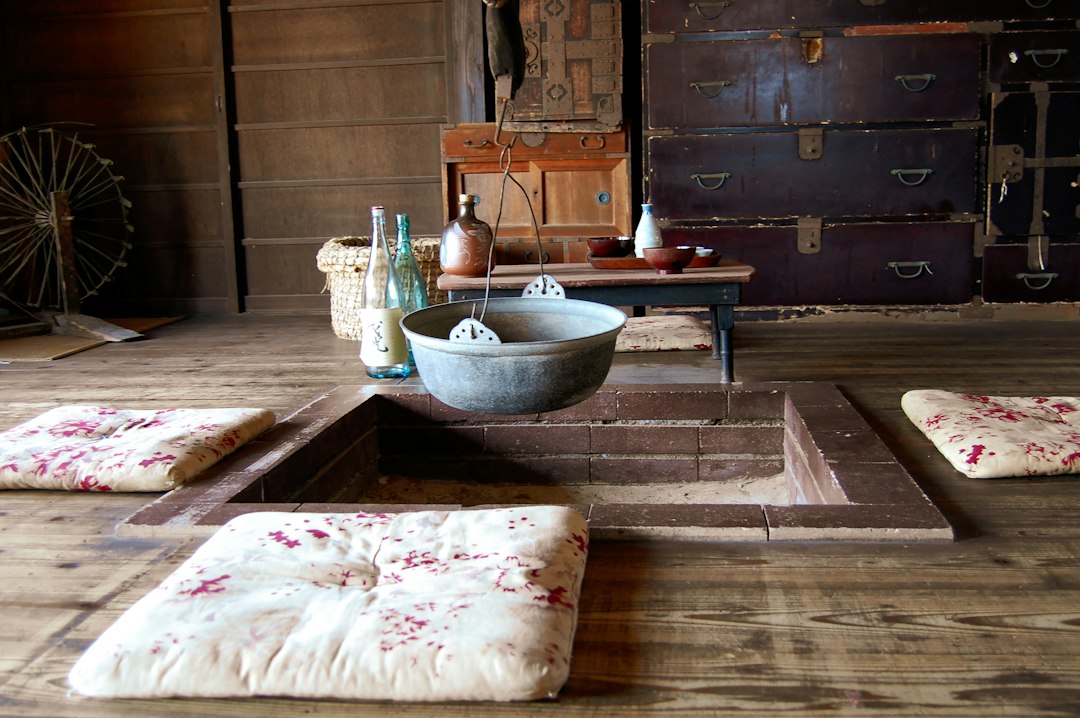
## What Is an Irori Fireplace Dinner Ryokan?\nAn irori is a traditional sunken hearth built into the floor of old Japanese farmhouses, once used for cooking, heating, and gathering the family together. Today, a handful of ryokan and rural inns preserve this custom, seating guests around a crackling fire while grilled river fish, mountain vegetables, and warmed sake are served course by course. It’s one of the most atmospheric ways to experience old Japan, but it isn’t the only style of memorable ryokan dining. Before you book, it helps to understand how an irori-style stay compares to other popular accommodation options in terms of price, privacy, food style, and overall vibe.\n\n## Why Compare Accommodation Types Before Booking\nRyokan culture is wonderfully diverse. Some properties specialize in rustic, smoke-scented hearth dinners; others offer refined multi-course kaiseki served in your own room; and some budget-friendly minshuku give you a similar countryside feeling for a fraction of the price. Choosing the wrong style for your travel companions or budget can mean missing out on the experience you actually wanted. Below we break down four common options so you can match the right stay to your trip.\n\n## Option 1: Traditional Irori Ryokan (Hearth-Side Dining)\nThese are typically small, family-run inns in mountain villages such as Shirakawa-go, the Iya Valley, Oku-Hida, or parts of Tohoku. Guests sit on low stools or cushions around the open hearth while the host grills skewered river fish (ayu or iwana) and vegetables directly over the coals. The atmosphere is smoky, communal, and deeply nostalgic.\n\n**Best for:**\n- ✅ Travelers who want an authentic, rustic cultural experience\n- ✅ Couples or small groups who enjoy communal, unhurried dining\n- ✅ Photography lovers seeking atmospheric, candlelit-style shots\n- ❌ Not ideal for guests who prefer strict privacy during meals\n- ❌ Not ideal for those with smoke sensitivity or mobility issues (low seating)\n\n## Option 2: Standard Onsen Ryokan (In-Room Kaiseki)\nThis is the most common ryokan experience across Japan, found in hot spring towns like Hakone, Kusatsu, or Kinosaki. Multi-course kaiseki dinners are served in the privacy of your own tatami room, often paired with an in-house or private onsen bath.\n\n**Best for:**\n- ✅ Couples wanting a romantic, private dinner\n- ✅ Travelers prioritizing hot spring bathing alongside dining\n- ✅ Guests who want polished, seasonal Japanese cuisine\n- ❌ Less \“rustic\” atmosphere compared to irori-style inns\n- ❌ Generally pricier than budget minshuku\n\n## Option 3: Luxury Kaiseki Ryokan (Ryotei-Style)\nHigh-end ryokan, often in Kyoto, Hakone, or exclusive countryside retreats, elevate dinner to a fine-dining event with rare seasonal ingredients, artisanal tableware, and impeccable service. Some upscale properties even build a modern irori as a design feature while still delivering refined, chef-curated courses.\n\n**Best for:**\n- ✅ Special occasions such as anniversaries or honeymoons\n- ✅ Travelers who want top-tier service and presentation\n- ✅ Those with a generous travel budget\n- ❌ Not suited for budget travelers or large casual groups\n- ❌ Reservations often required months in advance\n\n## Option 4: Rustic Minshuku with Irori (Budget-Friendly)\nMinshuku are family-operated guesthouses, simpler than ryokan but sometimes featuring their own irori hearth for communal meals. Rooms are basic, bathrooms may be shared, but the home-cooked, hearth-grilled dinners can rival those of pricier inns.\n\n**Best for:**\n- ✅ Budget-conscious travelers and backpackers\n- ✅ Solo travelers wanting to chat with hosts and other guests\n- ✅ Those exploring remote countryside or hiking regions\n- ❌ Limited privacy (shared bathrooms/common areas)\n- ❌ Fewer amenities than full-service ryokan\n\n## Side-by-Side Comparison Table\n| Feature | Irori Ryokan | Standard Onsen Ryokan | Luxury Kaiseki Ryokan | Minshuku with Irori |\n|—|—|—|—|—|\n| Price range | ¥15,000–25,000/night | ¥15,000–35,000/night | ¥40,000+/night | ¥6,000–12,000/night |\n| Dining style | Communal hearth-side grilling | Private in-room kaiseki | Chef-curated fine dining | Home-style communal meal |\n| Privacy | Low to moderate | High | High | Low |\n| Atmosphere | Rustic, smoky, nostalgic | Elegant, relaxing | Refined, exclusive | Cozy, homely |\n| Onsen access | Sometimes | Usually included | Often private/in-room | Rarely |\n| Best for | Cultural experience seekers | Couples & families | Special occasions | Budget & solo travelers |\n| Booking difficulty | Moderate (limited rooms) | Easy | Hard (advance booking) | Easy |\n\n👉 Ready to find your perfect hearth-side stay? Check current availability and rates for irori-style ryokan and rural minshuku before your preferred dates sell out, especially during autumn foliage and snow season when rural inns fill up fast.\n\n## How to Choose the Right Option for Your Trip\n- Traveling as a couple for a romantic getaway? Choose a **standard onsen ryokan** for privacy and in-room dining.\n- Want the most photogenic, storybook countryside experience? Go for a **traditional irori ryokan** in a village like Shirakawa-go or the Iya Valley.\n- Celebrating a milestone and budget isn’t a concern? Splurge on a **luxury kaiseki ryokan**.\n- Backpacking solo or traveling with friends on a budget? A **minshuku with irori** offers charm without the high price tag.\n\n## What to Expect During an Irori Dinner\nMeals are usually served in multiple small courses over an hour or two. Expect skewered river fish slow-grilled beside the coals, mountain vegetables, mushroom-based soups, house-made pickles, and rice cooked in a kettle. Sake or shochu is often warmed right at the hearth. Because seating is communal, it’s common to chat with other guests or the innkeeper themselves, making it a wonderful option for travelers who enjoy a personal connection with their hosts.\n\n## Booking Tips for Irori-Style Stays\n- Book several weeks to a few months ahead, especially in autumn and winter when rural inns are popular.\n- Confirm transportation in advance; many irori ryokan are located in remote villages with limited bus service.\n- Ask whether dinner is fixed-course or customizable, as some inns can accommodate dietary restrictions with advance notice.\n- Pack warm layers if visiting in colder months, as traditional wooden buildings can be drafty despite the fire.\n\n## Frequently Asked Questions\n\n**Is an irori dinner available year-round?**\nYes, most irori ryokan operate throughout the year, though the hearth feels especially cozy in autumn and winter.\n\n**What kind of food is typically served?**\nExpect river fish, wild mountain vegetables, mushrooms, house pickles, rice, and warmed sake, all prepared using traditional hearth-cooking methods.\n\n**Do I need to speak Japanese to stay at these inns?**\nBasic English signage or translation apps are usually enough, though many rural innkeepers only speak Japanese. A friendly attitude goes a long way.\n\n**Is an irori-style ryokan suitable for families with children?**\nIt can be, but supervise children carefully near the open hearth, and check with the inn about seating arrangements for young kids.\n\n**How far in advance should I book?**\nFor popular villages and peak seasons, booking one to three months ahead is recommended, since many irori ryokan have only a handful of rooms.
Photo by Susann Schuster on Unsplash