Here’s the detail most search results skip: MAPPA does not run a public studio tour, and there is no ticketed visitor program like you’d find at Studio Ghibli’s museum in Mitaka. MAPPA is a working animation production house, not a tourist facility, and the staff inside are on deadline for shows like Jujutsu Kaisen, Chainsaw Man, and Vinland Saga. If you’ve found this page hoping to book a walk-through of the building, that product doesn’t exist. What follows is what fans who’ve actually gone looking can realistically do in Tokyo around MAPPA’s world, from the neighborhood where the studio operates to the shops, cafes, and museums that scratch the same itch.
Where MAPPA Actually Operates
MAPPA’s main production offices are in Suginami Ward, the part of west-central Tokyo that’s been an animation industry hub since the Mushi Production days of the 1960s. Suginami City Hall even promotes the ward officially as an “anime town,” and you’ll see banners referencing it around Ogikubo Station. Don’t expect a storefront or signage pointing you to MAPPA’s door — like most studios here, the building is unmarked on purpose, and showing up to photograph or loiter outside a working studio is considered rude by local standards and occasionally gets fans turned away by building security. Treat the area as a neighborhood to experience, not an address to stake out.
Suginami Animation Museum — The Real Substitute
This is the one stop that actually delivers an “inside the industry” experience, and it’s free. The Suginami Animation Museum sits at 3-29-5 Kamiogi, a five-minute walk from Ogikubo Station (JR Chuo/Sobu Line or Tokyo Metro Marunouchi Line). Admission is ¥0, hours are 10:00–18:00, and it’s closed Mondays (plus year-end holidays). Inside there are hands-on animation stations where you can try flipbook and cel-timing exercises, a small theater running classic and contemporary clips, and rotating exhibits that sometimes feature production materials from Suginami-based studios. It’s modest — budget 45–60 minutes — but it’s the closest thing to a legitimate “studio tour” experience in the area.
Getting There From Central Tokyo
From Shinjuku Station, take the JR Chuo Line rapid service to Ogikubo — it’s about 10 minutes and costs ¥220 one-way with an IC card (Suica/Pasmo). If you’re coming from Tokyo Station, figure roughly 25–30 minutes via the same line. The Marunouchi subway line also terminates at Ogikubo, useful if you’re coming from Ikebukuro or Ginza without transferring to JR.
Merch Hunting: Nakano Broadway and Ikebukuro
If the goal is owning something tied to MAPPA’s shows rather than seeing the building, redirect your energy here. Nakano Broadway, a short walk from Nakano Station (one stop west of Shinjuku on the JR Chuo Line, about 5 minutes, ¥160), houses more than 25 Mandarake specialty shops spread across its upper floors. The second and fourth floors in particular rotate stock of Jujutsu Kaisen, Chainsaw Man, and Attack on Titan figures, cels, and signed goods, with prices ranging from ¥500 bargain-bin keychains to ¥30,000+ for limited production cels or signed shikishi boards. Animate’s flagship store in Ikebukuro (east exit, roughly 5 minutes on foot from the station) is the other essential stop — eight floors of official merchandise, and it’s usually the first place new MAPPA-show merchandise lands on release day.
Collab Cafes: Timing Is Everything
MAPPA properties regularly run limited collaboration cafes through Animate Cafe locations in Ikebukuro, Shinjuku, and Osaka’s Namba. These aren’t walk-in friendly — most require advance reservation through the Animate Cafe app or website, released in timed lottery windows weeks ahead of the event start date. Meal sets with exclusive coasters or placemats typically run ¥1,800–¥2,500, and the item you actually want (the random/blind goods) is usually sold separately at ¥700–¥1,200 per pull. If you’re planning a trip around a specific cafe, check the official Animate Cafe site before booking flights — these events have fixed start and end dates, often 3–4 weeks long, and sell out same-day for popular titles like Jujutsu Kaisen.
Pilgrimage Spots From the Shows Themselves
Rather than the studio, many fans get more satisfaction tracking down real locations referenced in MAPPA’s anime. The Jujutsu Kaisen Shibuya Incident arc leans heavily on recognizable Shibuya geography — Center Gai, the Shibuya Scramble crossing, and the area around Shibuya Station’s Hachiko exit all appear in stylized form. It costs nothing to walk the route and compare angles, and it pairs naturally with a stop at the Pokémon Center Shibuya or Tokyu Hands a few blocks away if you want to make an afternoon of it.
Practical Tips Before You Go
- Don’t photograph or approach any building you suspect is a studio office — Japanese production companies are private workplaces, and staff have reported fans causing enough disruption that some studios tightened building security as a direct result.
- Carry a Suica or Pasmo IC card loaded with at least ¥2,000 for the day; Ogikubo, Nakano, and Ikebukuro are all on different lines and you’ll be tapping in and out often.
- Mandarake shops in Nakano Broadway are cash-friendly but increasingly accept IC card payment — don’t assume every small stall takes credit cards.
- If a specific collab cafe is the centerpiece of your trip, confirm exact dates on the official Animate Cafe website first — event calendars shift and early titles sometimes close ahead of schedule due to merchandise selling out.
One Last Caveat
Anime studio access in Japan works almost opposite to what Western fans sometimes expect from behind-the-scenes tourism culture. Studios like MAPPA, Production I.G, and Wit Studio keep their offices closed precisely because the industry runs on tight, often strained production schedules, and public access would make that worse, not better. If a tour or meet-and-greet advertising “official MAPPA studio access” turns up on a ticket resale site or social media, treat it as a red flag rather than a bargain — it isn’t something the studio authorizes.
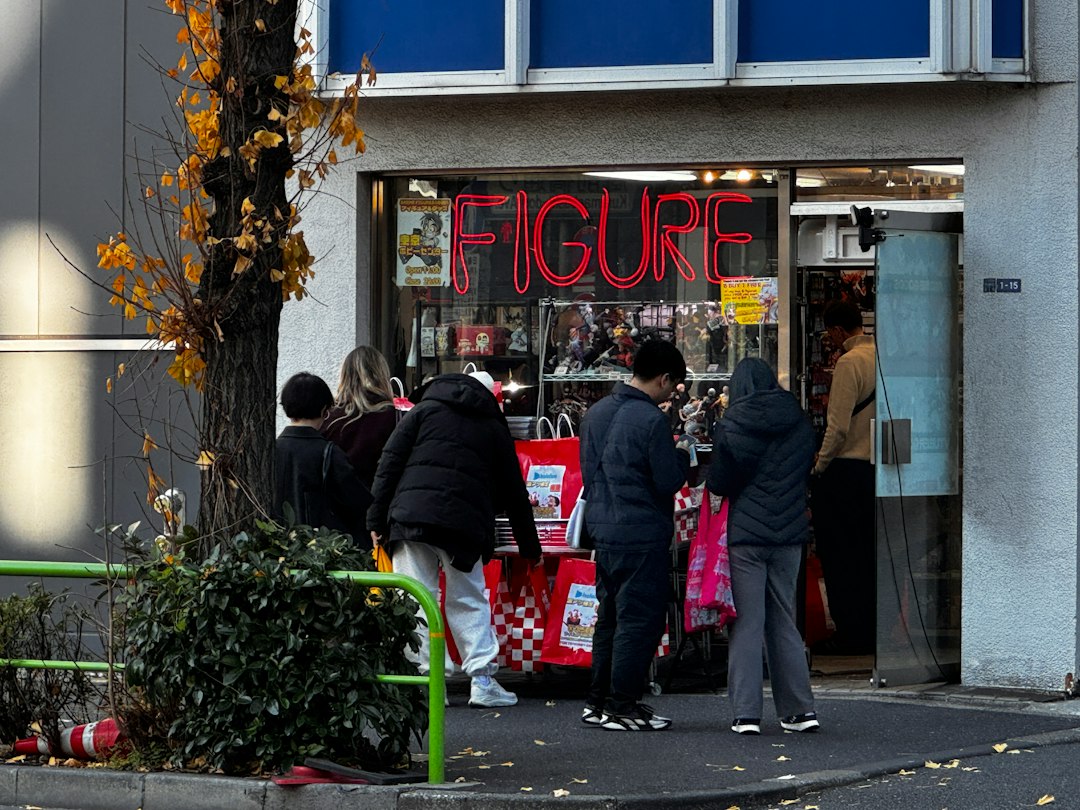
Photo by Suzi Kim on Unsplash