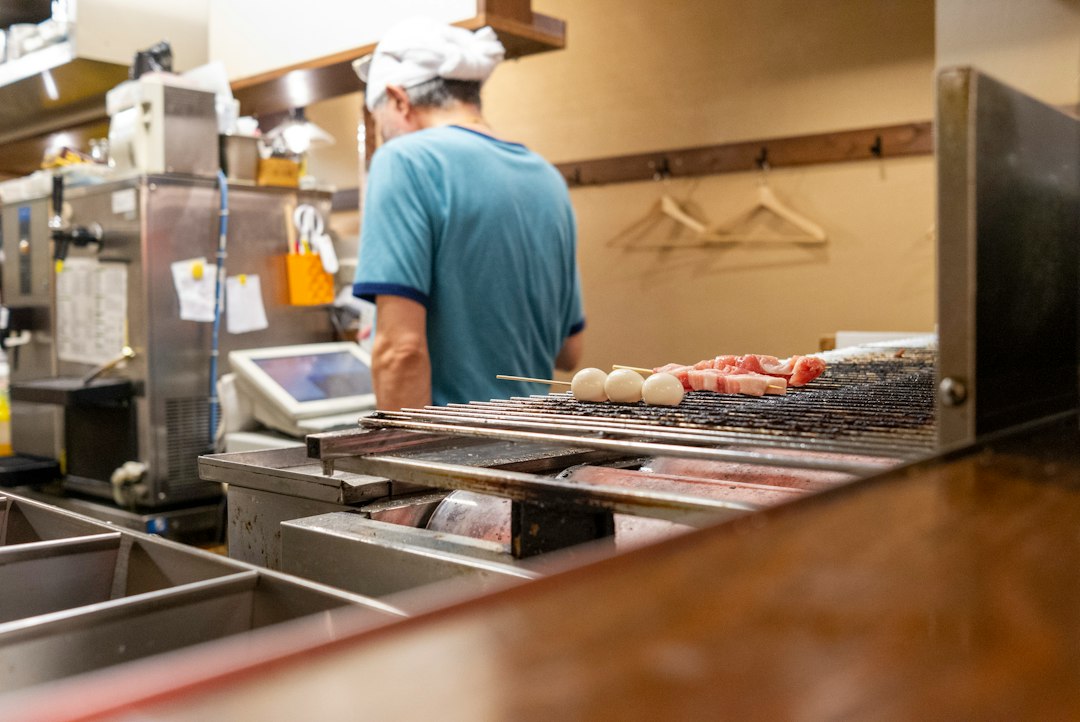
Book the course menu, not the à la carte menu, and tell the izakaya your budget when you reserve — most places like Torafuku in Shibuya or Ishii Shoten in Nakameguro will build a chef’s-choice run of 8-10 dishes around a number you give them, usually ¥4,000 to ¥8,000 per person including a 90 or 120-minute nomihodai (all-you-can-drink) block. That single sentence is the difference between a stressful night of pointing at a Japanese-only menu and a relaxed evening where plates just keep arriving.
What “omakase” means at an izakaya (it’s not sushi)
At a sushi counter, omakase usually means an expensive, chef-curated procession of nigiri with no menu at all. At an izakaya, the word is looser and cheaper. It typically refers to a set course (コース, kōsu) that bundles a fixed sequence of dishes — sashimi, grilled skewers, a fried item, a simmered dish, rice or noodles to finish — for a flat price per person, often with a drink package attached. You’ll see it written as “飲み放題付きコース” (course with all-you-can-drink) on the door or on Tabelog. This is the format built for first-timers because you never have to decode a handwritten specials board.
What it actually costs
Budget izakaya chains like Torikizoku charge around ¥280-350 per skewer à la carte, but their set courses run roughly ¥3,500 for 90 minutes with drinks. Mid-range independent izakayas — the kind with a grill master and a short seasonal menu — price omakase courses between ¥5,000 and ¥7,000, sometimes with sake pairings bumping that to ¥9,000. On top of whatever course you book, expect an otoshi (table charge disguised as a small starter dish, usually a pickle or simmered bean plate) of ¥300-500 per head, even if you ordered a fixed course — this is standard across Tokyo and isn’t a scam, it’s effectively a seating charge.
Where to go: four areas that actually work for beginners
Yurakucho yakitori alley
The arches under the JR tracks between Yurakucho Station (Yamanote, Keihin-Tohoku lines, Ginza exit) and Shimbashi Station are lined with smoke-filled yakitori counters that have been serving salarymen since the postwar black-market days. Stalls like Andy’s or the unnamed red-lantern shops along Koreinbo-dori rarely have English menus, but most now offer a simple “omakase 5 pon” (five-skewer chef’s selection) for around ¥1,800-2,500 — order this instead of trying to read the chalkboard.
Omoide Yokocho, Shinjuku
Three minutes on foot from Shinjuku Station’s West Exit, this narrow lane of two-seat-wide shops (nicknamed “Piss Alley” decades ago, now cleaned up but still cramped) is touristy but genuinely good for a first izakaya experience precisely because the staff are used to non-Japanese speakers. Shops here are open roughly 17:00 to midnight; expect to pay ¥3,000-4,000 for a skewer-and-drink omakase set at counters like Asadachi.
Nonbei Yokocho, Shibuya
One minute from Shibuya Station’s Miyamasuzaka exit, tucked behind the Shibuya River, this is a tighter, less chaotic alley than Omoide Yokocho. Many of the 2nd-floor bars here are standing-room or seat four people max, so it suits couples or solo travelers better than groups of six.
Shimokitazawa — Shirube
For a genuinely local, non-touristy night, take the Odakyu or Keio Inokashira line to Shimokitazawa Station (about 7 minutes from Shinjuku on the Odakyu line) and walk 5 minutes to Shirube, a 24-seat izakaya that’s been running since the 1970s. It has no English menu and no course system, which is exactly why it’s worth including here: if the course-menu places above feel too packaged, this is the next step up in difficulty once you’ve got one omakase night under your belt.
How to actually book it
Reserve through Tabelog (search the restaurant name plus “コース” to go straight to the course page) or Pocket Concierge, which has English support and lets you pay upfront — useful because some popular izakayas, especially in Ebisu and Nakameguro, won’t hold a table for walk-ins after 19:00 on Friday or Saturday. If you’re booking same-day, call the shop directly; even a few words of Japanese (“konbanwa, yoyaku onegaishimasu” — good evening, I’d like to reserve) plus the number of people and time usually works, since staff expect this. Walk-in without a reservation and you can still often get a course menu, but you’ll likely be capped at a 2-hour table limit (seki-ryō or “table charge with time limit”), which is posted near the entrance.
What actually arrives, in order
A typical ¥5,000 omakase course runs: otoshi (small pickled or simmered starter, automatic), otsukuri (a small sashimi plate, often tuna and a white fish), 3-4 yakitori skewers covering negima (chicken thigh and leek), tsukune (chicken meatball), and often one offal piece like kawa (crispy skin) or reba (liver) — don’t assume everyone orders this, ask to skip offal if you’d rather not, staff are used to the request. Then a fried course, usually karaage or a seasonal tempura, a simmered or grilled vegetable dish, and a finisher — either ochazuke (rice in tea/dashi broth) or a light noodle dish. In winter, courses swap the simmered vegetable for a one-pot nabe shared at the table.
Etiquette that actually matters here
- Don’t pour your own drink in a group — pour for the person next to you and let them pour yours; it’s a small gesture but noticeably appreciated.
- Say “sumimasen” to call staff over rather than waving or making eye contact and waiting — izakayas are loud and staff won’t necessarily watch your table.
- If you ordered a nomihodai course, note the cutoff time; staff will usually come by 10-15 minutes before to ask for last orders on drinks.
- Tipping doesn’t happen — don’t leave cash on the table, it sometimes gets returned to you by staff chasing you down the street.
- Splitting the bill (warikan) is completely normal and expected in groups; just ask for one receipt and divide it yourselves rather than asking staff to split it on the card machine, which many smaller izakayas can’t do.
One thing to watch for
The biggest mistake first-timers make isn’t etiquette, it’s timing: arriving right at opening (usually 17:00 or 17:30) means you’ll get seated fast but the kitchen is still running a limited early menu, so some course items may not be ready yet, while arriving after 20:00 on a Friday at a popular spot in Ebisu or Nakameguro without a reservation means a 30-45 minute wait even with a course booked. The sweet spot is walking in or arriving for a reservation between 18:00 and 18:30 — early enough to get full menu availability, late enough that the kitchen is in full swing.
Photo by Julius Yls on Unsplash